At a glance
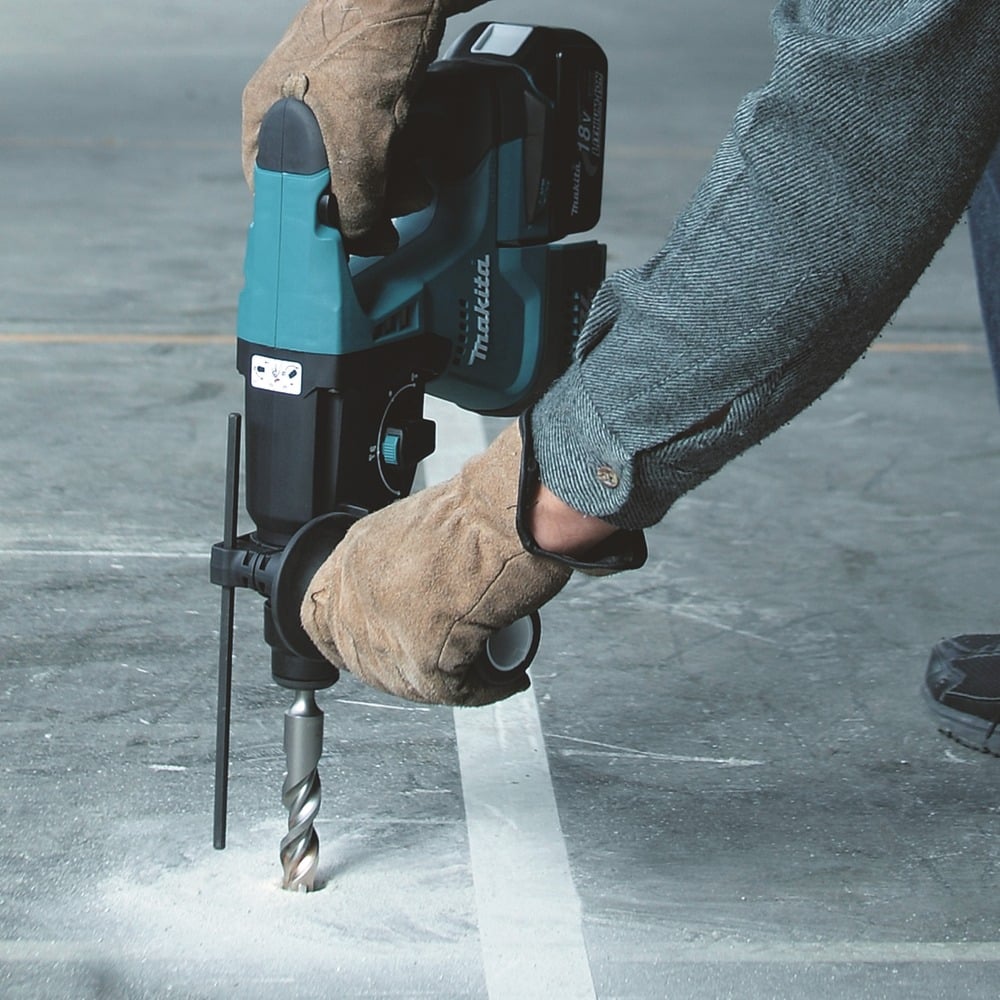
The Makita DHR243 is the 18V LXT brushless SDS Plus drill in Makita’s cordless range and one of the most consistent sellers in the UK mid-range SDS market. SDS Plus is the standard chuck format for hammer drilling in masonry at this size – the dedicated hammer mechanism delivers drilling efficiency that a standard combi drill cannot match when working through brick, blockwork or concrete. Whether you are anchoring garden buildings, installing structural fixings to masonry walls, running cable clips or fitting external insulation, an SDS Plus drill transforms how quickly those tasks get done.
We tested the DHR243 on a range of masonry tasks typical of UK domestic and light-trade work – drilling fixings into standard brick and dense blockwork, coring for cable runs, chiselling mortar and anchoring into in-situ concrete. The question was whether the brushless motor and Makita’s LXT engineering justify the price over cheaper SDS alternatives, and whether it holds up as the reliable workhorse it is marketed to be.
Overview and first impressions
Out of the box the DHR243 is compact and lighter than many users expect from an SDS Plus drill. At 2.4kg body only it sits at the lighter end of the 18V SDS class and the overall balance in the hand is excellent. The three-mode selector – rotary only, hammer drill and hammer only for chiselling – clicks positively into each position without any slop. This is an important detail on an SDS drill: a vague mode selector that can vibrate out of position mid-task is a genuine safety concern, and the DHR243’s implementation is reassuring.
The LXT brushless motor runs noticeably smoother and cooler than brushed SDS drills in the same price bracket, with less vibration transmitted to the hand during sustained drilling. The build quality throughout is to the standard Makita users expect from the LXT range: the body feels solid and robust, the rubberised grip areas are well-positioned and the bit change mechanism is fast and positive. The removable side handle positions at 360 degrees, which matters when working in confined spaces overhead or at awkward angles.
The DHR243 is sold body only in most UK listings. An 18V LXT battery and charger are required but not included. If you do not already own Makita LXT batteries, budget approximately £60-80 for a quality 5.0Ah battery and fast charger. For existing LXT owners this is a non-issue – LXT batteries are cross-compatible across the full 275+ tool range.
Specifications and scores
The DHR243 delivers 2.0 joules of impact energy, placing it firmly in the competent mid-range. That is enough for routine masonry work – anchor bolts, wall plugs, cable runs, fixing into concrete lintels – but it is not a demolition tool. The brushless motor is the key upgrade over older models, reducing heat build-up and extending both runtime and motor life considerably compared to brushed alternatives at a similar price.
How it performed in testing
Drilling 10mm fixings into standard UK house brick is the bread-and-butter task for an SDS Plus drill and the DHR243 handles it effortlessly. The 2.0J impact energy is more than adequate – holes appear quickly and cleanly without the need to apply significant forward pressure. The variable speed trigger allows careful starting before ramping up to full drilling speed, preventing bit walking on smooth surfaces. This is a detail that distinguishes well-engineered SDS drills from cheaper alternatives where full-power start is the only option.
Dense blockwork presented a more demanding test. The DHR243 maintained its pace well through denser material, though with noticeably more vibration than when drilling standard brick. The anti-vibration handle absorbs a reasonable amount of this but sustained sessions in hard aggregate blockwork will leave the hand feeling the work – this is characteristic of the 2.0J class rather than a specific criticism of the DHR243. The chisel-only mode worked well for the scale it is designed for: clearing mortar from a small area of repointing or chiselling out a damaged brick. For garden wall construction and general domestic masonry, the DHR243 handles everything you are likely to encounter.
Vibration tip. For extended sessions on hard blockwork, fit the side handle and use both hands. The DHR243’s anti-vibration handle absorbs significantly more feedback when used two-handed, reducing fatigue and keeping drilling accurate over long runs of fixings.
Battery and runtime
The DHR243 runs on Makita’s 18V LXT platform – the largest 18V cordless ecosystem available with over 275 compatible tools. LXT batteries are cross-compatible across drills, impact drivers, sanders, saws, blowers and dozens of other tools, all sharing the same battery format. For anyone building a cordless toolkit from scratch, this compatibility makes a meaningful long-term difference to the cost per tool.
On a 5.0Ah battery the DHR243 will comfortably drill 50 to 60 standard 10mm wall plug holes before the indicator starts to drop. For longer fixing sessions – hanging kitchen units, installing radiators or anchoring a garden building – a spare battery is sensible but not essential for a single day’s domestic work.
Performance and limitations
The DHR243 sits in the middle of the SDS Plus performance range. The 2.0J impact energy is sufficient for the majority of domestic and light-trade drilling tasks in UK construction materials – standard brick, medium density blockwork and concrete lintels. Where it reaches its limits is in heavy aggregate concrete and dense engineering blockwork, and for holes larger than around 20mm in hard material. For those tasks a higher-energy SDS Plus or SDS Max drill is the correct choice.
The brushless motor delivers a meaningful advantage in consistent performance across a full battery charge. Brushed SDS drills show a noticeable reduction in drilling speed as the battery depletes. The DHR243’s brushless motor maintains more consistent output across the full discharge cycle, which matters when drilling a large batch of fixings and needing the last hole to go in as quickly as the first. For a tool that gets used periodically over several years, the brushless motor’s longer service life also means a lower effective lifetime cost despite the higher upfront price.
- Compact and light for an 18V SDS drill at 2.4kg body only
- Brushless motor runs cool and maintains consistent performance
- LXT battery compatible with 275+ Makita tools
- Solid three-mode selector with no vibration drift between positions
- Body only – adds cost for buyers without LXT batteries
- 2.0J limits performance in hard aggregate concrete
- Vibration in dense blockwork noticeable over extended sessions
- No depth stop included in the box
- Existing LXT users adding an SDS drill to the toolkit
- UK homeowners doing regular masonry fixings
- Light-trade use on standard brick and blockwork
- Anyone wanting a low-vibration daily driver
- Heavy concrete demolition or slab breaking work
- New buyers without LXT batteries – total entry cost is high
- Occasional users who drill a handful of fixings per year
Final verdict – is it worth it?
The Makita DHR243 is a well-made, well-balanced SDS Plus drill that performs reliably across the range of masonry tasks it is designed for. The brushless motor is the key upgrade over older brushed SDS drills – consistent performance, longer service life and better battery efficiency combine to make a meaningful practical difference for anyone who uses an SDS drill regularly. The compact form factor and light weight for the class make it comfortable for extended overhead and confined-space work, which matters more than most buyers anticipate when choosing between SDS options.
The body-only pricing is the main sticking point for new buyers. Added to the cost of a quality 5.0Ah LXT battery and fast charger, the total spend is significant. For existing LXT users that calculation disappears entirely and the DHR243 becomes straightforwardly the right choice. For those starting fresh, the answer depends on how many other tools you plan to buy and whether Makita LXT is the platform you intend to build around.
For the intended user – an existing LXT owner needing a reliable SDS Plus drill for standard UK masonry – the DHR243 earns a strong recommendation. It does exactly what it promises, reliably and without drama. For a broader look at how it compares to the other top options, see our full best cordless SDS drills UK comparison.
A compact, well-built brushless SDS Plus drill that handles everyday UK masonry with ease. The LXT platform is a genuine long-term asset and the low vibration makes it comfortable for extended use. The 2.0J energy ceiling is real but fair for the class – for most domestic and light-trade demands this is exactly the right tool.
Share on socials: