At a glance
The house sparrow was once so abundant in Britain that it barely warranted a second glance. Today it is on the Red List of birds of conservation concern, having lost around 70% of its UK population since the 1970s – one of the steepest declines of any common bird. The causes are complex and still debated, but the loss of insect-rich habitats, the decline of seed-bearing weeds, changes in farming practice and the removal of nest sites in modernised buildings have all contributed. The house sparrow that survived in large numbers precisely because it lived alongside humans is now struggling because of how we have changed the environment around them.
The encouraging news is that sparrows are still present in large numbers in many UK gardens and urban areas, and where they do persist they respond readily to targeted habitat improvements. Unlike some declining species that require large-scale landscape intervention, sparrows can be meaningfully helped by individual garden owners – which makes them one of the most rewarding species to support. Food, water, shelter and insect-rich planting are the four pillars – and providing all four together has a significantly greater effect than any single measure in isolation, because sparrows are social birds that nest in loose colonies and need a garden that functions as complete habitat rather than just a feeding station.
About house sparrows
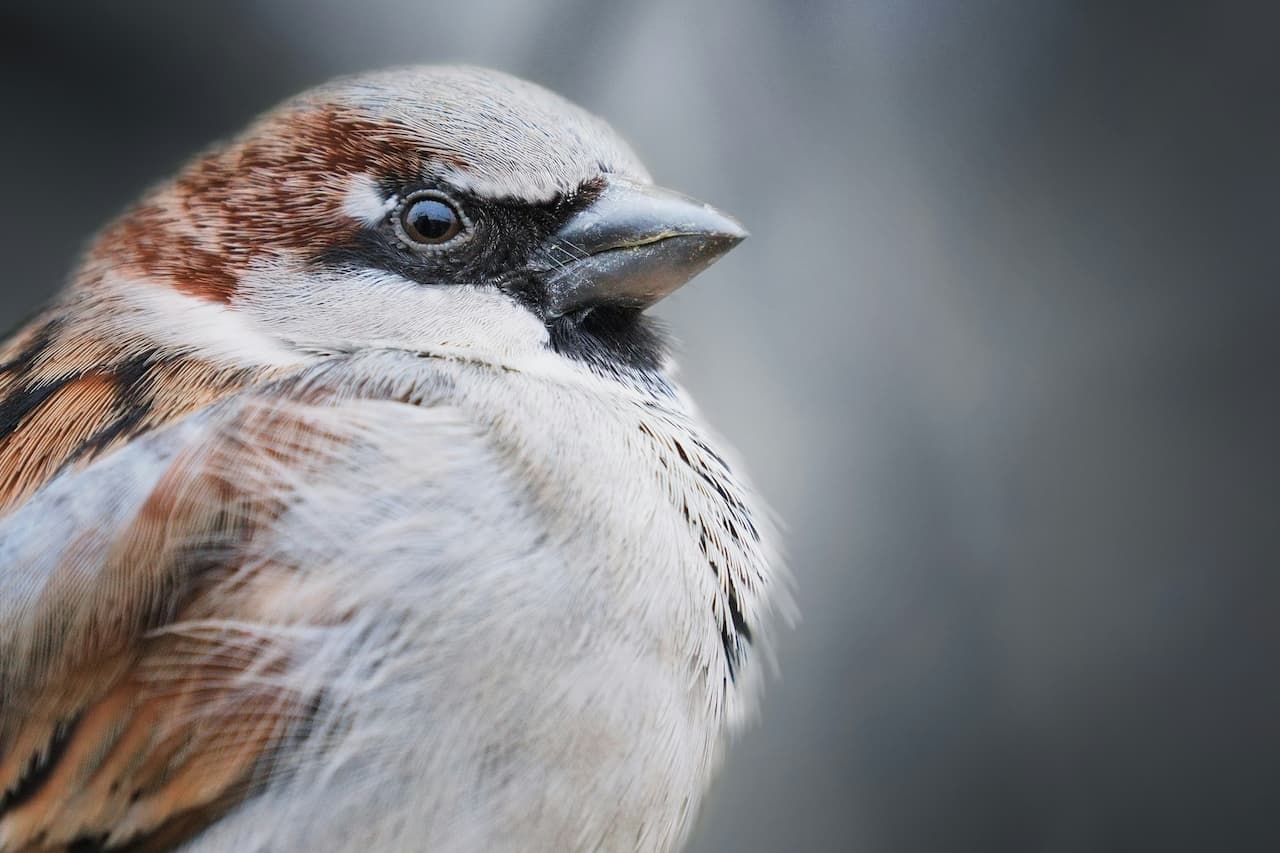
The house sparrow (Passer domesticus) is a small, stocky bird instantly recognisable by the male’s chestnut-streaked brown back, grey crown and black bib. Females are a plainer streaked brown. Both sexes have a noticeably thick bill – an adaptation for seed-eating – and a sociable, noisy character that is one of their most distinctive traits. Sparrows rarely move far from where they were born, tending to stay within a few hundred metres of their natal colony, which makes the garden environment particularly important. A sparrow colony that loses its nesting site or food source does not simply move to the next garden – it often collapses entirely.
Food and feeding
Sparrows are primarily seed-eaters as adults, but critically they feed their chicks almost exclusively on insects – particularly aphids, caterpillars and small beetles – during the breeding season from April to August. This means that providing supplementary food at a bird feeder supports adult sparrows through autumn and winter but does nothing to support chick survival, which depends on insect availability in the garden environment. A garden with a well-stocked feeder but no insect habitat will attract adult sparrows but is unlikely to support successful breeding. The two approaches work together: seed and grain for adults year-round, insect-friendly planting for chicks in summer.
Sparrows prefer to feed on or close to the ground, or on a broad platform feeder rather than a narrow tube feeder. A wide tray feeder or a ground feeding station suits their feeding behaviour far better than a hanging tube – they will use tube feeders but will not compete well with larger birds on them. A bird bath alongside the feeder significantly increases the attractiveness of a feeding area, as sparrows drink and bathe frequently. Fresh water changed daily prevents the spread of bird diseases that can devastate small garden populations. Positioning feeders close to dense shrubs gives sparrows cover to retreat to when a predator arrives, which is a genuine requirement for a species that has several natural predators including sparrowhawks.
Nesting and shelter
Nest site availability is widely considered one of the primary factors in sparrow decline in urban areas. Sparrows nest in holes and crevices – traditionally under roof tiles, in gaps in eaves, behind fascia boards and in dense hedgerows – and the renovation and insulation of buildings over the past 30 years has closed off vast numbers of these sites. A well-insulated modern house is often a sparrow-free house for this reason, making purpose-built nest boxes the single most impactful thing a garden owner can provide.
Hedgerows and dense shrubs serve the dual purpose of providing cover at the nest box and supporting the insects that sparrow chicks need to survive. A native hedge of hawthorn, blackthorn or elder is ideal, but even a dense cotoneaster or pyracantha against a wall provides valuable nesting habitat and insect food. If a native hedge is not practical, several dense shrubs grouped together achieve a similar effect. Ivy on a wall or fence is particularly valuable – it provides nest sites, roosting cover and produces berries and insects across different seasons.
Garden habitat features
The insect food that sparrow chicks need is produced by a garden that includes sufficient habitat diversity to support invertebrate populations through the breeding season. A lawn with some areas left uncut, a flower border with nectar-rich plants that attract aphids and other insects, a patch of leaf litter, a compost heap and some bare soil for dust bathing together create the habitat mosaic that a breeding sparrow colony needs. Any single one of these features helps; all of them together is transformative.
Dust bathing is a behaviour specific to sparrows among UK garden birds – they find patches of fine dry soil and perform vigorous bathing motions to work dust through their feathers, which helps control parasites. A small patch of bare dry soil in a sheltered corner of the garden is enough. Most gardens with sparrows will see them using the base of hedges or the edge of flower borders for this purpose. Maintaining that access is as simple as not mulching every bare patch of soil in the garden. A compost heap is another underrated feature – sparrows forage actively in the surrounding area for invertebrates and will use a heap that is accessible at ground level. Even a small open heap in a corner, rather than a sealed plastic bin, provides significantly more wildlife value and helps the sparrow colony find the insect food it needs through the breeding months.
Sparrow garden calendar
Sparrows have distinct seasonal needs and the most effective garden support addresses each phase of their year. Understanding what sparrows need each month allows garden tasks to be timed to maximum benefit rather than applying generic wildlife gardening advice that may not be targeted to the species. The breeding season from April to August is the period when garden support matters most for population recovery – this is when chick survival is determined and when the quality of the garden environment has its greatest influence on whether a colony grows, holds steady or contracts.
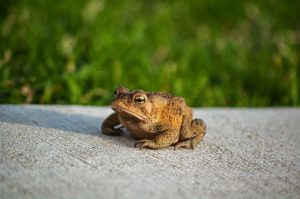
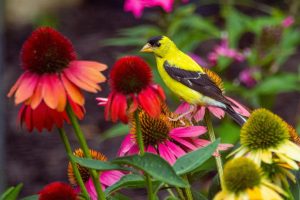
Sparrows often share garden space comfortably with other species – goldfinches, house martins and frogs and other garden wildlife all benefit from the same broad habitat improvements that help sparrows. A garden managed with sparrows in mind – with native plants, dense hedging, a water source and reduced pesticide use – is also a better garden for most of Britain’s declining wildlife more broadly.
Share on socials: