At a glance
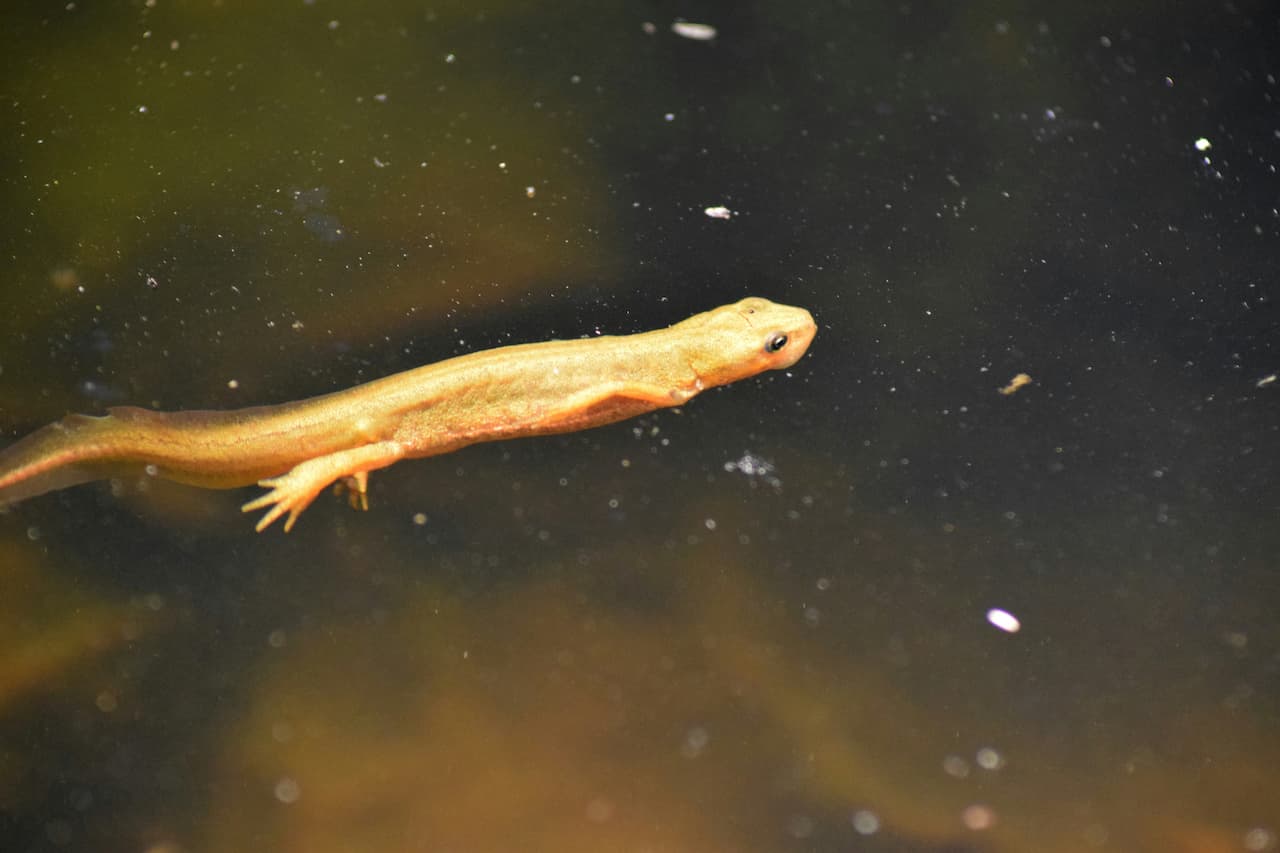
The UK has three native newt species, all of which can colonise garden ponds given suitable conditions. The smooth newt is the most widespread and the one most likely to appear in a suburban garden pond – it is a small, relatively plain newt with a spotted orange belly, reaching around 10cm in length. Males develop a continuous wavy crest along the back and tail during the breeding season which makes them unmistakable. The palmate newt is very similar in size and is more common in acidic or upland areas of the west and north. The great crested newt is a different matter entirely – Britain’s largest newt at up to 18cm, it is fully protected under both UK and European law, and its presence in a garden pond carries significant legal implications for any pond management work.
Attracting newts requires two things: a pond without fish, and suitable terrestrial habitat immediately surrounding it. Newts spend the majority of the year on land rather than in water, entering the pond only from March to June for breeding before returning to rough ground, log piles and dense vegetation for the rest of the year. Both elements need to be right before a newt population can establish and persist through the seasons.
UK newt species
Identifying which species are using a garden pond is easier than it might seem. The smooth and palmate newts are superficially similar but have reliable differences – palmate newt males develop webbing between the hind toes during breeding season and a thin filament at the tail tip, both absent on smooth newts. Both are small enough that distinguishing them from a great crested newt requires no expertise whatsoever: the great crested is substantially larger, coal-black or very dark brown above, and in breeding males carries a dramatic jagged dorsal crest that breaks at the base of the tail – entirely unlike the smooth continuous crest of a breeding male smooth newt.
Pond design for newts
A pond is non-negotiable – newts cannot colonise a garden without one. The single most important rule for a newt pond is no fish. Fish eat newt eggs, larvae and small adults comprehensively, and a pond containing goldfish or koi will support no newts. If an existing pond contains fish and you want to attract newts, the fish must be rehomed or moved to a separate pond. A new wildlife pond built with a well-designed shallow margin is the most important single action you can take to attract newts to your garden.
The design features that make a pond most attractive to newts are a shallow end of 15-30cm depth for egg-laying and larval development, submerged aquatic plants such as hornwort, water milfoil and starwort that females use to fold their eggs individually into leaf wraps, and a gradual slope or ramp exit allowing easy access in and out. Ponds of at least 4 square metres give the best results – very small ponds heat up and dry out more easily, reducing the window of suitable conditions for larvae to complete development. A position in partial shade is preferable to full sun, which raises water temperatures above the comfortable range for newts in summer. Frogs often breed in the same pond, and a pond that attracts frogs is already providing much of the habitat newts need.
Never introduce newts to a garden pond. All UK newt species are protected and cannot be legally moved without a licence. The good news is that you do not need to – newts will find a suitable pond themselves, typically within one to three years of creation, as long as suitable habitat exists within dispersal range. Build the pond, create the surrounding land habitat, and wait.
Land habitat around the pond
Newts spend the majority of the year on land rather than in water – they enter the pond from March to June for breeding and then return to terrestrial habitat from July through to the following spring, including overwintering in frost-free spots under logs, stones and dense vegetation. The quality of land habitat immediately surrounding the pond is therefore as important as the pond itself. Rough grass, log piles, stone walls, dense groundcover planting and undisturbed leaf litter all provide the terrestrial refuge and overwintering habitat newts need to complete their annual cycle.
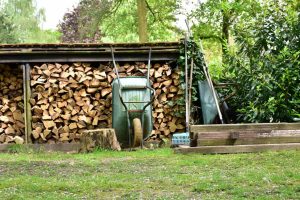
A bug hotel or log pile positioned within 5-10 metres of the pond provides ideal overwintering and refuge habitat. Avoid tidying up border edges and leaf piles near the pond in autumn – this is precisely when newts are seeking overwintering quarters and disturbance at this time can be harmful. Hedgehogs and newts often share the same rough ground habitat, so features that benefit one typically benefit the other. Avoid slug pellets containing metaldehyde or ferric phosphate near the pond – newts eat slugs and can be harmed by accumulation of these chemicals through their food chain.
Great crested newts and the law
If you suspect great crested newts are present in your garden pond, the presence can be confirmed by their distinctive appearance – much larger than smooth newts, dark brown or black above, with a bright orange belly with black spots, and in breeding males a dramatic jagged dorsal crest that is unlike anything else in UK wildlife. Torchlight survey of the pond on mild spring evenings above 5°C is the standard detection method for amateur naturalists. The presence of great crested newts must be taken seriously before any garden works near the pond are considered.
Do not carry out significant pond works if great crested newts may be present. Any major works to a pond containing or potentially containing great crested newts require a licence from Natural England. Working without a licence is a criminal offence carrying unlimited fines. If in doubt, contact your local wildlife trust or a licensed ecologist before carrying out any pond works between February and June.
Newt seasonal calendar
The presence of great crested newts is not a reason to avoid managing the pond – unmanaged ponds silting up, filling with emergent vegetation and eventually drying out are a major cause of great crested newt population loss. Regular, careful management carried out outside the core breeding season is both legal and beneficial. Removing excess blanketweed, managing overgrown marginal vegetation and maintaining clear open water on at least half the pond surface all benefit great crested newts and should be carried out as routine management even where the species is present.
Understanding the newt annual cycle tells you when the pond and its surrounding habitat are most critical and when management work can safely be carried out. The breeding season from March to June is the most sensitive period – the pond should not be disturbed, cleaned or have significant vegetation removed during this time. Outside the breeding season, particularly from September through to February, routine maintenance can be carried out safely and beneficially.
Share on socials: