At a glance
Hellebores occupy a unique position in UK gardening: they are the finest flowering plants for the winter months, producing their nodding blooms from December through to April in conditions – deep shade, dry soil under trees, heavy clay – where almost nothing else will flower at all. A clump of hellebores in January, with their jewel-coloured flowers emerging through frost-hardened ground while the rest of the border stands completely bare, is one of the most genuinely rewarding sights any UK garden produces through the winter months. They are also exceptionally long-lived, largely trouble-free and increase steadily in both size and numbers over the years as self-sown seedlings establish naturally around the parent plants, eventually forming generous drifts with no effort from the gardener.
The genus Helleborus contains around 20 species, but the vast majority of garden hellebores are either Helleborus orientalis – the Lenten rose – and its hybrids, or Helleborus niger, the Christmas rose. Both are widely grown in UK gardens and both are straightforward to establish in appropriate conditions. The Orientalis hybrids in particular have been bred into an extraordinary range of flower colours and forms over recent decades, and modern selections in double, anemone-centred and heavily spotted forms have transformed hellebores from cottage garden stalwarts into some of the most collectable hardy perennials available.
About hellebores
Hellebores are evergreen or semi-evergreen perennials in the buttercup family (Ranunculaceae), native to a broad area stretching from southern Europe through the Balkans and into western Asia. They have naturalised widely in UK woodland gardens and thrive under the deciduous tree canopy that characterises much of the British landscape, taking advantage of winter light when the canopy is bare to complete their flowering season before the leaves return overhead. All parts of the plant are toxic – a fact worth knowing for households with children or pets – but this toxicity also makes them completely unpalatable to deer, rabbits and most other browsing animals, which is a significant practical advantage in rural gardens.
Best varieties for UK gardens
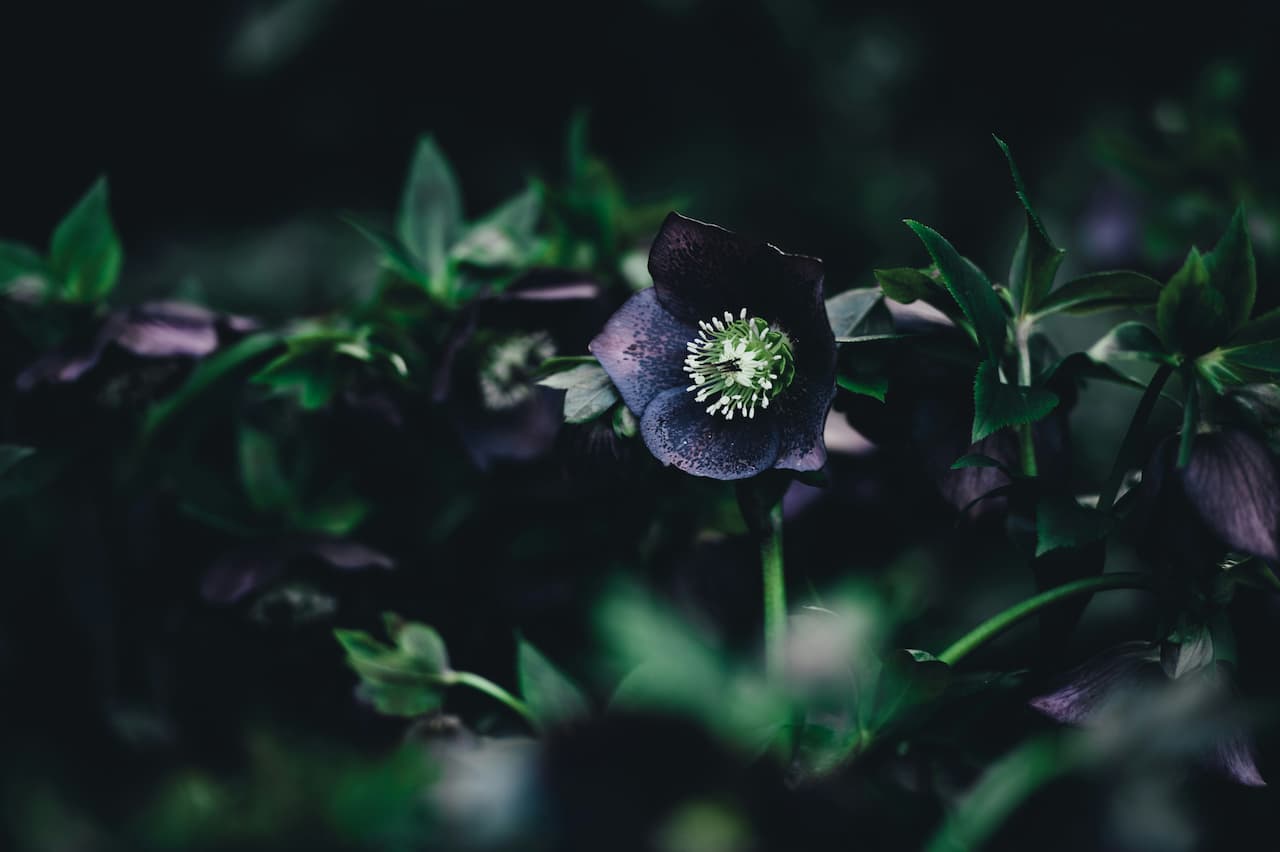
The two main groups for UK gardeners are the Helleborus orientalis hybrids (Lenten rose) and Helleborus niger (Christmas rose). Within the orientalis group the range of flower colours now available is extraordinary – from near-black through deep plum, burgundy, pink, cream, white and yellow, with single, semi-double, double and anemone-centred forms, as well as heavily spotted and picotee-edged types. The Christmas rose flowers earlier, often from December, but is slightly more demanding in its requirements and performs best in alkaline conditions with good drainage.
Among the Orientalis hybrids, the named doubles from specialist nurseries – particularly the Harvington series and varieties from growers like Ashwood Nurseries – represent the highest development of the genus for garden use. These plants are worth seeking out when a specific colour or form is required, though unnamed seedlings bought cheaply at garden centres will often be just as beautiful in practice. The hellebore’s natural variability means that even budget plants regularly produce flowers of considerable quality.
Planting and conditions
Hellebores are planted from pot-grown stock in autumn or spring. Autumn planting gives the roots time to establish before the winter flowering period and is preferred for the best first-season display. Spring planting works well but may produce a reduced flower count in the first season as the plant focuses energy on root establishment rather than flowering. Bare-root plants are sometimes available from specialist suppliers in late summer and can be planted directly, though they take longer to establish and need careful watering through the first autumn. Container-grown plants available at garden centres through winter are an excellent choice for an instant effect – they can be planted even while in flower, though they may sulk slightly in their first season before settling into their new position the following year.
Soil preparation for hellebores is straightforward. Hellebores tolerate a very wide range of conditions – including dry soil under dense tree canopy, heavy clay and chalky alkaline ground – but they perform best and establish fastest in soil that has been improved with organic matter. Working in a generous bucket of garden compost or leaf mould around the planting area before setting the plant in the ground is sufficient preparation in most situations. Plant with the crown just at or slightly below soil level and firm in well. Newly planted hellebores benefit from a mulch of leaf mould or composted bark around the base to retain moisture through their first year.
Remove all old leaves in January before the flowers emerge. Hellebores carry their previous year’s foliage through winter, and by January those leaves are often marked by hellebore leaf spot and looking tired. Cutting them off at the base clears the view for the emerging flowers, reduces the spread of leaf spot, and makes the plants dramatically easier to appreciate during the flowering season. This single task transforms the winter display.
Care and seasonal tasks
Established hellebores are among the most self-sufficient perennials in the UK garden. Once past their first season they require minimal intervention – the main annual tasks are removing old foliage in January, applying a mulch of compost or leaf mould in spring, and managing self-sown seedlings to prevent overcrowding. Feeding with a slow-release balanced fertiliser in February, just as the flowers are opening, gives a noticeable improvement to the vigour and flower size of plants growing in poorer soil. In richer garden soils feeding is rarely necessary.
Division is rarely needed and usually inadvisable with hellebores. Unlike many perennials, established clumps do not become less floriferous with age – they typically flower more prolifically as the crown enlarges – and dividing them resets years of establishment. The exception is when a plant is clearly overcrowded or the centre has become very woody and congested, in which case dividing in early autumn and replanting the outer sections with fresh compost worked into the planting hole is worthwhile. Self-sown seedlings are an annual bonus that most hellebore growers come to rely on – they can be transplanted when small in autumn or spring and will flower after two or three years from germination. Seedlings from named double or spotted varieties will not come true to type – they will produce flowers of their own character, which is often a pleasant surprise but occasionally disappointing if a specific colour was expected. For guaranteed colour, buy named varieties from specialist nurseries rather than relying on seedlings.
Problems and companions
Hellebores are relatively problem-free compared with most flowering perennials, but there are a handful of issues that occur regularly in UK gardens. Hellebore leaf spot is the most common, caused by the fungus Coniothyrium hellebori, and produces brown or black blotches on the leaves and stems. It is largely cosmetic and is best managed by removing affected foliage – particularly the wholesale removal in January described above – rather than by chemical treatment.
As companions in the shade garden, hellebores work superbly alongside plants that share their preference for dappled light and humus-rich soil. Heuchera provides evergreen foliage colour through the winter months while the hellebores flower, and both die back at different times so neither leaves a gap. Astrantia takes over the flowering baton as hellebores finish in April, providing interest from May through to July in similar conditions. Hydrangeas behind a drift of hellebores create a classic woodland-edge combination that works in most UK shaded borders, the bold summer flowerheads providing scale and contrast to the hellebores’ more delicate winter presence. Managing slugs consistently in these plantings protects all species simultaneously and reduces the overall management burden considerably.
Share on socials: