At a glance
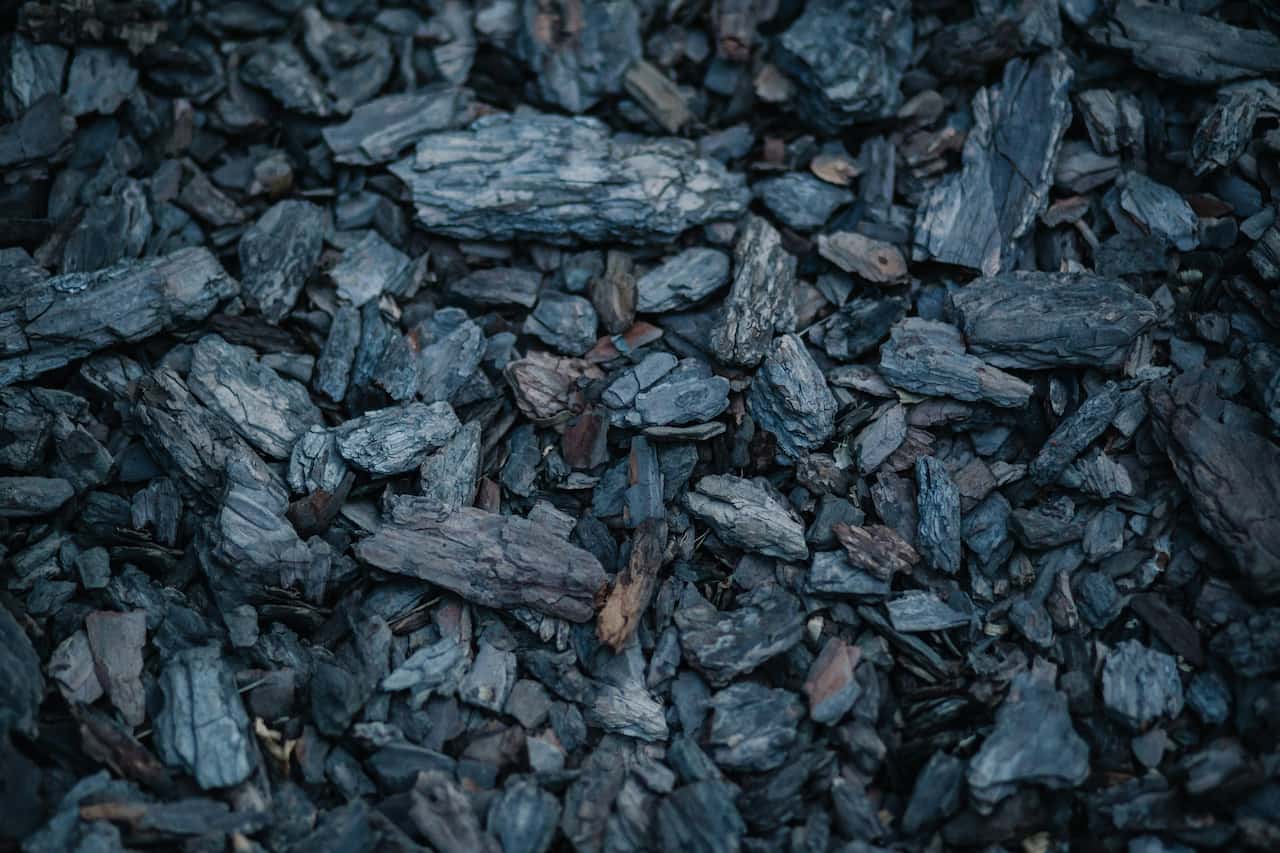
Blue slate chippings have become one of the defining materials of contemporary UK garden design. The distinctive blue-grey colour weathers slowly and gracefully, the angular pieces lock together better than rounded gravel, and the material provides genuine horticultural benefits as a mulch over weed-suppressing membrane. Unlike many decorative aggregates that fade or discolour within a couple of seasons, Welsh blue slate holds its colour over decades of outdoor exposure – it is effectively a permanent surface material that will outlast most other garden features. The cost is higher than concrete gravel but lower than paving, and the installation is accessible to a competent DIYer working over a weekend.
The most common mistakes made with blue slate chippings are laying them too shallow (under 40mm, which allows weed breakthrough), skipping the membrane (which doubles the long-term maintenance burden), and choosing the wrong grade for the application. A 40mm chipping on a garden path creates an uncomfortable, unstable walking surface; a 10mm chipping used as a water feature surround displaces into the water with every heavy rain. Grade selection matters as much as quantity, and getting it right before ordering saves both money and frustration.
Grades and sizes – which to choose
The 20mm grade is the right choice for most applications in UK gardens: paths, borders, mulching over flower beds and general decorative coverage. It is stable enough to walk on without excessive movement, fine enough to bed down around plant stems without damaging them, and the piece size creates the clean blue-grey carpet effect most gardeners are looking for. The 6-10mm fine grade works well around water features, in planters and as a top dressing around alpine plants where a neater, more uniform surface is needed. The 40mm grade makes a strong visual statement in wide open areas or contemporary minimalist gardens but is uncomfortable underfoot and difficult to manage around planting.
Best uses in the garden
Blue slate chippings suit a wide range of garden contexts. The colour sits naturally in contemporary, coastal, gravel garden and Japanese-inspired designs, and it works equally well as a neutral backdrop that lets plant colour dominate in more traditional planting schemes. The most common applications are border mulching, path and pathway coverage, water feature surrounds and as the surface material for alpine or rock garden plantings where sharp drainage and a cool root environment are needed.
Coverage, depth and cost
Coverage calculations are straightforward once depth is fixed. The standard recommendation is 50mm for border and decorative areas and 75mm for paths and high-traffic areas. Below 40mm the weed suppression effect is unreliable – roots find their way through thin slate even over membrane – and the visual depth is insufficient for the material to settle into a stable, consistent carpet. 50mm is the right minimum for most applications and 75mm gives more robust weed suppression and a longer time before top-up is needed.
Always order 10% more than your calculated area needs. Edge losses, compaction and the irregular shape of most garden beds means bare calculations consistently underestimate. Running short mid-project and having to reorder introduces batch colour variation and delivery delays. Ten percent extra is cheap insurance against both.
How to install – step by step
Calculating your order before purchasing saves a second delivery charge and avoids the colour-matching problem that arises when a second batch from a different production run sits slightly lighter or darker than the first. The formula: length (m) x width (m) x depth in metres = volume in cubic metres. Multiply by 1.4 to convert to approximate tonnes (blue slate has a bulk density of around 1.3-1.5 tonnes per m3 depending on grade). Add 10% for wastage. Most suppliers sell by the tonne in bulk bags, so round up to the nearest half-tonne. For a 20m2 patio area at 50mm depth: 20 x 0.05 x 1.4 = 1.4 tonnes, plus 10% = 1.54 tonnes. Two bulk bags typically covers this comfortably with a small reserve for top-up.
Preparation is the stage most often rushed and the one that determines long-term success. The area to be covered needs to be cleared completely of existing vegetation including root systems – couch grass, bindweed and ground elder will push through membrane if any root fragments remain. Dig out to 80-100mm below the finished surface level to allow depth for membrane and slate. On compacted soil this is sufficient; on loose or recently cultivated soil, lightly firm the surface before laying membrane to prevent the slate sinking unevenly over time.
Edge restraints are essential for paths and strongly recommended for border areas adjacent to lawns. Without them the slate gradually migrates into surrounding ground, thins at the edges and the clean boundary becomes ragged within a season. Steel or plastic edging pinned into the ground at 30cm intervals is the standard solution. For curved borders, flexible plastic edging is available from garden centres that follows any radius without additional cutting.
The relationship between blue slate and garden plants is largely positive but worth understanding before planting. The angular, pale surface reflects heat and light upward, which benefits sun-loving Mediterranean plants – lavender, cistus, rosemary and salvias thrive in the warm microclimate created by a slate mulch. The same effect can stress plants that prefer cool, moisture-retentive conditions: hostas, astrantia and most ferns prefer organic mulch that breaks down and adds nutrition rather than a permanent mineral layer. Mixing blue slate with planting is most successful when the palette is chosen to suit the conditions the slate creates rather than expecting the slate to adapt to the plants.
Weed-suppressing membrane must be permeable – it needs to allow water through to plant roots while blocking light to weed seeds below. Solid polythene sheet is the wrong product for borders: it waterproofs the soil underneath, starving plants of rainfall and creating wet patches in heavy rain. Look for woven polypropylene membrane rated at 50g/m2 or above for most applications, and 70g/m2 for paths where a more robust product is needed. Overlap membrane joins by at least 150mm and pin through the overlap – a gap in the membrane becomes an active weed germination zone within months.
Maintenance and common problems
Share on socials: