At a glance
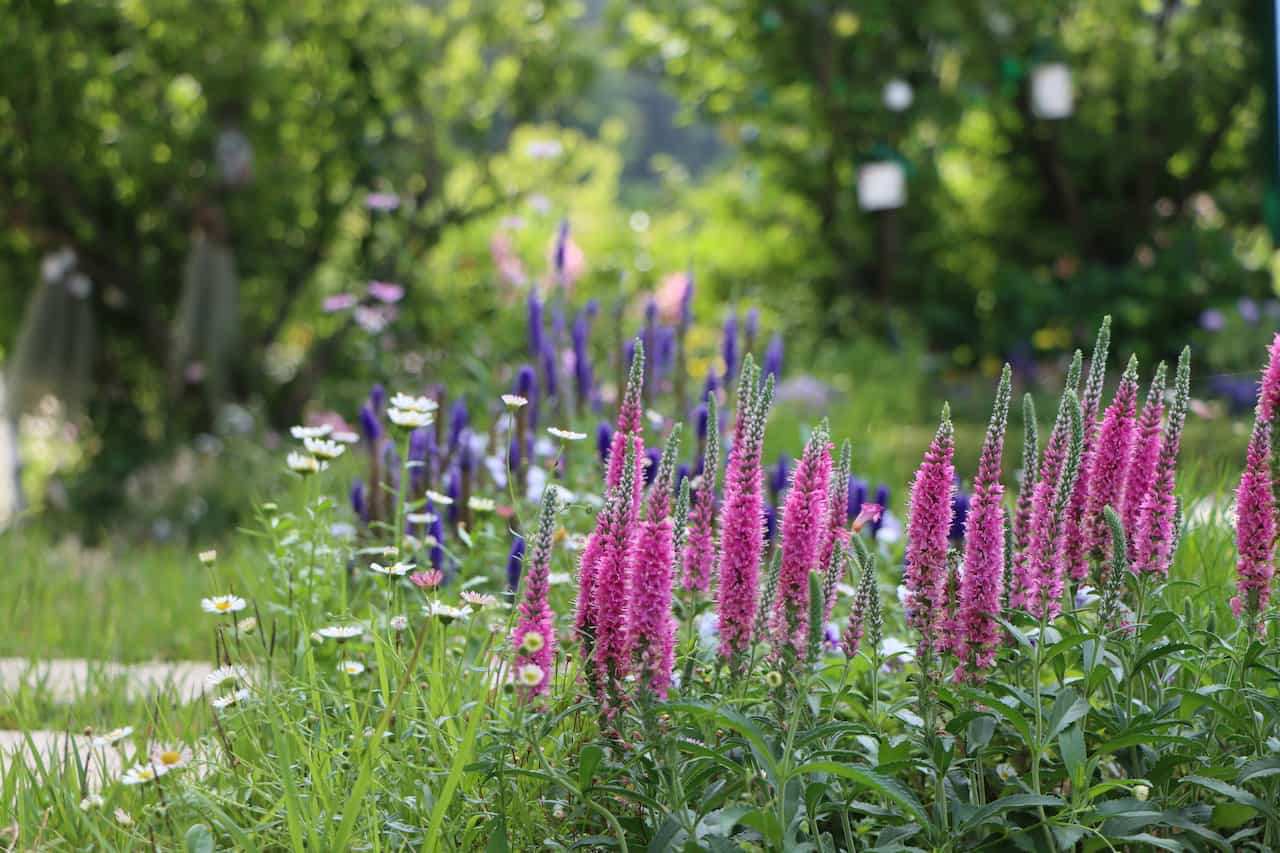
Veronicas – also known as speedwells – are one of the most underused groups of border perennials in UK gardens. They are easy to grow, tolerant of a wide range of soil conditions, reliably long-flowering from June through to September, and the upright flower spikes in shades of blue, violet, pink and white give a vertical accent that most border perennials cannot match. They also require very little maintenance once established – no staking, minimal deadheading and a straightforward division every few years to keep clumps vigorous.
The genus Veronica is large and varied, ranging from low mat-forming ground cover types just 10cm tall to stately border perennials reaching 120cm. The group most commonly grown in UK borders is Veronica spicata and its cultivars – the spiked speedwells that produce upright racemes of small flowers over a long period. These are the plants covered in detail in this guide, alongside the best varieties for different positions and a brief look at the ground-cover types that suit rock gardens, wall tops and the front of a border.
Types and best varieties
The veronicas available to UK gardeners fall into three broad groups based on habit and use: tall upright border veronicas (30-120cm), mid-height clump-forming types (20-40cm), and low prostrate ground-cover types (5-15cm). Each group serves a different design purpose, and understanding which type suits which position avoids the common mistake of planting a vigorous tall variety at the front of a border where it overpowers everything around it.
Among the border veronicas, Veronica spicata ‘Rotfuchs’ (Red Fox) deserves particular mention for UK gardens. Despite the name, it produces deep rose-pink spikes rather than red, and at 40-50cm it occupies the middle layer of a border without overreaching. It is one of the longest-flowering veronicas available, producing spikes from June well into August if deadheaded regularly. Veronicastrum virginicum ‘Fascination’ is the choice for a large statement plant – at 120cm with multiple slender spires of pale lavender-pink in July and August, it is one of the finest late-summer border perennials available to UK gardeners.
Planting and soil
Veronicas are tolerant plants that perform well in average UK garden soil, but they give their best in full sun with reasonable drainage. They will grow in partial shade but produce fewer flowers and have a tendency to flop. Wet, waterlogged soil in winter is the most reliable way to reduce vigour and eventually kill them – good drainage matters more than soil fertility for long-term performance. Most UK garden soils need no amendment at planting beyond ensuring drainage is not impeded.
Plant container-grown veronicas at the same depth as they were in the pot – planting too deep buries the crown and can cause rotting in wet winters. In heavy clay soils, add a generous handful of grit to the planting hole and fork it into the surrounding soil to improve drainage around the root zone. Water in well at planting and keep the soil moist for the first few weeks until the plant is established. After that, established veronicas are surprisingly drought-tolerant and will not need regular watering except in prolonged dry spells during the flowering period.
Space border veronicas generously at planting. Established clumps of V. spicata spread to 40-50cm across and should be planted 45cm apart. Planting too close produces congested clumps that flower poorly and are more susceptible to powdery mildew through restricted airflow. A single well-spaced plant given room to develop will always outperform three cramped ones competing for light and nutrients.
Care and pruning
Established veronicas require very little day-to-day care. They are not heavy feeders – a light application of balanced fertiliser in spring is sufficient and they perform better in moderate rather than rich soil. They are reasonably drought-tolerant once established, though consistent moisture during flowering extends the season and improves flower spike length. The key maintenance task is deadheading and the autumn cutback, both of which directly affect the following year’s performance.
Cut back border veronicas to ground level in late autumn or early spring – both timings work, though autumn cutting exposes the crown to harder frosts in colder UK regions. In northern England and Scotland, leaving the old stems through winter provides some crown protection and can be cut back in February or March as new growth begins to show at the base. Deadhead spent flower spikes by cutting back to the next lateral bud or to the base of the stem – this encourages secondary spikes on many varieties.
Propagation
Veronicas are straightforward to propagate by division and stem cuttings, and the border types benefit from being divided every three to four years to prevent the centres becoming woody and unproductive. Division in spring just as new growth appears is the most reliable method and produces plants ready to establish through the growing season.
Common questions and problems
Veronicas have a short list of problems, most of which are the result of poor siting rather than disease or pest pressure. The most common complaint is flopping – which is almost always caused by too much shade or too rich a soil – and powdery mildew, which increases in humid, still conditions and in overcrowded plantings. Neither problem requires chemical treatment if the underlying cause is addressed. A veronica that flops needs more sun or less feeding, not staking. A veronica with chronic mildew needs more space and better airflow, not repeated fungicide applications.
Slugs and snails occasionally target emerging growth in spring, though veronicas are not a primary target compared with hostas or delphiniums. The leaves are slightly rough-textured, which deters most gastropod feeding once the plant is beyond the small seedling stage. Aphids can congregate on shoot tips in early summer but rarely cause lasting damage – a strong jet of water knocks them back and natural predator populations usually bring colonies under control within a fortnight without intervention.
Veronicas are genuinely easy-going plants that reward good siting and minimal intervention. The combination of long flowering season, upright habit, pollinator appeal and low maintenance makes them one of the best additions to any UK mixed border, whether you are building a new planting or filling gaps in an established bed. The blue-violet tones of V. spicata and V. longifolia in particular are invaluable in summer and early autumn when many other blue-flowering perennials have finished. Plant them alongside late-season grasses, echinacea and rudbeckia for a border that carries interest from June well into October without requiring constant attention.
Share on socials: