At a glance
A cold frame is one of the most productive structures a UK kitchen gardener can add to their plot, and one of the most underused. Unlike a polytunnel or greenhouse, it requires no significant investment, no planning permission and no permanent installation – a basic cold frame can be built from reclaimed timber and old window panes for almost nothing, or bought ready-made for under £50. Yet used properly it delivers results that many gardeners assume require a much larger or more expensive structure: salad crops in February, protected overwintering of tender plants, earlier harvests of everything from carrots to courgettes, and a dedicated space for hardening off seedlings before they face the open garden.
The cold frame’s limitation compared to a heated greenhouse or polytunnel is simply that it provides frost protection and microclimate enhancement rather than active heating. On a still night in January a well-built cold frame typically stays 4-6 degrees Celsius warmer than the ambient air temperature outside – not enough to keep truly tender tropical plants alive, but more than enough to protect hardy annuals, overwintering brassicas, hardy herbs and the cut-and-come-again salad crops that are most valuable to a UK grower in the lean winter and early spring months. Understanding what a cold frame actually does – and what it cannot do – is the starting point for using it effectively.
Siting and setting up a cold frame
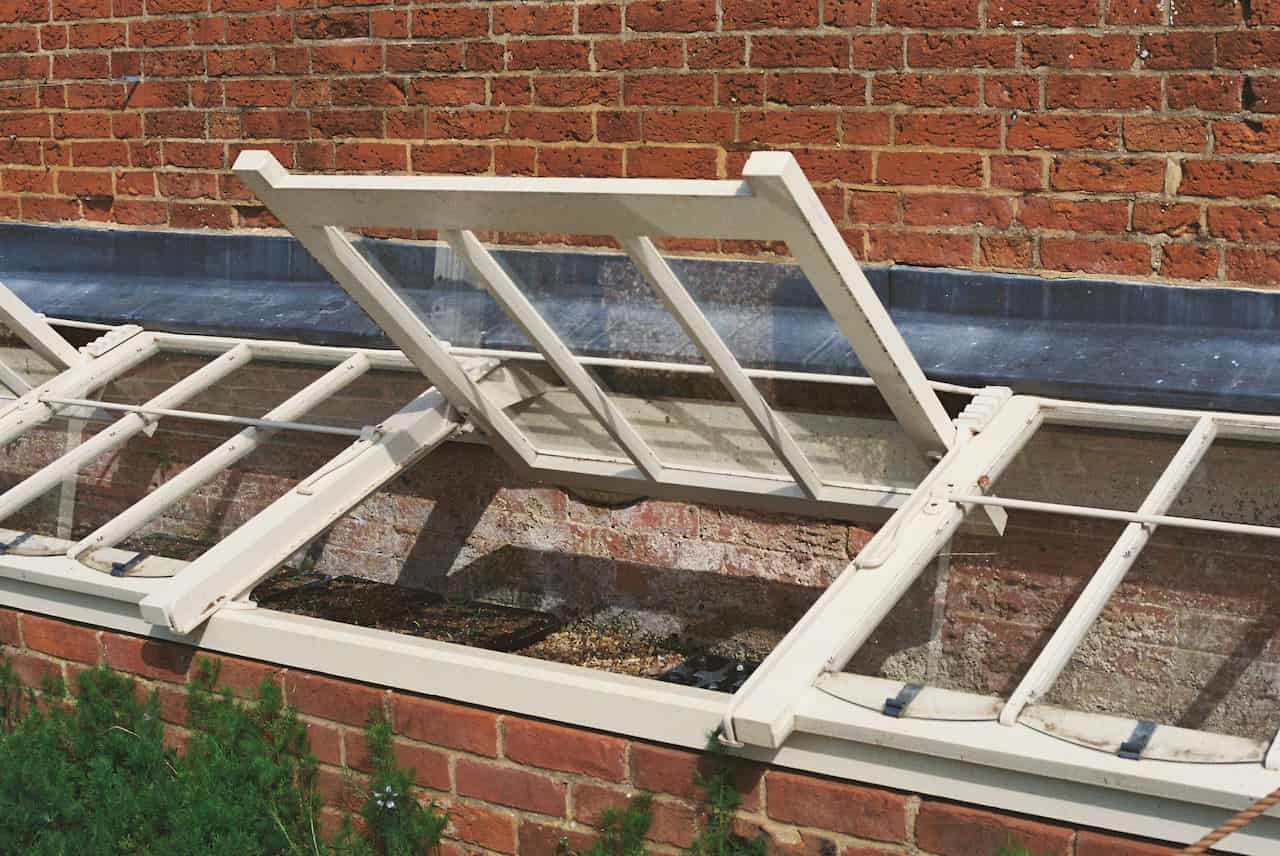
A cold frame should be positioned against a south-facing wall or fence wherever possible. The wall provides reflected heat, additional wind protection and a thermal mass that retains daytime warmth into the night – a cold frame backed by a south-facing brick wall will consistently stay warmer overnight than the same frame in an open position. South-facing also maximises the light available through the lid, which matters particularly in the lower-light months of October through to March when the sun is at its lowest angle.
The frame should sit on level ground and be large enough to be practical. A frame of at least 60cm x 90cm gives enough space to run two or three short rows of salad simultaneously or to harden off a meaningful batch of seedlings. The lid should fit without gaps and ideally be hinged or removable rather than just propped, so ventilation can be controlled precisely. Traditional cold frames use a timber frame with a glass or polycarbonate light – glass transmits more light but polycarbonate is lighter, safer and better insulated. For a kitchen garden where the frame will be heavily used through winter, polycarbonate double-wall panels are the better practical choice.
Ventilation – the critical daily task
Ventilation is the single most important daily management task for a cold frame, and the one most often overlooked. A cold frame closed on a sunny March morning can reach 40 degrees Celsius inside within two hours. Seedlings that survived a January frost without damage will be scorched, wilted or killed entirely by a single closed frame on an unexpectedly warm spring day. The temperature inside a cold frame rises dramatically faster than the ambient air temperature outside because the glazing traps radiant heat – on a bright day even in February, the interior can be 20 degrees warmer than outside.
The practical rule is simple: if the sun is out and the temperature is above 10 degrees Celsius outside, the lid should be propped open. On very warm days the lid can be removed entirely. In autumn and winter the lid stays closed except during mild spells when brief opening reduces the humidity that builds up and encourages fungal disease. Automatic vent openers that react to temperature are available for cold frames and are well worth fitting if you cannot guarantee to check the frame each morning – a single day of overheating can undo weeks of careful growing.
A maximum-minimum thermometer inside the cold frame is invaluable. Checking overnight minimum temperatures tells you immediately whether plants are getting adequate protection in cold spells, and the daytime maximum tells you whether ventilation is adequate on warm days. A basic thermometer costs under £10 and removes all the guesswork from cold frame management throughout the year.
Best crops for a cold frame
The cold frame’s most productive uses are winter salad crops, early spring propagation and the hardening off of seedlings started indoors. For winter cropping, the key is choosing varieties bred specifically for low-light, low-temperature conditions – standard summer lettuce varieties will not perform well in a cold frame in January, but cut-and-come-again mixes including lamb’s lettuce, land cress, rocket, winter purslane and spinach will continue producing pickable leaves through most UK winters with no additional heat at all. Sown in August and September, these crops are well established before temperatures drop and provide genuine harvests from October through to March.
Hardening off seedlings
Hardening off is the process of gradually acclimatising seedlings raised in the warmth of a house or heated greenhouse to the cooler, windier conditions of the open garden. Skip this step and seedlings planted directly outdoors suffer transplant shock – they wilt, stop growing and take weeks to recover, often producing a worse final harvest than later-sown plants that were properly hardened off. The cold frame makes this process simple, reliable and considerably less labour-intensive than the traditional method of carrying trays in and out each day.
The standard cold frame hardening off schedule runs over 10-14 days. For the first three to four days, place seedlings in the closed frame during the day and return them indoors at night. Then leave them in the frame day and night with the lid closed, opening the lid progressively more each day as the week progresses. By the end of the second week the lid should be fully off during the day and the seedlings should be spending cool nights with the lid open or only lightly covered. After this process plants go into the garden with minimal disruption and establish far more quickly than unhardened alternatives.
Month-by-month cold frame calendar
Common problems and solutions
The most common cold frame problems are all preventable with consistent management. Overheating in spring is the most damaging and the most easily avoided – a single warm morning with the lid closed kills more cold frame crops than all winter frosts combined. Slugs are the other persistent issue, drawn to the moist, sheltered environment under the frame. Check for them under the lid and around the base of the frame regularly, particularly in autumn and early spring when slug activity is high and winter salad crops are young and vulnerable.
Never leave a cold frame fully closed on a sunny spring morning without checking it by mid-morning. The temperature inside a closed cold frame on a clear March or April day can exceed 40 degrees Celsius within two hours of sunrise, even when the air temperature outside is only 8-10 degrees. This kills seedlings faster than any frost. If you cannot guarantee to check the frame before 10am, fit an automatic vent opener – they cost around £20 and pay for themselves immediately in crops saved.
Share on socials: