At a glance
Raspberries are one of the most reliably productive soft fruits you can grow in a UK garden. A well-established row of raspberry canes takes up minimal space, requires only one significant annual task – the pruning – and in a good year produces more fruit than most households can eat fresh, with plenty left over for jam, freezing and cooking. They are also remarkably long-lived: a correctly sited and properly pruned raspberry bed can remain productive for fifteen to twenty years with little more than annual feeding and pruning.
The one thing that catches most new growers is understanding the difference between summer-fruiting and autumn-fruiting varieties. They fruit at different times, grow differently and – critically – are pruned at different times using completely different methods. Getting the pruning wrong is the most common reason a raspberry bed stops performing well. Everything else about raspberry growing is straightforward once the variety type is understood. For comparison, growing blackberries follows a similar cane management system, though the pruning timing differs slightly between the two crops.
Summer vs autumn raspberries
Summer-fruiting raspberries produce fruit from June to August on canes grown the previous year. Autumn-fruiting raspberries produce fruit from August to October on canes grown in the current year. This fundamental difference determines everything about how each type is managed – particularly pruning, which removes the wrong canes entirely if the type is misidentified.
Best varieties for UK gardens
Growing one summer and one autumn variety extends the raspberry harvest from July through to October from a single bed. Glen Ample paired with Autumn Bliss is the most reliable combination for most UK gardens – both are widely available, heavy cropping and straightforward to manage.
Planting raspberry canes
Plant bare-root canes from November to March during dormancy. Container-grown canes can be planted at any time but bare-root is significantly cheaper and establishes just as well. Prepare the bed by digging in compost or well-rotted manure generously – raspberries are hungry plants and a well-fed bed pays dividends for years. They prefer a slightly acidic soil (pH 6.0-6.5) and do not thrive on waterlogged ground, so raised beds or well-drained borders are ideal.
Plant canes at 45cm spacing in rows, with rows 1.8m apart if planting more than one row. Set the canes at the same depth as they were previously growing – the soil mark on the cane is visible. Firm in well and water thoroughly. After planting, cut all canes back to 25cm above ground level to encourage strong new growth from the base rather than weak top growth from the existing cane.
Support and training
Summer raspberries need a permanent wire support system. Knock in stout posts at 3m intervals along the row and run three horizontal wires at 60cm, 90cm and 150cm height. As canes grow through the season, tie them in to the wires every 30cm using soft garden twine. This keeps the row narrow and accessible, maximises light to each cane, and prevents the canes from blowing over and snapping in wind.
Autumn raspberries are shorter and many varieties – Autumn Bliss in particular – are self-supporting enough not to need wiring in sheltered gardens. In exposed positions a single wire at 90cm to which canes are loosely tied is sufficient.
Pruning – the essential difference
Summer raspberry pruning: immediately after the last fruits are picked in August, cut all the canes that have just fruited down to ground level. These are the brown, woody canes – the ones that carried the fruit. Leave the new green canes that have grown alongside them all summer. Tie these new canes in to the wires and they will carry next year’s crop. In late winter, tip the canes back to just above the top wire to remove any frost-damaged tips.
Autumn raspberry pruning: in February, cut every single cane to ground level – no exceptions. Every cane in the row goes, including any that look healthy. The new canes that grow from the base in spring will fruit in their first year from August onwards. This radical approach produces the strongest possible new growth and the heaviest crop. Do not leave any canes over winter thinking it will produce extra early fruit – it produces weaker growth and a smaller total crop.
Thin new canes to 8-10 per metre in early summer. Raspberry beds naturally produce more canes than needed. Overcrowded canes compete for light and nutrients, producing smaller fruit and increasing disease risk. In May or June, remove the weakest canes in each section leaving the strongest 8-10 per metre of row spaced evenly. The removed canes can be potted up and given away or used to extend the bed.
Feeding and care
Apply a balanced fertiliser in late February and a high-potassium feed such as sulphate of potash in May to support fruit development. Mulch generously each spring with compost or well-rotted manure – this feeds the soil, suppresses weeds and retains moisture through summer. Raspberries have shallow roots and suffer in dry conditions during fruit development; water during dry spells in June and July to maintain fruit size and flavour.
Harvesting
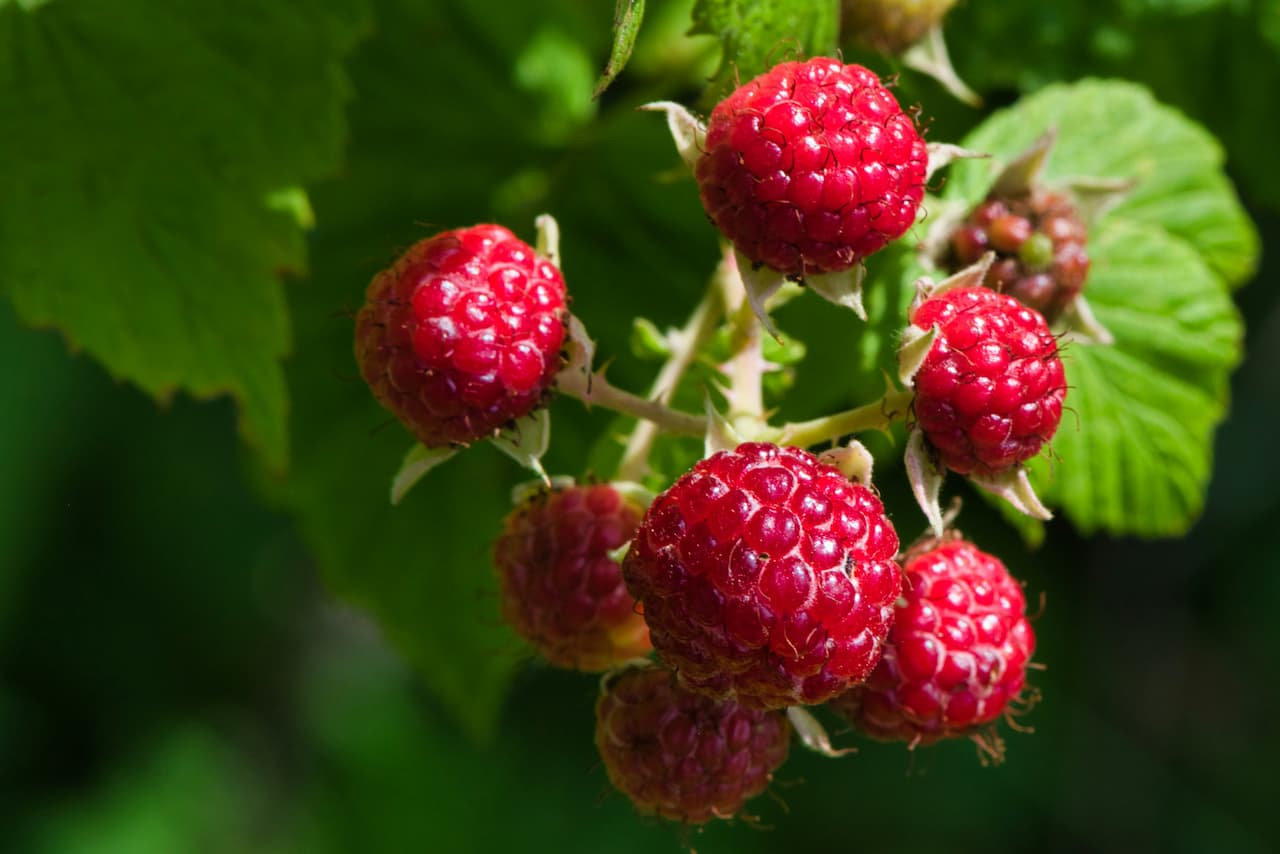
Pick raspberries when they are fully coloured, slightly soft and come away from the central plug with the lightest touch. Fruit that requires any pulling is not yet fully ripe. Raspberries do not ripen after picking – if they resist, leave them another day. Pick every two to three days during the harvest season as fruit ripens unevenly along the cane. Raspberries deteriorate quickly once picked – use within two days or freeze immediately by spreading on a tray to freeze individually before bagging.
Common problems
Raspberry beetle is the most common pest in UK gardens – the larvae tunnel into ripening fruit, leaving a small grub inside. Pheromone traps in May reduce adult populations and therefore larval numbers. Birds take ripening fruit rapidly – netting the row as fruit begins to colour is the only reliable protection. Cane diseases including spur blight and cane spot cause purple spotting and die-back on canes; removing and destroying affected canes promptly and improving airflow by thinning prevents spread.
Raspberry mosaic virus causes mottled, distorted foliage and progressively weaker growth over several years. It is spread by aphids and has no cure – affected plants must be dug out and replaced with certified virus-free stock, which all reputable suppliers sell. Never replant on the same site for at least five years after a viral problem, and control aphids on nearby plants to reduce transmission risk.
Share on socials: