At a glance
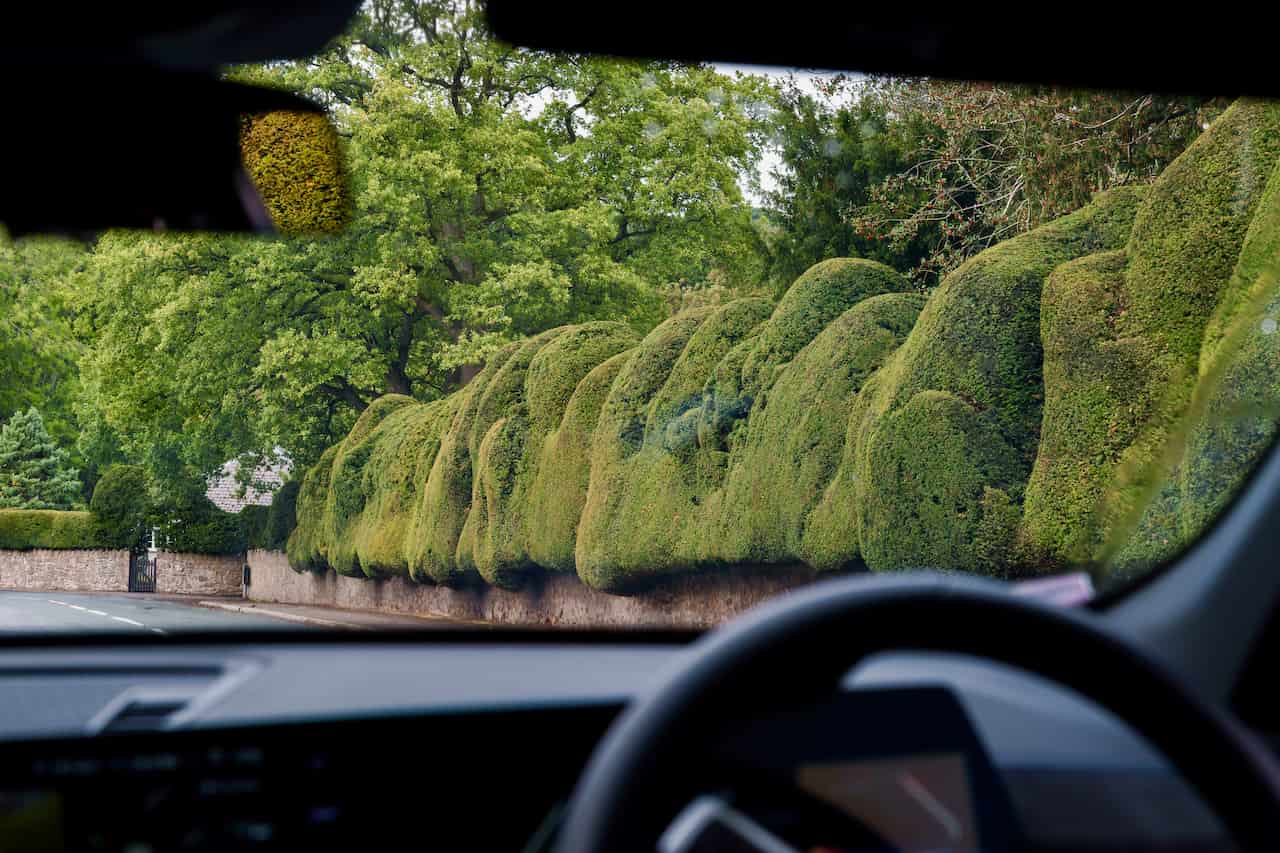
People plant leyland cypress because it’s fast and then spend the next twenty years fighting it. People avoid yew because it’s “slow” and miss out on the best hedging plant in British gardening. The slow reputation is a comparison problem. Compared to leyland, yew is slow. Compared to practically everything else worth planting, it grows at 20 to 40 centimetres a year once settled in, holds any shape you give it with one clip a year, regenerates from hard cutting better than any other conifer, and will still look perfect in a hundred years. That is not a slow plant. That is a plant that rewards you properly.
The other thing most people don’t realise is how tolerant it is. Full sun or deep shade, chalk or clay, acid or strongly alkaline. Yew handles all of them. The one absolute is drainage. Waterlogged soil kills it, not gradually but decisively. Get that right and almost nothing else goes badly wrong.
Where yew grows and where it doesn’t
Yew will grow on chalk, sandy soil, clay and loam. It genuinely doesn’t mind as long as it drains. On thin chalk downland where most shrubs struggle for moisture, yew is entirely at home. On clay it’s fine as long as the clay doesn’t sit wet over winter, which in practice means improving the drainage before planting rather than hoping for the best.
Shade tolerance is one of yew’s exceptional properties. Very few hedging plants will make a dense, clippable hedge in deep shade. Yew will. The foliage goes darker and slightly more blue-green in deep shade and the growth rate drops a touch, but it holds its form and stays dense. In full sun the growth is faster and the colour a warmer mid-green. If you have a north-facing position or a run under trees where nothing else will make a proper hedge, yew is the answer.
The drainage point is worth being blunt about. Yew killed by Phytophthora root rot, which is what happens when roots sit in wet soil, dies completely and leaves infected soil behind. You can’t just replant the same spot. Check drainage before you plant. If there’s any doubt, improve it first: a drainage trench backfilled with gravel, a raised bed, or breaking up compacted subsoil with a fork can make all the difference. This is a lot cheaper than replacing a dead hedge two years later. Soil pH barely matters by comparison. Yew is comfortable anywhere from mildly acid to strongly alkaline. Rich, heavily fertilised soil is actually counterproductive, pushing growth faster than the plant can lignify properly and producing softer stems more prone to snow damage. Lean soil produces better yew.
Choosing which yew
Taxus baccata is the one you want for a hedge or any topiary work. This is the common yew, the plant that’s been cut into great garden structures and churchyard forms for centuries. Nothing clips with the same precision or holds its shape as well over decades. For hedging there’s no real alternative worth considering.
The other varieties are specimen plants, each with a distinct character that suits a specific use. They’re not better or worse than common yew. They’re different jobs entirely.
Semperaurea in particular is worth understanding before you plant it. The name means “always gold” and it earns that. The foliage holds its yellow-gold year-round rather than just in the spring flush, and in winter it takes on a warm orange tinge. It grows broader than it grows tall, so give it the space it needs rather than trying to constrain it into an upright form it doesn’t want to take. As a specimen in a lawn it’s genuinely striking. As a low spreading boundary along a path it works well. The key thing is to work with its naturally wide, spreading character. It isn’t a tall hedge plant and treating it like one will always look wrong.
Planting
Bare-root yew is available from late autumn through to early spring and I’d always use it for a new hedge if I can. It establishes faster than container-grown, costs significantly less, and the plants settle in with less transplanting shock because the roots haven’t adapted to life in a pot. Plants in the 60 to 90 centimetre range are the sweet spot, big enough to look like something immediately and small enough to establish quickly. Anything larger than about a metre is going to sit there looking sorry for itself for a season while the root system catches up.
Container-grown yew is available year round and is perfectly fine. It’s the better choice outside the bare-root window. The planting method is identical. Just make sure the compost around the rootball is genuinely moist before you put it in, not just damp on the outside.
Before planting, work the whole planting line rather than just individual holes. Yew roots travel a long way as the plant matures and you want decent soil throughout the area. Break up compaction at the base of each hole. Plant at the same depth the plant was growing at previously. Look for the soil mark on bare-root stems or the top of the rootball on container plants. Planting too deep is a much more common error than planting too shallow. Burying the base of the stem encourages collar rot, and a yew killed by collar rot is as dead as one killed by waterlogging. The root collar needs to sit right at soil level.
Water in properly after planting and keep the planting line moist through the first season. On free-draining soils this matters particularly in summer. Yew is drought tolerant once established but newly planted specimens haven’t had time to develop the deep root system they need to find their own water.
A mulch does more work than most people give it credit for. Bark or compost over the planting line, 50 to 75mm deep and kept clear of the stems, holds moisture, suppresses competing weeds and gradually improves the soil as it breaks down. On free-draining chalk or sandy soils it’s the difference between a hedge that struggles through its first summer and one that doesn’t.
Feeding and first years
Yew doesn’t want much. A balanced granular fertiliser in the first spring or two after planting is enough to support establishment. After that, on most soils, it genuinely doesn’t need feeding. Don’t pile nitrogen on it trying to push faster growth. The result is soft, sappy stems that don’t clip cleanly and are more prone to damage. Yew at its best grows steadily, not explosively. On very thin chalk soils essentially free of organic matter, a light annual mulch of garden compost around the base is more useful than fertiliser. It builds organic matter slowly and improves moisture retention over years.
Once established, usually after the second or third growing season, yew is genuinely self-sufficient. It finds its own water, it doesn’t need feeding, it just grows. A box hedge needs feeding, treating for blight, and clipping twice a year. A yew hedge needs one clip in August and nothing else. That trade-off becomes more appealing every season.
Clipping: when and how
One cut a year. That is what a maintained yew hedge needs, and it’s one of the things that makes it so much more manageable than the alternatives. The same hedge in privet needs four cuts. Box needs two. Yew needs one, and the result is sharper and holds longer than either.
The best time to clip is late summer, mid-July through to the end of August. By then the main flush of new growth has fully hardened up, which means the cut is clean and the clipped face looks neat rather than brown and ragged. A late summer clip also gives the freshly cut surface time to settle before the cold weather arrives, and the hedge goes into winter looking its best. Clipping in early spring before growth starts is also possible, but the window is narrower than most people think. Miss it by a week or two in a warm spring and you’re clipping into soft new growth, which is messier and the results show for months.
Young hedges need formative work for the first couple of years. Trim the sides to encourage density but let the top grow. Once the hedge reaches the height you want, clip the top flat and hold it there. The mistake is letting the top run three or four feet above where you actually want it before cutting back. That’s a harder cut to make and while yew will take it, you’re creating unnecessary work.
The cut face angle is something most people never think about until they’ve got a problem. The hedge should be very slightly narrower at the top than at the bottom, what’s called a batter. It doesn’t need to be dramatic, five degrees is enough. Without any batter, the upper growth eventually shades the lower growth and the base of the hedge loses its foliage. A lot of people assume that a thin base is just what happens with an old yew hedge. It isn’t. It’s a geometry problem that could have been avoided from the start.
Power hedge trimmers are fine for long straight runs. For shaped work, tight corners, curved forms or topiary, hand shears give you control that a vibrating motor can’t match. The feedback through the blades tells you exactly where you are in the shape. For architectural or precise work, hand shears aren’t optional.
Renovating an old yew hedge
Yew does something no other conifer can reliably do: it regenerates from hard cutting back into old bare wood. If you’ve inherited a hedge that’s massively overgrown, grown out sideways, or just got away from whoever had it before, you can cut it back to the bare structure and it will grow again. This isn’t a last resort with uncertain results. It’s a reliable property of the species that’s been used deliberately in formal gardens for centuries.
The right approach is two stages. Year one, cut one face of the hedge hard back to the bare structure and leave the other side alone. Year two, cut the other side back. Doing both sides at once is possible and yew will survive it, but the two-stage approach is less stressful on the plant and keeps the hedge working as a boundary throughout. New growth fills back in over two or three seasons.
The timing matters. Hard renovation cuts work best in March or early April, just as the plant is coming out of winter dormancy and breaking into new growth. The plant’s energy is going upward at that point and it responds by breaking dormant buds along the cut stems. Don’t attempt this in summer. Cutting hard into old wood when the plant is under heat stress and in full growth produces a much weaker response and risks sections dying back rather than regenerating.
Reducing the top of an overgrown hedge is slightly different. The top grows more slowly than the sides and you can bring it down more gradually, a third per year over two or three seasons rather than the dramatic single cut you’d use on a face. Reduce the height incrementally and keep the sides maintained, and the proportions come right over time without ever needing the bare-structure cut.
Never hard-renovate in summer. March or April only. The same cut that produces vigorous regrowth in spring produces a weak response and die-back risk in July or August. The timing isn’t a preference. It’s the difference between renovation and damage.
Pests and problems
Yew is remarkably trouble-free by the standards of most hedging plants. The problems that do occur tend to be serious, and knowing the symptoms is what separates a recoverable situation from a dead hedge.
Yew and toxicity
This needs saying plainly. Yew is toxic. The foliage, bark and seeds all contain taxine alkaloids that are dangerous to humans, horses, cattle, dogs and most other mammals. The red flesh of the berry can be eaten in small quantities, which is why birds take it readily, but the seed inside the fleshy aril is toxic. Poisoning acts quickly and can be fatal even with relatively small quantities, particularly in horses.
The practical implications aren’t complicated: collect clippings and dispose of them rather than leaving them where livestock could reach them, and be aware if you have young children who might eat the berries. Fresh clippings are more dangerous than dried material because the toxins remain potent and palatability to animals is higher when the foliage is fresh. Bag and bin them, or compost in a sealed system if you have one.
What this doesn’t mean is that yew is unsuitable for domestic gardens. It’s grown in British gardens, churchyards and estates alongside people and animals for over a thousand years without being a practical disaster. Awareness and sensible clippings management is what’s needed, not removal or avoidance. Berries only form on female plants. Standard Taxus baccata hedges are a mix of male and female, so you’ll see berries on some plants in autumn but not all. If berry risk is a specific concern, they can be removed by hand when they form, or the hedge clipped before they develop fully.
Share on socials: