At a glance
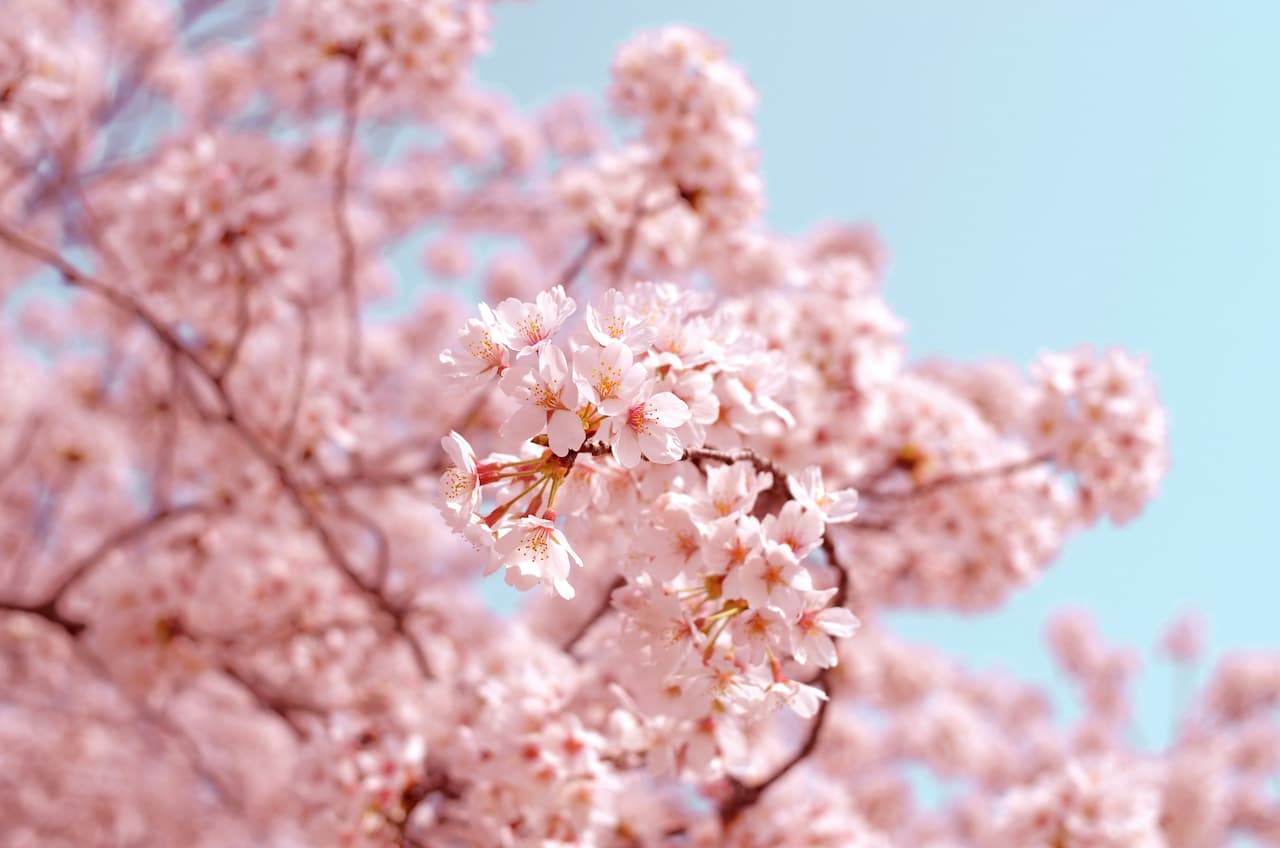
Cherries are one of the most rewarding fruit trees a UK gardener can grow. The blossom in April is among the best of any fruit tree, the fruit in July is genuinely incomparable to anything bought in a supermarket, and modern dwarfing rootstocks have made it possible to grow a productive cherry tree in almost any garden that has a south or west-facing position and a square metre of soil. What the cherry requires in return is an understanding of its particular demands – correct pruning timing, effective netting against birds, and realistic expectations about what the UK climate can and cannot deliver.
The two decisions that determine success or failure before a single tree is planted are rootstock and variety. Get those right and cherries are far more straightforward than their reputation suggests. Get them wrong – buying an unknown rootstock variety from a supermarket trolley, or planting a sweet cherry in a north-facing position without a pollination partner – and the results will disappoint regardless of how well the tree is subsequently cared for. This guide covers both of those decisions in full before moving to the practical business of planting, pruning and harvesting.
Sweet vs acid cherries and best varieties
The first decision is not which variety to choose but which type – sweet or acid. Sweet cherries are the ones eaten fresh from the tree, with rich, glossy fruit in red, near-black or occasionally yellow. They need more sun, more warmth during ripening and a longer season than acid cherries, which limits their reliable performance to southern and central England, and to well-sited positions in the Midlands. In Scotland, northern England and shaded or exposed positions in any part of the UK, sweet cherries are a gamble. Acid cherries, of which Morello is the definitive example, are an entirely different proposition – they tolerate north-facing walls, partial shade and the shorter cooler summers of northern England and Scotland, and they crop reliably where sweet cherries would fail entirely. Their fruit is used for cooking, jam and preserves rather than fresh eating, which is a limitation for some gardeners but not a practical one for anyone who actually uses their fruit.
Stella is the right starting point for most UK growers attempting sweet cherries for the first time. It is self-fertile, which removes the pollination problem entirely, it crops reliably in most UK summers without requiring exceptional warmth, and the dark red fruit has good flavour if harvested at full ripeness. Sweetheart follows a few weeks later in the season, giving a useful extension to the cherry harvest if both are grown, and it has notably good resistance to rain splitting. Kordia produces the finest quality sweet cherries available to UK growers but it requires a compatible pollination partner from the same flowering group – the investment in two trees is justified by the fruit quality if the garden space exists. Morello is the correct choice for north-facing walls, for gardeners who primarily want cherries for cooking, and for anyone wanting the most reliably productive cherry regardless of summer weather.
Rootstocks and tree size
Cherry trees grown on their own roots are large – too large for the vast majority of domestic gardens. Every cherry sold for garden planting is grafted onto a rootstock that determines the ultimate tree size, and this choice has more influence on long-term practicality than the variety selected. Gisela 5 is the standard dwarfing rootstock for garden cherries and the choice of most UK fruit nurseries for domestic planting. On Gisela 5, a cherry tree reaches around 3-4 metres in height, comes into bearing within 2-3 years of planting, and stays small enough to net against birds without significant difficulty. The limitation of Gisela 5 is its need for reasonable soil – on very poor, dry or compacted ground it can struggle to establish and may produce a weak-growing tree that never reaches its productive potential.
Colt rootstock produces a larger tree of around 4-5 metres and is considerably more tolerant of difficult soil conditions than Gisela 5. It takes slightly longer to come into bearing but produces a sturdier, longer-lived tree that is less demanding about soil quality. For a free-standing tree in an open garden where netting the top of the canopy is less critical, Colt is a reasonable alternative. The rootstock naming used for cherries is less standardised in garden centre labelling than for apples, where M27, M9 and MM106 are universally recognised designations – when buying a cherry tree, always confirm the rootstock name explicitly rather than relying on size descriptors like “dwarf” or “semi-vigorous”, which different suppliers use inconsistently.
Pollination
Pollination is where cherry growing catches most first-time growers out. Unlike apples, where the rules are straightforward and most varieties will cross-pollinate with any other apple flowering at the same time, cherries operate on two separate compatibility systems simultaneously. The first is flowering group – cherries must flower at the same time to pollinate each other, so two varieties from different flowering groups produce no cross-pollination benefit even when grown side by side. The second is genetic compatibility – some cherry varieties, even when they flower simultaneously, carry a genetic incompatibility that prevents pollination. The simplest way to sidestep the entire complexity is to start with self-fertile varieties. Stella, Sweetheart and Morello are all self-fertile and will set a reliable crop without any partner. If growing a non-self-fertile variety such as Kordia, check both the flowering group and the compatibility group with the nursery before buying a partner variety.
Bees are essential even for self-fertile cherries. Self-fertility means a variety can pollinate itself, but pollen still needs to be moved between flowers by insects. Even the most reliable self-fertile variety will produce a significantly reduced crop in a cold, wet April when bee activity is low. Avoid any insecticide application during blossom period, and if growing cherries under cover, open the structure fully on warm afternoons during flowering to allow free bee access.
Planting and site requirements
Sweet cherries need three things from their position: sun, shelter and drainage. They flower in April, often before the last frost date in many parts of the UK, and a single late frost event during blossom can wipe out an entire season’s crop. A south or south-west facing position away from frost pockets is the starting point. Any low-lying ground where cold air settles on still spring nights should be avoided for sweet cherries. A gentle south-facing slope, a wall-trained position against a south-facing fence, or any position that benefits from heat reflected off a warm surface gives the combination of earlier warming in spring and frost drainage that reduces the blossom-frost risk. Acid cherries are entirely different – Morello tolerates a north-facing wall position that would produce almost nothing from a sweet cherry, and it is the single best fruit tree for genuinely difficult north-facing situations.
Both types prefer well-drained, moderately fertile soil with a pH of around 6.5. Waterlogging is fatal over time – roots sitting in wet soil through winter are susceptible to root rot and will produce a declining tree regardless of how well other conditions are met. On heavy clay soils, incorporate grit at planting to open up the soil around the root zone and plant on a slight rise if the ground is prone to water sitting after heavy rain. Plant bare-root trees between November and March. Stake firmly on planting – Gisela 5 trees in particular are not strongly anchored and will rock in the root zone in wind without support for the first three to four years. Maintain a weed-free, grass-free area of at least 60-90cm diameter around the base mulched with garden compost for the first several years. Root competition from grass in particular significantly reduces the growth rate of young cherry trees, and getting the first two seasons right determines how quickly the tree comes into bearing.
Pruning cherries
The timing of cherry pruning is not a preference but a requirement with significant consequences for getting it wrong. Cherries are highly susceptible to silver leaf disease, a fungal infection caused by the pathogen Chondrostereum purpureum. The spores are active in autumn and winter, meaning any pruning wound made between October and March is at serious risk of infection. The infected wood develops a characteristic silver sheen on the leaves – not to be confused with the natural gloss of healthy cherry foliage – and if unchecked the infection progresses branch by branch until the tree dies. The correct response to silver leaf infection is to cut back the affected branch to at least 15cm below where the internal staining stops, sterilising the saw between cuts. Prevention is entirely straightforward: prune only in summer, between June and August, when the tree is in active growth and natural wound callusing happens rapidly enough to seal the cut before spores can colonise it. This summer-pruning rule applies equally to plums and all other stone fruit for the same reason.
On fan-trained cherries against a wall, summer pruning is more detailed. As new sideshoots develop from the trained framework branches, pinch them back to five or six leaves in June. After harvest in late August, cut these same shoots back further to two or three leaves. This keeps the fan framework open, encourages fruiting spurs to develop on the retained wood, and prevents the trained form being overwhelmed by new extension growth each season. Any new extension shoots that are needed to expand the fan framework should be tied in to fill gaps; all other extension growth is removed. On established fan-trained trees the aim is to maintain the shape and renew fruiting wood, not to increase the size of the tree.
Never prune cherries between October and March. Silver leaf disease spores are at their most active through autumn and winter. A pruning wound made during this period has a high probability of infection. Infected trees show a silver sheen on the foliage and die back branch by branch if untreated. Always prune in June, July or August when wounds callus rapidly and the infection risk is at its lowest.
Birds, rain splitting and other problems
Birds are the most reliable and infuriating challenge of cherry growing in a UK garden. Blackbirds, starlings and wood pigeons will strip a tree of ripe and near-ripe cherries within hours of discovering them, and they find the tree reliably. The only fully effective solution is netting – a fine-mesh net thrown over the tree or fruit cage as the cherries begin to colour, typically two to three weeks before full ripeness. The mesh must be fine enough to prevent a bird pushing its head through – coarse mesh provides no real protection and has the additional problem of trapping birds inside the net. On Gisela 5 trees kept to 3-4 metres, netting is practical and takes a few minutes with help. On Colt-rooted trees approaching 5 metres, netting becomes progressively harder and is a genuine argument for keeping cherries on the most dwarfing rootstock available.
Rain splitting is the second major problem and is largely beyond the gardener’s control. As cherries approach ripeness, their skins absorb water rapidly during wet weather, causing the fruit to split and exposing the flesh to brown rot. Split cherries deteriorate within 24 hours and cannot be stored. The main mitigations are choosing split-resistant varieties – Sweetheart and Kordia have significantly better resistance than Stella – harvesting promptly the moment fruit reaches full colour rather than leaving it on the tree in the hope of another day’s ripening, and accepting that some splitting in wet summers is an inherent feature of growing cherries in the UK climate rather than a failure of technique. Under polytunnel cover or a permanent fruit cage roof that excludes rain during ripening, splitting is almost eliminated entirely – an approach that is worth considering for anyone growing cherries seriously.
Share on socials: