At a glance
Courgettes are one of the most productive vegetables you can grow in a container, and they are far more suited to pot growing than their sprawling reputation suggests – provided you choose the right variety and meet their basic needs consistently. A compact bush courgette in a 40-50cm pot on a sunny patio will produce fruit from July to October, cropping prolifically enough that two or three plants is typically more than a household can use fresh. They are the ideal crop for anyone who wants meaningful vegetable harvests from a small patio, balcony or courtyard space.
The two most important factors in container courgettes are pot size and watering. Too small a pot and the roots cannot sustain the enormous leaf area the plant needs to photosynthesize and fruit – courgettes are greedy, fast-growing plants and they need a generous root run. And because containers dry out far faster than open ground, particularly in summer heat, consistent watering is non-negotiable – a courgette in a pot that dries out significantly will drop its flowers and set back fruiting by days even in an otherwise ideal summer. Getting these two things right makes container courgette growing straightforward and very rewarding. Like chillies in pots, the key is treating the container as a high-maintenance environment rather than a set-and-forget one.
Best varieties for pots
Patio Star F1 is the variety bred specifically for container growing – it has a genuinely compact, upright habit that keeps the plant within a manageable footprint while still producing an excellent yield. Buckingham F1 is another compact variety with similar patio credentials and a very reliable cropping record in UK conditions. Both are the first choices for anyone growing courgettes on a balcony or in a limited space. Defender F1 is a widely available, reliable variety that works well in larger containers of 50cm or more but is too vigorous for smaller pots. For something different, Soleil F1 produces vivid yellow courgettes on a compact plant – the flavour is milder and slightly sweeter than green types and the colour is striking in a salad.
Choosing the right pot and compost
The minimum viable pot size for a single courgette plant is 40cm diameter and 30cm deep – approximately 40 litres of compost volume. This is the absolute minimum; a 50cm pot holding 60-70 litres of compost produces a significantly more vigorous and productive plant. Do not be tempted to use a smaller pot with a view to potting on later – courgettes establish quickly and resent root disturbance, so the final pot should be in place from the time of planting out. Terracotta pots look attractive but dry out faster than plastic – if using terracotta, line the inside with polythene (leaving the drainage holes clear) to slow moisture loss. Large plastic growing bags are also excellent and hold moisture well.
Use a peat-free multipurpose compost enriched with slow-release fertiliser granules mixed in at planting time. Courgettes are heavy feeders and the nutrient content of standard multipurpose compost is depleted within six to eight weeks by an actively growing plant. Adding a generous handful of slow-release fertiliser granules at planting provides a sustained background nutrition level, with liquid feeding beginning from the time the first flowers appear. Place the pot in the sunniest available position – courgettes need at least four to six hours of direct sun daily for good fruiting and will crop poorly in shade.
Sowing and planting out
Sow courgette seeds indoors in late April or May, one seed per 9cm pot on its side (to prevent water pooling on the flat seed surface and causing rot) at 2cm depth. Place on a warm windowsill at 18°C or above – germination takes three to seven days in good conditions. Grow on in a warm, bright position until the plant has two to three true leaves and the roots are just beginning to circle the base of the pot. This typically takes three to four weeks from sowing.
Do not plant outside until after the last frost – in most UK regions this means late May at the earliest, and June is safer. Courgettes are very cold-sensitive and a cold check at the seedling stage sets the plant back significantly. Harden off over a week before the final planting – placing outside during the day and bringing in at night – before committing to the pot permanently. Water the plant in well after planting and place in the final sunny position. The best container vegetables share courgettes’ need for a generous pot and a sunny aspect.
Watering, feeding and seasonal care
Hand pollination and harvesting
Courgettes produce separate male and female flowers on the same plant – the female flower has a tiny immature courgette behind it at the base, the male is on a plain stem. In a garden, bees move pollen from male to female flowers reliably. In a pot on an urban balcony or in a position with limited pollinator access, pollination can be poor and fruit development fails – the tiny courgettes turn yellow and drop off shortly after the flower opens. Hand pollination solves this entirely.
To hand-pollinate, take a clean, dry artist’s paintbrush or simply pick a male flower, remove the petals and brush the pollen-covered stamen gently inside an open female flower. Do this in the morning when both flowers are fully open and the pollen is fresh. One male flower typically contains enough pollen to pollinate three or four female flowers. Once successfully pollinated, the tiny courgette swells visibly within two to three days. Harvest fruits when they are 10-15cm long – at this size they are at their most flavoursome and tender, and regular picking every two to three days keeps the plant setting new fruits continuously. Allowed to swell to marrow size, the plant stops producing entirely. The same harvesting principle applies in a raised bed as in a container.
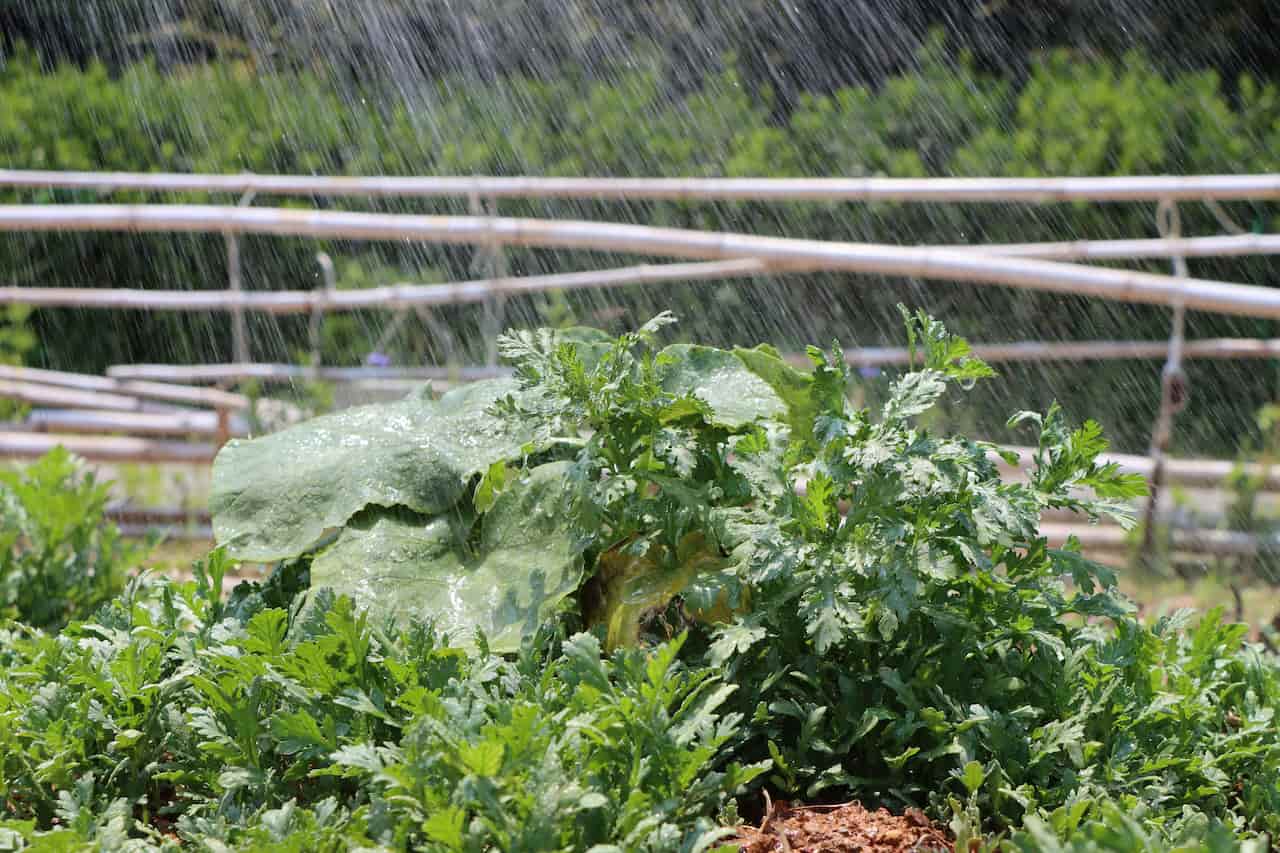
Push a plastic bottle into the compost as a watering reservoir. Cut the bottom off a 2-litre plastic bottle, push the neck end into the compost at an angle near the root zone, and fill the bottle with water. The water drains slowly directly to the root zone, dramatically reducing the frequency of watering needed in hot weather and ensuring that water reaches the roots rather than running off the surface. This improvised wick system is particularly useful if you are away for a day or two and cannot water manually.
Common problems and solutions
Share on socials: