At a glance
Blackberries are one of the most productive and least demanding fruiting plants you can grow in a UK garden. A single established plant will yield several kilograms of fruit from late August through October, requiring little more than annual pruning and something to train the canes against. They tolerate poor soil, partial shade and neglect that would see most fruiting plants fail, and in a good year the harvest from even a modest planting can fill the freezer with enough fruit for crumbles, jams and cordials through the whole winter.
Most UK gardeners are familiar with picking wild blackberries from hedgerows, but garden varieties are substantially superior in fruit size, consistency and – in the case of thornless types – ease of harvesting. Growing your own also extends the season considerably: early-fruiting varieties start producing in late July while late varieties carry on into October, compared to the short wild season in most areas. Blackberries share similar training and pruning requirements with raspberries and the two crops complement each other well in both growing space and harvest timing.
Why Grow Blackberries
The case for blackberries in a UK garden is primarily one of productivity and ease. Few fruit crops deliver as much harvest for as little ongoing effort once established. They are fully hardy throughout the UK, need no winter protection, tolerate a wide range of soil types and aspects, and once the annual pruning routine is established, take perhaps an hour of attention per plant per year. The fruit freezes exceptionally well and retains good flavour and colour, making a large autumn harvest genuinely useful rather than overwhelming – a well-stocked freezer in October represents months of crumbles, sauces and cordials through the winter.
They are also one of the few fruiting plants that produce acceptably in partial shade. While a sunny position gives the heaviest and sweetest crop, blackberries trained against a north-facing fence will still produce a useful harvest – a significant advantage in smaller gardens where sunny wall space is limited and already committed to other crops. The combination of shade tolerance, low maintenance and exceptional yield makes blackberries one of the most space-efficient fruit choices available to UK gardeners.
Best Varieties for UK Gardens
For most UK gardeners, Loch Ness is the best starting point. It is thornless, compact enough to manage on a 2-metre fence section, crops reliably and produces large, flavourful fruit from August into September. Adding an early variety like Bedford Giant and a late variety like Oregon Thornless extends the blackberry season across three months from a small planting – a simple strategy that gives a far longer harvest window than a single variety provides.
Planting Blackberries
Plant bare-root blackberries from November to March, or container-grown plants at any time of year. Bare-root plants are significantly cheaper and establish just as well – they are the better choice for most gardeners. Dig a planting hole wide enough to accommodate the roots without cramping, plant at the same depth as previously grown, firm in well and water thoroughly. After planting, cut all canes back to 25cm above ground level. This looks severe but forces the plant to put energy into root establishment in its first season rather than fruit production, producing a far stronger and more productive plant from year two onwards.
Blackberries are unfussy about soil type and tolerate clay, sandy and loamy soils equally well, provided drainage is reasonable. They prefer a slightly acidic to neutral pH of around 6.0-6.5. Incorporate some compost or well-rotted manure into the planting hole to improve soil structure, but avoid rich nitrogen fertiliser at planting as this pushes soft leafy growth at the expense of root establishment. Spacing depends on the variety – vigorous types need 3-4 metres between plants, while compact varieties like Waldo and Loch Ness can be planted 2-2.5 metres apart.
Training and Support
Blackberry canes need support and training to keep them manageable and productive. The most practical system for most UK gardens is horizontal wires fixed to posts or a fence at 45cm, 90cm, 135cm and 180cm height. Canes are tied into these wires as they grow, spreading them out to maximise light exposure and air circulation through the plant. Good airflow through the trained canes is genuinely important – overcrowded, untrained canes are significantly more susceptible to fungal diseases, particularly in wet summers. A well-trained plant against a fence section is also easier to net against birds at harvest time than a sprawling unpruned tangle.
Pruning – the Essential Annual Task
Blackberries fruit on canes produced the previous year. After harvest in autumn, the canes that have fruited will not produce fruit again and must be cut out entirely at ground level. This is the core annual pruning task and it is non-negotiable – leaving old canes in place creates a tangled, disease-prone thicket that reduces yields and becomes increasingly difficult to manage with each passing year. The whole process takes 30-45 minutes per plant and transforms an overgrown tangle into a clean, well-organised fruiting structure ready for the following season. Cut fruited canes with loppers or a pruning saw for thicker stems, removing them completely rather than cutting to a stub.
You can identify fruited canes by their peeling, woody bark and the stumps where fruit trusses were attached. New canes are smooth-barked and flexible. If in doubt about whether a cane has fruited, trace it back to the base – canes that fruited this season will have dead tip growth and multiple lateral stubs. Removing all fruited canes every year, without exception, is what keeps a blackberry planting productive indefinitely rather than declining into a tangled mass of old wood.
Harvesting
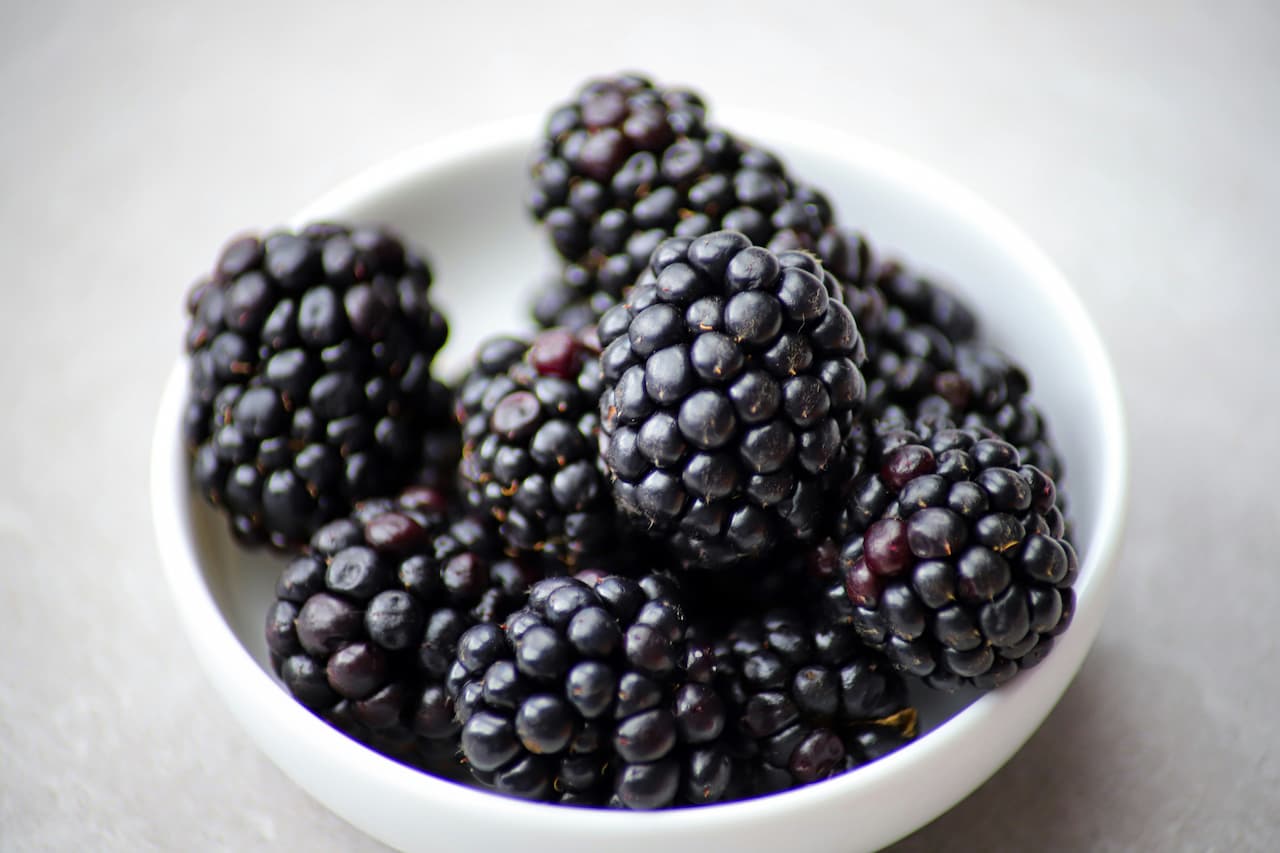
Blackberries are ready to harvest when they are fully black, slightly soft to the touch and come away from the plant with gentle pressure. A berry that requires pulling is not yet ripe. Taste is the best guide – fully ripe blackberries are sweet with no astringency, while underripe fruit is sour. Pick every two to three days during the fruiting season as berries ripen unevenly along the cane, with those at the tip of each lateral ripening before those at the base.
Blackberries do not keep well once picked – use within two days at room temperature or refrigerate for up to five days. They freeze extremely well: spread on a tray to freeze individually before transferring to bags, which prevents them clumping together and allows you to take out exactly the quantity needed for a recipe. A large autumn harvest frozen this way is arguably more useful than the same fruit fresh, giving access to garden-quality blackberries through the entire winter.
Common Problems
Share on socials: