At a glance
Chafer grubs are the larvae of chafer beetles and are one of the most destructive lawn pests in the UK. Unlike leatherjackets, which cause patches of dead turf that can be lifted cleanly, chafer grub infestations often produce their most visible damage not from the grubs themselves but from the secondary assault of birds, badgers and foxes that dig up the lawn to reach the grubs below. A lawn that looks as if it has been systematically ripped up overnight is usually the work of a fox or badger responding to an underlying chafer grub infestation rather than the grubs alone.
Understanding this two-stage damage pattern is essential for an effective response. Nematodes control the grubs themselves. Mesh or temporary fencing prevents the secondary animal damage while the nematodes do their work. Both elements are needed for a complete response to a serious infestation. The same nematode-based approach is also the most effective solution for leatherjacket control, though the two pests require different nematode species applied at slightly different times of year.
Identifying Chafer Grubs
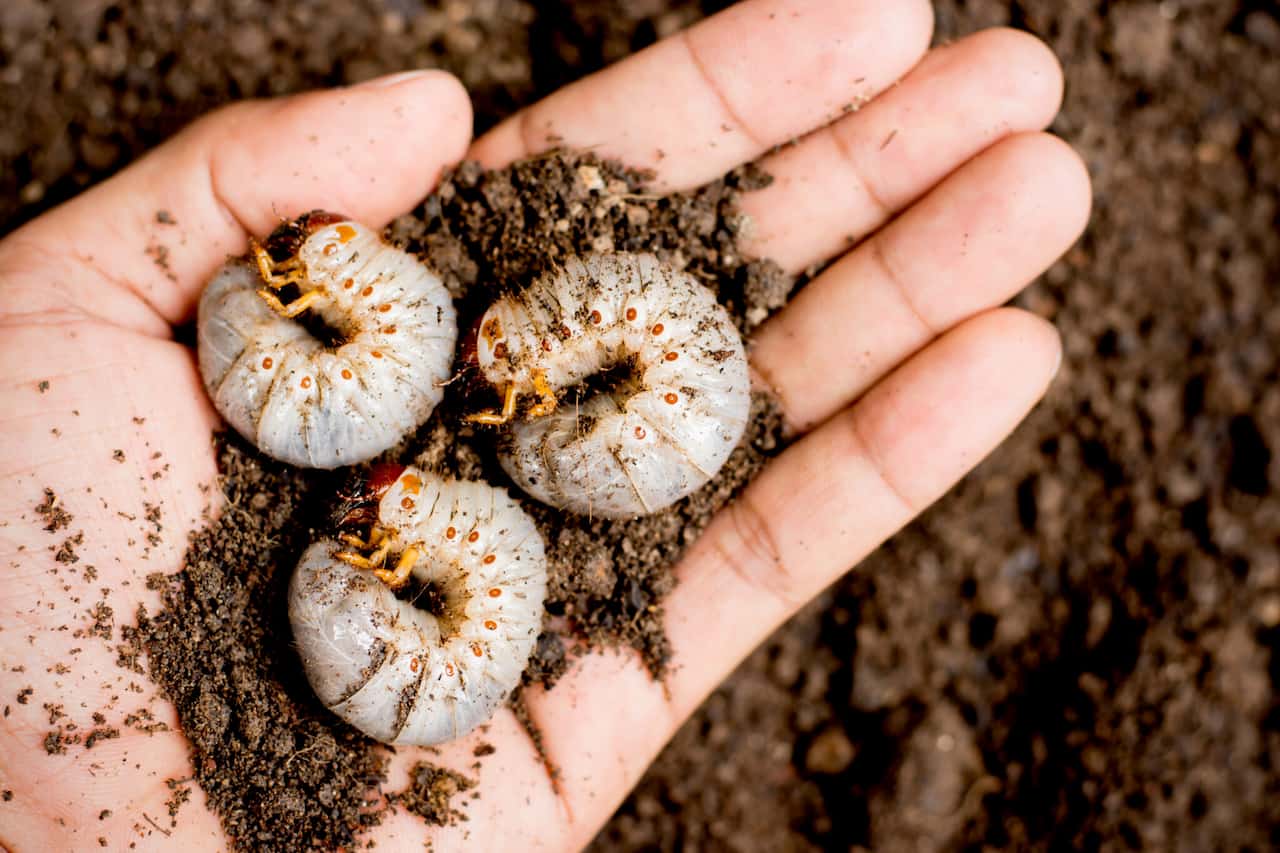
Chafer grubs are among the most distinctive of all lawn pests – once seen they are unmistakeable. They are large (up to 3-4cm long when fully grown), creamy-white and distinctly C-shaped, curled in a tight arc. They have visible brown heads, three pairs of legs near the head end and a swollen blue-grey abdomen at the rear caused by soil visible through the body wall. Dig into any area of suspect lawn to a depth of 5-10cm and the grubs are often immediately visible in numbers. A heavily infested lawn may contain 20 or more grubs per square metre in the worst areas – a concentration that is more than sufficient to cause the visible die-back and spongy turf that characterises a serious infestation.
The distinction matters practically because different nematode species are required for each pest. Getting this right before ordering treatment is important – applying leatherjacket nematodes to a chafer grub infestation produces little result. When in doubt, photograph the grub clearly showing the shape and whether legs are present, and compare to reference images before purchasing treatment.
How Chafer Grubs Damage Lawns
Chafer grubs feed on grass roots from late summer through autumn, severing the roots and killing the turf above. Affected areas go yellow and die, and the turf can be lifted like a loose carpet because there is no root system holding it to the soil. The grubs continue feeding through mild periods in winter before pupating in late spring and emerging as adult beetles to mate and lay eggs in June and July.
The secondary damage from predators is often worse than the grub damage itself. Badgers, foxes, crows and magpies all dig energetically to reach chafer grubs, and a single night’s attention from a badger can leave a substantial area of lawn looking as if it has been ploughed. This predator damage is frustrating but is actually a sign that the predators have correctly identified a real infestation – they are rarely wrong. The correct response is to treat the grubs with nematodes to remove the food source while physically protecting the surface from further digging.
Chafer Species and Lifecycle Timing
The garden chafer is by far the most commonly encountered species in UK lawns. Its one-year lifecycle means that eggs laid in June and July hatch by August, with young grubs feeding actively through September and October – precisely the window when nematode treatment is most effective. The cockchafer has a much longer lifecycle and its grubs are harder to time nematode treatment for, but the garden chafer is responsible for the majority of chafer grub lawn damage reported by UK gardeners each year.
Nematode Biological Control
The nematode species used for chafer grubs is Steinernema kraussei – sold as Nemasys Chafer Grub Killer or equivalent. It is applied as a water drench to the lawn between August and October when grubs are young and actively feeding near the surface. Soil temperature must be above 12°C for effective nematode activity – met comfortably in August and September in most UK locations. Results of 70-80% reduction in grub numbers are typical with correctly timed application.
Apply to well-watered soil and keep the lawn moist for two weeks after application. Nematodes need moisture to move through the soil and will die if the lawn dries out before they have had time to locate and infect the grubs. In a dry August or September, water the lawn thoroughly the day before application and continue watering every two to three days for two weeks. The nematodes are harmless to children, pets, earthworms and all beneficial garden wildlife – they are specific to the target pest and pose no risk to anything else in the soil.
Watch for adult chafer beetles in May and June as your treatment trigger. Garden chafer adults fly in May and June in swarms visible above lawns on warm evenings – a distinctive low buzzing swarm at dusk. This swarming signals egg-laying is occurring or imminent. Note the date and plan to apply nematodes approximately 8-10 weeks later, when eggs will have hatched into young, vulnerable grubs that are most susceptible to treatment.
Stopping Secondary Bird and Fox Damage
Preventing the secondary damage from predators digging for grubs is the most urgent practical concern when chafer grubs are detected. Laying rigid wire mesh or heavy-duty garden mesh flat over the lawn surface and pegging it down at the edges prevents badgers and foxes from digging, while birds can still probe through the mesh for individual grubs. The mesh needs to be removed for mowing but can otherwise be left in place through the peak damage period from September to November. On a large lawn, cover the worst affected areas first – predators return to the same spots night after night once they have found a productive feeding area, so protecting those zones early makes the most immediate difference.
Do not attempt to deter badgers through harmful means. Badgers are fully protected under UK law – interfering with badgers, their setts or blocking their access to feeding areas is a criminal offence. All deterrent methods must be non-harmful physical barriers only. If badger activity is causing serious ongoing damage, contact the Badger Trust for advice on appropriate legal management options.
Repairing the Lawn
Once the grub population is controlled and predator digging has stopped, the lawn can be repaired. Roll or firm back any turf that has been lifted by digging – much of it will re-establish if pressed back into contact with the soil promptly and watered. Rake out areas where the grass is killed and overseed with a hard-wearing grass seed mix. Water well and protect with bird-repellent mesh until germination, as newly sown seed attracts birds that will disturb it before it has had a chance to germinate and anchor.
Apply a balanced lawn fertiliser to support recovery growth. Autumn lawn repair after chafer grub treatment follows the same principles as any post-damage reseeding – soil temperatures remain adequate for germination through September and October, and autumn rain reduces the irrigation burden significantly compared to summer reseeding. For broader lawn aeration and structural recovery work, autumn is the ideal window to combine everything in one thorough pass.
Prevention
Chafer grub infestations are difficult to prevent entirely, as adult beetles fly in from surrounding areas and lay eggs in any suitable lawn. However, a lawn in good health is more resilient to chafer grub damage than one already stressed by drought, compaction or poor nutrition. Maintain good lawn care – regular feeding, aeration and scarifying – to give the grass the strongest possible root system to tolerate some grub feeding without dying. A dense, well-rooted sward can lose a proportion of its roots to grubs without showing visible die-back, where a thin or stressed lawn shows damage much more readily.
Annual nematode treatment in August as a preventative measure, before damage is visible, keeps grub populations at low levels that cause minimal harm. For gardeners who have experienced chafer grub damage in previous years, this routine annual treatment in August is considerably easier and cheaper than the reactive approach of treating an established infestation and repairing significant lawn damage after the fact. The cost of a single pack of nematodes applied in August is trivial compared to the time, seed and effort required to repair a badly damaged lawn in autumn.
Share on socials: