At a glance
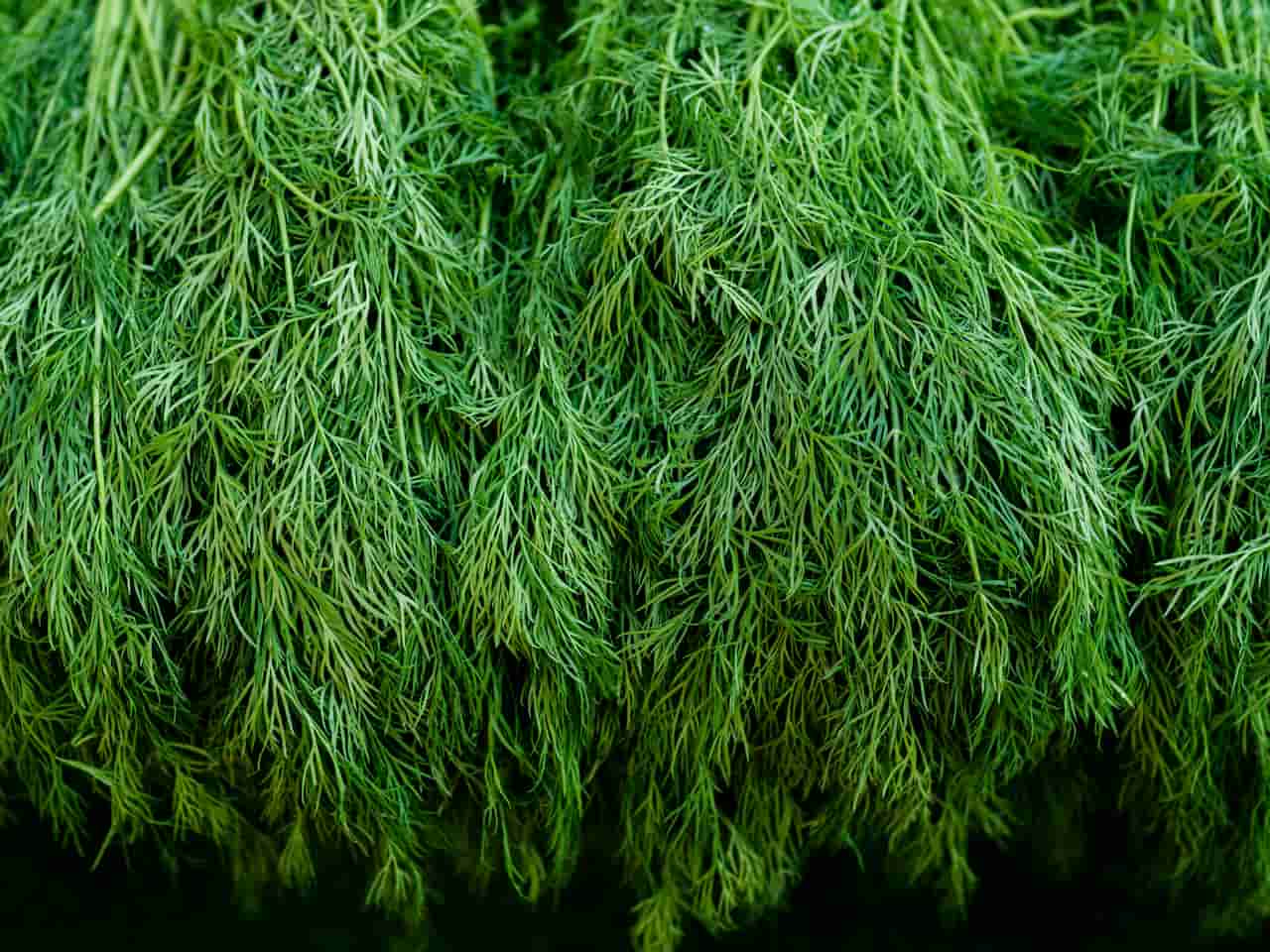
Dill is one of the easiest and most rewarding herbs to grow in the UK, producing its distinctive feathery foliage from seed in as little as six weeks and requiring almost no maintenance beyond watering and a sunny position. The fresh herb has a flavour somewhere between anise, parsley and fennel – irreplaceable in Scandinavian-influenced cooking, excellent with fish and cucumber, and genuinely better fresh from the garden than anything available in supermarket packets. The seeds that develop when the plant flowers are equally valuable, used in pickling, bread and spice blends.
The main challenge with dill is its tendency to bolt quickly to flower, shortening the window for leaf harvest. This is managed almost entirely through succession sowing rather than any complex intervention – a small patch of dill sown every three to four weeks from March to July provides a continuous supply of fresh leaves through the entire growing season. Dill’s approach is similar to coriander in this respect – the bolt-prevention technique is repeated sowing in small amounts rather than fighting the plant’s natural tendency to flower.
About growing dill
Dill (Anethum graveolens) is an annual herb native to southwest Asia and the Mediterranean. It is closely related to fennel and shares the same feathery, thread-like leaf structure and yellow flower heads, though the two plants have distinctly different flavours and dill is considerably shorter and more compact. Left to flower, dill reaches 60-120cm tall with flat-topped clusters of small yellow flowers that appear from July onwards depending on sowing date. These flowers are followed by small oval seeds that ripen to brown and can be collected for drying.
The entire plant is useful in the kitchen. Young leaves have the strongest, freshest dill flavour and are best used raw or added to dishes at the last moment to preserve their delicate taste. Flower heads are used fresh in pickling and have a slightly stronger flavour than the young leaves. Dried seeds are the most pungent part of the plant and are used in spice blends and pickling brines where their assertive flavour is appropriate.
Sowing dill in the UK
Dill must be sown directly where it is to grow – it has a taproot that is easily damaged by transplanting, and disturbed dill almost invariably bolts immediately rather than producing the foliage growth you want. Sow seeds 0.5-1cm deep in short rows or scatter sow in a small patch, thinning seedlings to 15-20cm apart once they are large enough to handle. Germination is reliable at soil temperatures above 10°C – typically from March onwards in most UK locations, though outdoor sowings before May may be slow to germinate in cold springs.
Start sowing from mid-March in a sheltered spot or under cloches, continuing outdoors from April and making further sowings every three to four weeks until mid-July. This succession approach is the single most important technique for continuous dill supply. A batch of dill sown in June will be providing fresh leaves in August while the earlier sowings are already at seed stage, and a late July sowing will extend the fresh leaf season into October in mild areas.
Sow a pinch of dill seed between your tomato plants. Dill is one of the best companion plants for tomatoes – it attracts hoverflies and parasitic wasps that feed on aphids and other tomato pests. The timing works well too: a dill sowing made at the same time as tomatoes are transplanted outdoors in late May will be flowering and at its most attractive to beneficial insects when the tomatoes are growing most actively.
Position and soil
Dill needs full sun to perform well – a minimum of six hours of direct sun per day. In shadier positions the plants become lanky, the flavour is less intense and bolting is triggered more readily. A south or west-facing bed, border or container is ideal. Dill grown in a container on a sunny patio or balcony can be very productive, though containers dry out faster than open ground and need more frequent watering.
Soil should be moderately fertile and free-draining. Dill actually performs best in soil that is not excessively rich – very fertile soil produces lush, soft growth that is more prone to disease and less intensely flavoured. A light application of general-purpose granular fertiliser worked into the bed before sowing is sufficient. Avoid waterlogged or compacted soil, which stresses dill and triggers premature bolting.
Care through the season
Dill is low-maintenance once established. Keep the soil consistently moist – the plants are shallow-rooted and dry out relatively quickly, particularly in containers. Watering before the soil dries out completely is better than allowing the plant to wilt and then watering heavily, which stresses the plant and triggers bolting. Thin seedlings progressively as they grow, using the thinnings as fresh herb in the kitchen – even very young dill seedlings have a good flavour.
No feeding is generally required for dill in good garden soil. Container-grown dill benefits from a weekly liquid feed with a balanced fertiliser from six weeks after sowing, as the compost nutrients become depleted over the season. Dill has no serious pest or disease problems in UK conditions – it is largely left alone by slugs compared to many other herbs, and aphids rarely cause significant problems. The main enemy is drought, which triggers immediate bolting.
Harvesting dill leaves and seeds
Harvest dill leaves by snipping individual fronds from the outer growth of the plant, leaving the central growing tip intact to continue producing new growth. Take no more than a third of the plant’s foliage at any one harvest. Fresh dill is at its best used immediately – it loses flavour rapidly once cut, more so than most herbs. If you need to store it, stand the cut stems in a glass of water in the fridge for up to three days, or freeze whole fronds flat on a baking sheet and then store in a bag.
To harvest dill seeds, wait until the seed heads have turned from green to brown and the seeds are beginning to fall naturally. Cut the whole seed head with a length of stem attached, place it head-down in a paper bag and hang in a warm dry location. The remaining seeds will fall into the bag over one to two weeks. Store dried seeds in a sealed jar away from light – they keep their flavour for up to two years.
Succession sowing for continuous supply
A single dill plant typically provides a useful harvest for three to five weeks before it bolts and redirects its energy entirely into flowering and seed production. At that point the leaves become sparse, the flavour changes and the plant is no longer useful as a fresh herb. Succession sowing – making a new small sowing every three to four weeks – means there is always a batch of young plants at the ideal leaf-harvest stage, while older batches are flowering and providing seeds.
The most practical approach for a UK kitchen garden is to dedicate a small area of 30x60cm to dill and divide it into three or four strips. Sow one strip at a time in sequence, cycling back to the first strip once it has been cleared and composted. This rotating system provides continuous fresh dill from May to October from a very small space – a valuable approach for any fast-bolting herb including dill’s relative fennel.
Companion planting with dill
Dill is one of the most valuable companion plants in the kitchen garden, primarily because its flowers are extraordinarily attractive to beneficial insects. Hoverflies, parasitic wasps, lacewings and other natural predators of aphids, whitefly and caterpillars are drawn to dill flowers throughout the summer. Positioning dill near crops that are susceptible to these pests – tomatoes, brassicas, beans and cucumbers – provides a natural and effective pest-control service.
One important exception: do not grow dill near fennel. The two plants cross-pollinate readily, and the resulting seeds have a muddled flavour that is useful as neither dill nor fennel. Keep them at opposite ends of the growing area. Dill does grow well alongside carrots, onions, lettuce and cucumber, and self-seeds freely if a few plants are allowed to complete their full cycle to ripe seed, providing free seedlings the following spring that can be thinned and managed as the first succession batch of the new season.
Share on socials: