At a glance
Wallpapering has a reputation for being one of the harder DIY tasks – and it is true that a poorly hung room looks worse than painted walls. But the skills required are methodical rather than artistic. Careful preparation, a true vertical starting line and patient pattern matching account for the vast majority of what separates a professional-looking result from a disappointing one. Anyone who has successfully painted a room with care and attention to preparation will find wallpapering a natural next step.
The single most common cause of wallpapering failure in UK homes is inadequate wall preparation – specifically skipping the sizing step. Bare or newly plastered walls absorb paste too quickly for paper to be positioned correctly. Sized walls allow the paper to slide slightly into position before the paste grips.
Preparation and sizing
Walls must be clean, dry, smooth and sealed before any paper goes up. New plaster must be left to dry fully – at least 4-6 weeks – before papering. If you have recently had plaster repairs done after fixing a damp problem or water damage, this waiting period is non-negotiable regardless of how dry the plaster feels on the surface.
- 1Fill and sand all imperfectionsWallpaper does not hide bumps, cracks or holes – it emphasises them. Fill all imperfections with flexible filler, allow to dry fully and sand smooth. A wall that looks acceptable for painting often needs more work before papering.
- 2Size the wallsApply a coat of diluted paste (or proprietary size) to all walls to be papered. Sizing seals the surface, slows paste absorption and allows you to slide drops of paper into position. Allow to dry before papering. This step is frequently skipped by beginners and is the most common cause of bubbling and poor adhesion.
- 3Remove switch plates and socket coversTurn off electricity at the consumer unit. Remove all switch plates and socket covers from walls to be papered. Paper neatly behind them rather than cutting around them – the result looks far more professional.
Calculating how much wallpaper
| Room perimeter | Ceiling height | Rolls needed (plain) | Extra for pattern |
|---|---|---|---|
| Up to 10m | 2.4m standard | 5-6 rolls | Add 1-2 rolls for small repeat |
| 10-14m | 2.4m standard | 7-9 rolls | Add 2 rolls for medium repeat |
| 14-18m | 2.4m standard | 10-12 rolls | Add 2-3 rolls for large repeat |
| Any size | Above 2.4m | Recalculate for height | Always buy one roll extra – dye lots vary |
Always buy from the same dye lot and keep one spare roll after finishing. Wallpaper from different dye lots can vary subtly in colour – a difference invisible on the roll that becomes obvious when hung side by side. Check all rolls have the same batch number before starting. Keep one leftover roll after the job is complete – if a section is damaged in future, matching the pattern and dye lot is otherwise almost impossible.
Hanging the first drop
The first drop must be perfectly vertical – everything else is referenced from it. Do not use a door frame or window frame as a guide; they are almost never truly vertical. Use a plumb line or spirit level to draw a true vertical line on the wall where the first drop will hang.
- 1Cut and paste the first dropMeasure the drop length (wall height plus 5cm top and bottom for trimming). Cut the first piece. Apply paste evenly from centre to edges using a pasting brush, fold pasted side to pasted side (booking) and allow to soak for the manufacturer’s recommended time – typically 3-5 minutes for standard paper.
- 2Hang to the plumb line and smooth outUnfold the top half of the booked drop. Position against the plumb line with a 5cm overlap at the ceiling. Smooth from the centre outward and downward using a wallpaper brush or smoothing tool, working out any bubbles toward the edges.
- 3Trim top and bottom with a sharp knifePress the paper firmly into the ceiling and skirting board angles with a broad knife or scraper. Run a sharp craft knife along the edge to give a clean trim. A blunt blade tears paper – change the blade frequently.
As an Amazon Associate I earn from qualifying purchases. Prices correct at time of publishing.
Pattern matching
Pattern-matching is where most beginners struggle and most waste occurs. Cut each drop slightly long, hold it against the previous drop and slide it up or down until the pattern aligns perfectly before cutting to final length. The waste at the top or bottom of each drop is the price of a matched pattern – budget for it in the quantity calculation.
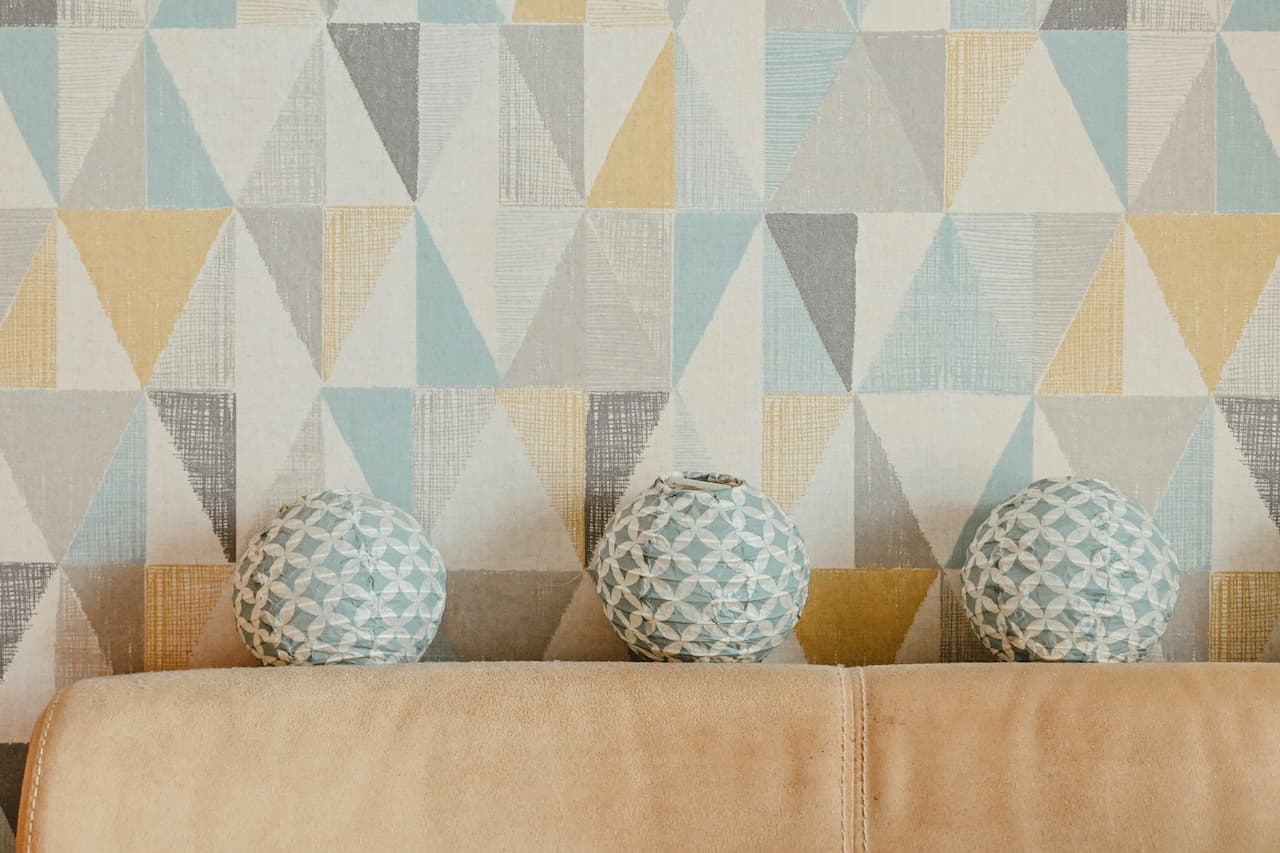
- Straight match – the pattern repeats horizontally across each drop at the same height. The simplest to match, minimal waste.
- Half drop match – the pattern on alternate drops is offset by half the repeat height. More waste – add at least 2 extra rolls for large half-drop patterns.
- Free match / random – no pattern matching required. Textured papers, grass cloth and plain papers are all free match and the most forgiving to hang.
Dealing with corners
Never try to wrap a full-width drop around an internal or external corner – the paper will not lie flat and any imperfection in the corner angle becomes immediately visible. Always cut drops to wrap around the corner by 10-15mm and start a new plumb line on the other side. The overlap is minimal and invisible once the paper is on.
Wallpaper types explained
| Type | Difficulty | Durability | Best for |
|---|---|---|---|
| Paste-the-wall | Easy | Good | Best for beginners – no soaking needed |
| Standard paste-the-paper | Moderate | Good | Most common type – wide range of designs |
| Vinyl | Easy to moderate | Excellent | Kitchens and bathrooms – washable |
| Lining paper | Easy | N/A – underlay | Essential under expensive paper on poor walls |
| Anaglypta / textured | Easy | Good | Hides imperfect walls well |
Wallpapering rewards patience more than skill. A carefully sized, carefully measured, carefully plumbed first drop sets up everything that follows. Once the technique clicks it becomes surprisingly fast and satisfying. For the complete decorated room, pair with our guide on how to paint a room UK for woodwork and ceiling treatment.
As an Amazon Associate I earn from qualifying purchases. Prices correct at time of publishing.
Share on socials: