At a glance
Replacing skirting boards is a straightforward DIY job that produces a dramatic improvement in a room’s appearance. Fresh skirting with clean corner joints, a neat caulk line and a sharp painted finish transforms a tired room for a modest outlay in both money and time. The job rewards patience and careful measuring far more than speed – take time on the corner joints and the finishing and the result will look completely professional. The materials are inexpensive and the tools required are those a competent DIYer will already own or can cheaply hire.
A single room typically takes a competent DIYer half a day from start to finish, including removal, cutting, fixing and an initial coat of primer. The key skills are accurate measuring, cutting internal corners correctly by scribing rather than mitring, and finishing the joints neatly before painting. None of these require specialist experience – they are learnable techniques that produce reliable results once understood, and the scribing step in particular improves noticeably and quickly with a little practice on scrap material before committing to the actual lengths.
What you’ll need
Removing old skirting boards
Old skirting boards are typically either nailed directly to the wall through cut nails into the plaster, or fixed to timber grounds (horizontal battens set into the plasterwork). Either way, the removal process is the same: work a wide bolster chisel or pry bar behind the board at one end, lever it slightly away from the wall, then move along the board using the gap created to get more leverage. Take your time and work in short sections rather than forcing large lengths away at once.
Protect the plaster by placing a piece of scrap timber against the wall when levering. Prying against bare plaster damages it and leaves a repair job before you can fit the new boards. Work steadily along the board rather than trying to force it away all at once – the old nails will release progressively as you move along. Once the board is free, remove any remaining nails from the wall using a claw hammer or nail puller. Cut away any timber grounds that are damaged or rotten. Fill any significant holes in the plaster with filler and allow to dry before fitting new boards – a flat surface behind the skirting makes fitting much easier and produces a better finished result.
Score along the top before levering. If you want to keep the old skirting boards – perhaps to reuse them in another room or to use as a template for matching – score along the top of the board with a sharp knife before levering to cut through any paint seal. This prevents plaster pulling away with the board as the paint seal breaks, which is the most common single cause of plaster damage during skirting board removal.
Choosing new skirting board
UK skirting boards are sold in three main materials: MDF, softwood pine, and hardwood. MDF is the most popular choice for DIY fitting because it is dimensionally stable (does not warp or shrink as timber does), takes paint extremely well, and is inexpensive. It is less durable than solid wood if subject to knocks and cannot be used in areas prone to damp such as bathrooms where moisture would cause it to swell – use moisture-resistant MDF in these locations.
Softwood pine skirting is traditional, accepts paint and stain equally well, and is more durable than MDF. It is more prone to minor movement as humidity changes, which can cause small gaps to appear at corners over time. Hardwood skirting is significantly more expensive and harder to work with but produces a premium result where a natural wood finish is desired. Profile choice is largely aesthetic – the most common UK profiles are torus (a rounded top edge), ogee (a more ornate S-curve profile), and pencil round. Match the existing profile if replacing only part of the skirting, or choose a new profile to suit the house style.
Measuring and cutting
Measure each wall separately rather than calculating the room perimeter as a single measurement. Rooms are rarely perfectly square – particularly in older UK homes – and individual wall measurements are far more accurate than a calculated perimeter figure. Measure from corner to corner along the base of each wall and add 50mm per measurement for waste at cuts. Buy 10-15% more skirting than your bare measurements suggest to allow for waste from cuts and any mistakes – returning to the merchant for an extra length mid-job is a frustrating and avoidable interruption.
Mark each length clearly on paper as you measure – note which wall each measurement applies to and whether there are any obstacles such as doorways, pipes or alcoves that require special cuts. A rough sketch of the room with measurements marked on each wall prevents confusion when cutting. Cut skirting with the profile face up when using a hand saw, or face down when using a circular or mitre saw – this prevents splintering on the visible surface. Always cut a test piece on scrap before cutting your good lengths, particularly when trying a new angle cut at a corner.
Internal and external corners
This is where skirting fitting becomes a skill rather than just a task. Internal corners – where two walls meet inside a room – are best dealt with by scribing rather than mitring. Scribing means cutting the end of one board to follow the profile of the other, so they overlap neatly regardless of whether the corner is exactly 90 degrees. Because most UK room corners are not perfectly square, scribing produces a much tighter joint than a mitre and remains tight even if the house moves slightly over time.
Cut and fix the first board square
Butt the first board into the corner with a square end. Fix it in place. This board sets the face that the second board will scribe to.
Cut the second board at 45 degrees outward
Cut the end of the second board at 45 degrees as if mitring, with the cut angling outward. This reveals the full profile of the skirting on the cut face.
Jigsaw along the revealed profile line
Use a jigsaw to cut along the profile line visible on the cut face. This creates a shape that fits exactly over the face of the first board.
Test the fit before fixing
Offer the scribed board up to the corner. Trim any high spots with a chisel or rasp until the joint sits tight with no visible gap. Fix only once the fit is clean.
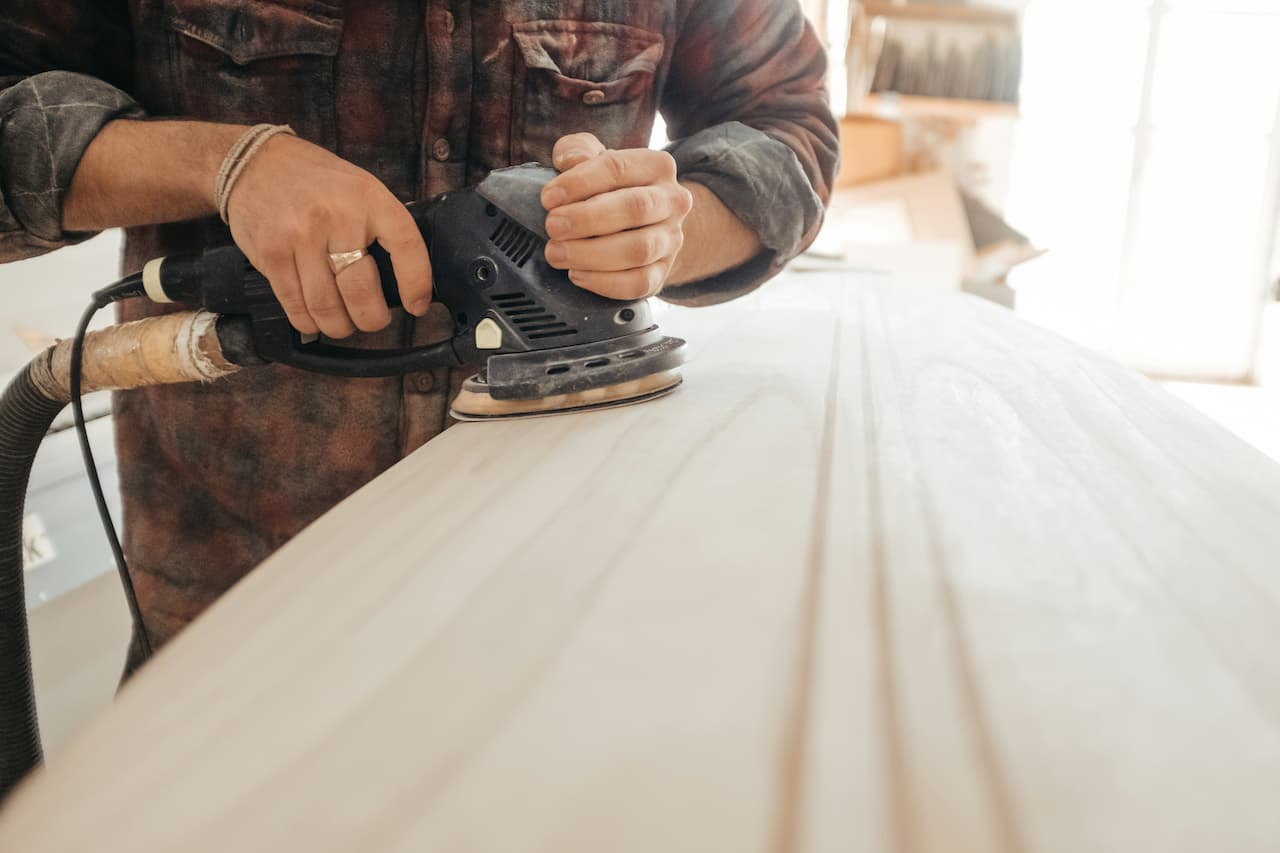
External corners – where walls project outward, such as at a chimney breast – are mitred at 45 degrees. Both boards are cut at 45 degrees so the cut faces meet cleanly at the corner. Apply a little wood adhesive to the joint before fixing and pin through the face if the joint needs reinforcing to prevent it opening as the adhesive dries. Sand the joint lightly after the adhesive dries to ensure a flush surface before filling and painting.
Fixing the boards
Skirting boards are fixed either by nailing directly into the wall (into timber grounds or masonry using cut nails), or by a combination of adhesive and nails. On masonry walls without timber grounds, construction adhesive combined with masonry nails provides a secure fix. Oval lost-head nails are the traditional fixing for skirting – they punch below the surface without splitting and the head is small enough to fill invisibly. Space nails at 400-600mm centres and always nail near both the top and bottom of the board to prevent bowing away from the wall in the middle. The bottom nail stops the board kicking outward at floor level; the top nail holds the back face of the board flush against the wall.
On walls that are significantly uneven, pack behind the board with thin timber offcuts to bring it to vertical before nailing. A nail gun speeds up the fixing process considerably and produces cleaner results than hand nailing. Second-fix nailers are inexpensive to hire and are well worth using for a whole room of skirting – they drive nails consistently to the same depth without splitting the board, which is difficult to achieve consistently with a hammer. Check each length of board with a spirit level before nailing to ensure it is running parallel to the floor rather than following any undulations in the wall.
Finishing – filling, caulking and painting
Once all boards are fixed, fill all nail holes with fine surface filler, allow to dry, and sand smooth. Then run a bead of decorator’s caulk along the top of the skirting where it meets the wall, and along the bottom where it meets the floor if there is a gap. Smooth the caulk with a wet finger and wipe away any excess immediately before it skins over. A clean, neat caulk line where skirting meets wall is the detail that separates a professional-looking finish from a DIY one – it hides any small gaps and gives the installation a sharp, crisp edge that paint alone cannot achieve. Running a painter’s tape along the wall above the caulk line before applying it makes cleanup and precision much easier.
Prime all new skirting board before painting. MDF in particular requires a good primer to seal the surface and prevent the paint from soaking in unevenly. Apply two coats of primer to the cut ends of MDF which are especially absorbent – unsealed MDF ends will drink paint and remain visibly different from the face surface even after multiple topcoats. Finish with two coats of gloss or satin paint in the desired colour, allowing each coat to dry fully before the next. Sand lightly between coats with fine-grade paper to remove any dust nibs and ensure a smooth final surface.
Skirting board types compared
Share on socials: