At a glance
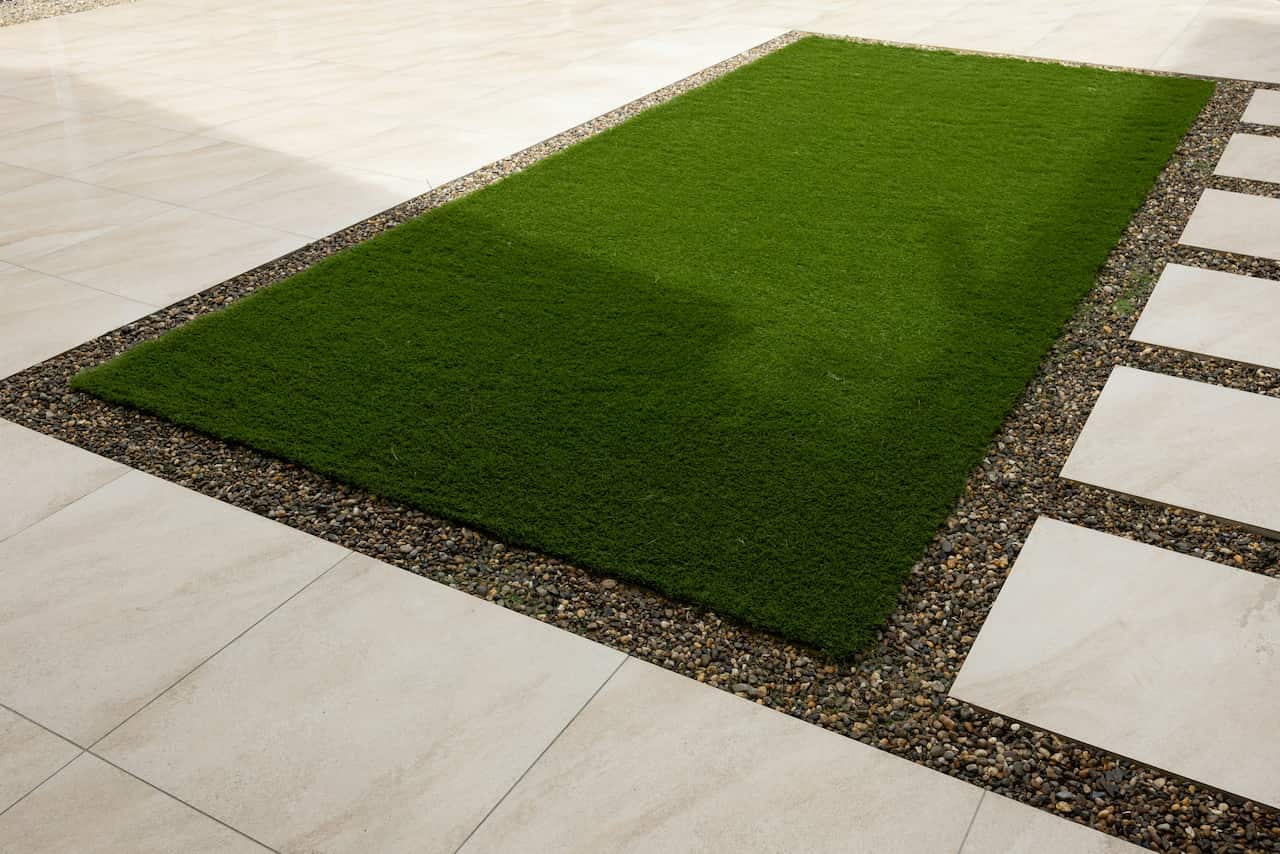
Porcelain paving has become one of the most popular choices for UK garden patios and paths over the past decade, and for good reason. It is harder and denser than natural stone, completely frost-proof when correctly manufactured, non-porous and therefore resistant to moss, algae and staining, and available in a wide range of formats and finishes that can closely mimic natural stone, timber decking and polished concrete at a fraction of the cost of the real material. A quality 20mm porcelain slab is also significantly more consistent in thickness and flatness than natural stone, which makes laying it more predictable and produces a flatter finished surface. It also requires very little ongoing maintenance compared to natural sandstone or slate, which need periodic sealing and cleaning to stay presentable through the British climate.
The critical requirement that catches many homeowners and even some experienced contractors out is the base preparation and the correct adhesive specification. Porcelain is a rigid, non-flexible material with virtually zero tolerance for movement. Any differential settlement in the base beneath it – even a few millimetres – produces cracked or hollow-sounding slabs. Unlike natural stone, which has some give, porcelain transmits stress directly to the slab surface and cracks rather than flexes. The base preparation for porcelain paving is therefore more demanding than for most other outdoor paving materials, and the adhesive bed must achieve full contact coverage across the entire underside of each slab – spot bedding, which works adequately for natural stone, is not acceptable for porcelain.
What you’ll need
Choosing porcelain paving
Outdoor porcelain paving in the UK is available in a wide range of sizes, thicknesses and finishes. The most common slab sizes are 600x600mm, 900x600mm and 1200x600mm, with larger format slabs (1200x1200mm) available for premium applications. Thickness matters for outdoor use: 20mm slabs are the standard for patio and path use in the UK, providing the structural strength to resist cracking across a well-prepared base. Thinner 10mm slabs are intended for indoor use and should never be used outdoors. Some manufacturers offer a “pedestal system” compatible format for raised terraces, but this is a specialist application.
Slip resistance is a critical specification for outdoor porcelain in the UK, where wet surfaces are the norm for much of the year. An R11 slip rating is the minimum recommended for general patio and path use; R12 or above should be specified anywhere with a slope, a step approach or near a pool or water feature. Highly polished porcelain, while attractive in showroom conditions, becomes dangerously slippery when wet and is entirely unsuitable for outdoor use in the UK climate regardless of how attractive the finish appears in the catalogue. Always request the slip rating certificate before purchasing – some marketing materials use vague descriptions like “textured” or “grip finish” that do not substitute for the actual DIN 51130 R-rating test result. If the supplier cannot provide the certificate, choose a different product.
Base preparation
Porcelain paving must be laid on a rigid, stable base with no capacity for differential movement. The standard approach for a patio or path is a concrete base of 100-150mm depth (C20 mix or stronger), laid over a compacted hardcore sub-base of at least 100mm. The total excavation depth including the adhesive bed and slab thickness is typically 280-320mm for a patio. For larger areas or softer ground conditions, consider adding steel mesh reinforcement to the concrete slab to reduce the risk of cracking across the base. The concrete must be fully cured – a minimum of 28 days and ideally longer in cold or wet weather – before the adhesive bed is applied. Laying porcelain on wet or green concrete is one of the most common causes of adhesive bond failure and subsequent slab cracking or lifting in the months after installation.
Never spot-bed porcelain. Spot bedding – applying five dabs of mortar to the corners and centre of the slab rather than a continuous bed – is widely used for natural stone and creates an acceptable result for flagging with some flexibility. For porcelain it is entirely unsuitable. Porcelain has no flex and a slab with voids beneath it will crack under load or foot traffic, often within weeks of laying. Full-bed coverage with the adhesive method is the only correct approach.
Laying methods
There are two accepted methods for laying outdoor porcelain in the UK: the adhesive method on a concrete base (the correct approach for permanent patios and paths), and the dry-lay method on a compacted sand and grit sub-base (a quicker approach suited to garden paths and areas where occasional removal for access is anticipated). The adhesive method produces a superior, longer-lasting result and is the only method suitable for driveways or areas subject to vehicle loading.
For the adhesive method, apply the C2 flexible adhesive generously to the prepared concrete base using the notched trowel to comb it into ridges, then back-butter the entire underside of each slab with a smooth, flat layer of the same adhesive. Lower the slab onto the bed and tap firmly into position with the rubber mallet. Check level and alignment immediately, as the adhesive has a working time of around 20-30 minutes before it begins to set. Use tile spacers to maintain consistent joint width. Once all slabs are laid and the adhesive has cured (typically 24-48 hours), grout the joints with a flexible exterior grout matched to the slab colour – rigid mortar joints will crack as the surface expands and contracts with temperature changes.
Common problems and costs
The most common failure mode for porcelain paving in UK gardens is hollow or cracked slabs resulting from inadequate adhesive coverage, movement in the base, or the use of incorrect materials. Tapping slabs with a hollow sound indicates voids beneath – these will eventually crack under load and the affected slabs must be lifted, the base corrected and new slabs relaid. Preventing this requires the double-buttering technique (adhesive on both base and slab back) and checking each slab’s bond by lifting and inspecting the adhesive contact print shortly after laying the first few slabs – the entire slab back should show adhesive transfer. If coverage is below 80%, the adhesive consistency or application technique needs adjusting before continuing.
Professionally fitted porcelain paving costs £80-150 per m2 including materials and labour, with the wide range reflecting significant differences in slab quality, site preparation requirements and regional labour rates. DIY installation on a straightforward existing concrete base costs considerably less – typically £25-55 per m2 for materials and consumables – but requires careful and precise execution of the double-butter adhesive technique. The project is fully accessible to a careful and methodical DIY installer for areas up to around 20m2, but it demands considerably more precision and attention to materials than block paving or natural stone. For comparison with other hard landscaping options, see the block paving guide which covers an alternative approach suited to driveways and areas requiring vehicle access. Existing garden steps can be faced with matching porcelain to create a cohesive look across the outdoor space.
Share on socials: