At a glance
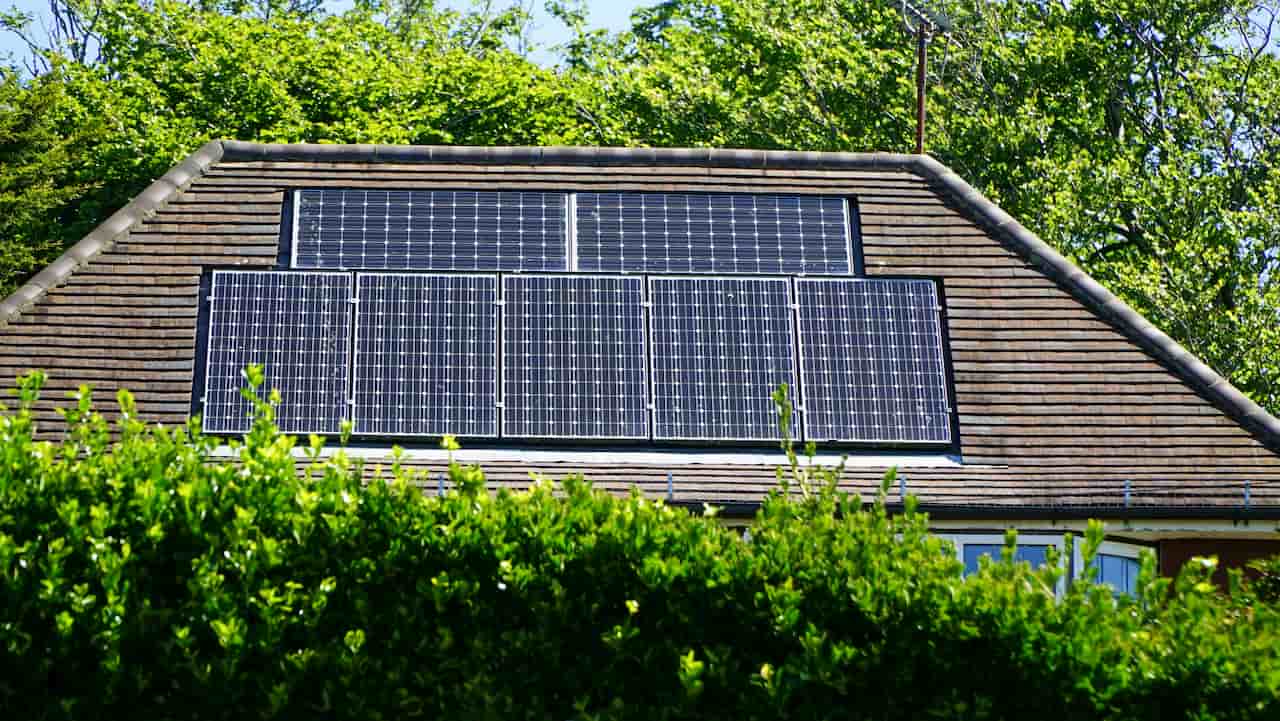
Solar panels are the most widely installed domestic energy technology in the UK, with over a million residential systems now generating electricity across the country. The financial case has strengthened significantly as electricity prices have risen, the Smart Export Guarantee replaced the old Feed-in Tariff, and panel costs have continued to fall. A well-sized system on a suitable roof now pays back its installation cost within ten to thirteen years on average, and then provides effectively free electricity for the remaining fifteen-plus years of the system’s working life. The maths is straightforward enough, but the decisions involved in getting to a good installation are not. Panel type, system size, inverter choice, battery storage, installer quality and understanding what you will actually earn from export all affect the outcome considerably.
This guide covers the complete picture from first principles through to commissioning. It is written for a UK audience and uses current UK electricity rates, generation figures and scheme details. The article does not advocate for any particular brand or installer – it explains how the technology works, how to size a system for your home, how to understand what you will generate and save, and how to find an installer you can trust. Whether you are researching for the first time or comparing quotes you have already received, the information below is designed to help you make an informed decision rather than rely on what a salesperson tells you.
How solar PV works – and what panels to choose
Photovoltaic (PV) panels generate electricity from light rather than heat. Each panel contains a layer of semiconductor material – silicon in the vast majority of panels sold in the UK – which releases electrons when photons from daylight strike it. These electrons flow as direct current (DC), which an inverter converts to alternating current (AC) suitable for your home’s circuits. The system connects to your consumer unit alongside your grid supply, and any electricity generated that you do not immediately use is either exported to the grid or, if you have a battery, stored for later use.
A critical point that surprises many first-time buyers: panels do not need direct sunlight. They generate electricity from daylight, including on overcast days. Output is substantially higher in bright sunshine – a south-facing panel on a sunny June day generates far more than the same panel on a grey November afternoon – but generation does not stop when clouds appear. UK solar systems generate meaningful electricity throughout the year, including in winter, just at lower levels than in summer. This is why annual generation figures matter more than peak output numbers when assessing what a system will deliver for a UK home.
Monocrystalline panels dominate UK residential installations and are the right choice for most homes. Their higher efficiency means more electricity from the same roof area, which matters in the UK where roof space is often limited and panels need to perform well in the diffuse light that characterises much of the British sky. Polycrystalline panels are less efficient but were historically cheaper – this price gap has largely closed, making monocrystalline the default recommendation for any new installation. Thin-film panels exist as a third option and are occasionally used on specialist buildings, but they are not a standard choice for domestic rooftop installation in the UK.
The inverter converts the DC output of the panels to AC for your home. A string inverter connects all panels in series and is the standard choice – efficient, reliable and straightforward to maintain. Microinverters attach individually to each panel and are worth considering if panels will be partly shaded at different times of day (for example, by a chimney that shades some panels in the morning but not others), since shading of one panel in a string inverter system reduces output from all panels in that string. The additional cost of microinverters is only justified by genuine shade complexity. Power optimisers offer a middle ground, fitting to each panel but converting to AC at a central inverter, and are increasingly common in UK installations. If you plan to add battery storage in the future, specify a hybrid inverter from the outset – this adds DC terminals for battery connection and avoids the need to replace the inverter later.
Sizing your system – how many panels do you need
System size in the UK is measured in kilowatt-peak (kWp), which represents the maximum output of the system under standard test conditions. In practice, a system rarely reaches its peak rating – the figure that matters for planning is annual generation, which in the UK averages around 900 kWh per kWp of installed capacity for a south-facing roof at a typical pitch. The right size system for your home depends on your annual electricity consumption and how much of your roof is suitable – correctly oriented, unshaded and structurally able to carry the additional weight.
The “covers” column above shows the proportion of annual household electricity demand that a correctly-sized system can offset, assuming average UK consumption for each home type and 50% self-consumption (typical for households where at least one person is at home during the day). This proportion increases with a battery, and decreases if you are a high electricity user or are out all day. The most important sizing principle is to install a system sized for your actual consumption rather than the maximum your roof can hold. Oversizing means generating large amounts of electricity you export at the low Smart Export Guarantee rate rather than use at full value. The goal is to maximise self-consumption, not to maximise total generation.
Roof orientation and pitch affect output significantly. A south-facing roof at 30-40 degrees produces the maximum annual output for a UK location. East and west-facing roofs produce around 80-85% of the output of an equivalent south-facing system – still worth doing, and in some households a west-facing system can be more valuable because it generates more in the afternoon when people are home. North-facing roofs are not viable for solar. Flat roofs can accept solar with angled mounting frames. Shading is a serious concern: even partial shading from a chimney, dormer window, neighbouring building or trees significantly reduces generation, and a shading analysis should be part of any professional survey.
Calculate from your electricity bill, not from estimates. Your annual electricity consumption in kWh is on your energy bill or accessible through your smart meter. A system generating 100-110% of your annual consumption is the right target. If your installer quotes a system size without asking about your consumption, treat that as a warning sign.
How much electricity will your system generate
The UK’s solar resource is better than most people assume. The south of England receives a solar resource broadly comparable to central Germany and the Netherlands – countries that have installed solar panels at scale for decades. Even Scotland generates meaningful amounts of solar electricity. The standard benchmark used by UK installers is approximately 900 kWh of generation per kWp of installed system capacity per year for a south-facing roof at typical pitch in an average UK location. South-west England, South Wales and southern England generally exceed this figure; Scotland and north-west England fall somewhat below it. The difference between the sunniest and least sunny parts of the UK is significant but not dramatic – typically a 20-30% spread.
Monthly generation varies considerably through the year – a UK solar system generates several times more electricity in June and July than in December and January. This seasonal variation is predictable and is factored into payback calculations, but it shapes how you benefit from the system in practice. In summer, the panels may generate substantially more than you can use, with the surplus exported to the grid. In winter, they supplement but do not replace grid electricity. This seasonal pattern is one of the strongest arguments for battery storage in high-electricity-use households, and it is also why the Smart Export Guarantee rate you earn for exports matters considerably to the overall economics.
Payback, savings and the Smart Export Guarantee
The financial return from a solar panel system comes from three sources: electricity you generate and use directly in your home, saving you from buying it at full grid rate; electricity you export to the grid and are paid for through the Smart Export Guarantee; and the reduced exposure to future electricity price increases that installing your own generation provides. The most valuable of these is self-consumption. Every unit of electricity you use from your panels saves you the full retail rate you would have paid for grid electricity. Every unit you export earns you the significantly lower Smart Export Guarantee rate. Maximising self-consumption is therefore the central financial objective – and it is shaped by when you use electricity relative to when the panels generate it.
Households where someone is at home during the day naturally achieve higher self-consumption – running dishwashers, washing machines and other appliances during daylight hours uses electricity directly from the panels. Households where everyone is at work until the evening achieve lower self-consumption because generation peaks at midday when demand is low. If you fall into the second category, a solar diverter that automatically redirects excess solar generation to heat your hot water tank is a cost-effective first step before considering a full battery system. A diverter uses electricity that would otherwise be exported at the low Smart Export Guarantee rate and converts it to domestic hot water, which has real value.
The Smart Export Guarantee requires any energy supplier with more than 150,000 customers to offer a tariff for the electricity you export to the grid. Rates vary considerably between suppliers and tariff types – from a few pence per kWh on basic tariffs to higher rates on time-of-use export tariffs, where export during peak demand periods commands a premium. To register for the Smart Export Guarantee your system must be installed by an MCS-certified installer. You can compare current export rates and register for the SEG through the regulator’s guidance at ofgem.gov.uk.
Shift your highest-demand appliances to daylight hours. Running your dishwasher, washing machine and tumble dryer during the day rather than the evening is free to implement and can increase the value of your solar system significantly – it costs nothing to change but the habit, and over a 25-year system life the cumulative effect on savings is substantial.
Payback periods for UK solar installations typically fall between nine and thirteen years depending on system size, location, self-consumption rate, electricity tariff and whether a battery is added. After payback, the electricity generated is effectively free for the remaining life of the system. Modern panels carry 25-year performance warranties guaranteeing output does not fall below 80% of rated capacity over that period; real-world panel longevity is typically 30 years or more. Inverters have shorter lives – typically 10-15 years – and will need replacement once during the system’s lifetime, which should be factored into long-term financial planning.
Battery storage – is it worth adding
A solar battery stores electricity generated during the day for use in the evening and overnight. Without a battery, a typical UK household self-consumes around 30-50% of what their panels generate. With a correctly sized battery, self-consumption rises to 60-80%. The financial logic is straightforward: every unit of solar electricity shifted from export to self-consumption saves you the full retail rate minus the export rate – currently a meaningful difference given UK electricity prices.
Whether a battery is financially worthwhile depends primarily on your usage pattern. If you are at home during the day and already achieve high self-consumption from your panels, a battery adds less incremental value. If you are out all day and your generation currently peaks into export, a battery can capture that surplus for evening use and make a significant difference to self-consumption. A battery is most valuable when combined with a time-of-use electricity tariff that offers cheap overnight electricity – you can charge the battery cheaply from the grid overnight and discharge it during expensive peak periods, independently of what the solar panels are doing. This use case extends the battery’s value beyond pure solar storage.
Battery sizing follows a practical rule: aim for a usable capacity roughly equal to two-thirds of your average daily electricity consumption. For a typical three-bedroom house using around 3,000 kWh per year (approximately 8 kWh per day), a battery in the 5-6 kWh usable range is appropriate. Oversizing wastes capital because winter solar generation is typically only 3-4 kWh per day – a battery larger than daily winter generation sits largely unused for months. If you are not adding a battery immediately, specify a hybrid inverter from the outset. This adds DC battery-ready connections and avoids replacing the inverter – which is a significant additional cost – when you retrofit storage later.
Planning permission and permitted development
Most domestic solar panel installations in England, Wales and Northern Ireland fall within permitted development rights and do not need a planning application. The key conditions are that panels must not protrude more than 200mm from the roof surface, must not be installed on a flat roof fronting a highway (unless there is no other suitable roof), and must not be installed on a listed building or a building in a World Heritage Site. Conservation area properties need permitted development consent from the local authority if panels are to be installed on a roof facing a highway.
Scotland has its own planning rules, which are broadly similar to England but with some differences in the detail – if your property is in Scotland, check current Scottish Government guidance before proceeding. In Northern Ireland, permitted development rules also apply with broadly comparable conditions to England. The practical advice is: if in doubt, contact your local planning authority for a pre-application discussion before committing to an installation. A reputable MCS-certified installer will know the rules that apply to your property type and will flag any issues before work begins. If an installer assures you no planning issues exist without checking the specifics of your property, be cautious.
Listed buildings and conservation areas need additional checks. If your property is listed at any grade, or if it sits within a conservation area where panels would face a highway, do not assume permitted development applies. Unauthorised solar installation on a listed building is a serious planning breach. Get written confirmation from your local authority before proceeding.
Finding an MCS-certified installer
MCS certification – the Microgeneration Certification Scheme – is the industry standard for solar panel installers in the UK. Only MCS-certified installers can issue the MCS certificate that your energy supplier requires to register you for the Smart Export Guarantee. An MCS-certified installer is also required to carry insurance and demonstrate that their work meets technical standards. Choosing a non-certified installer saves nothing if it prevents you from accessing SEG payments for the life of the system – the SEG income over 25 years can represent a significant proportion of the total financial return from solar.
Getting multiple quotes is essential. A useful minimum is three quotes from three different MCS-certified installers, and you should ask each one to provide the same specification so you are comparing like for like: the same panel model and wattage, the same inverter type, the same system size in kWp, and projected annual generation in kWh for your specific roof and location. Be wary of quotes that lead with monthly payment plans or savings projections without showing you the underlying system specification. A quote that does not specify the panel model, inverter model, expected annual output in kWh, panel warranty terms and inverter warranty terms is not giving you enough information to make a comparison. You can search for certified installers by postcode through the official MCS register at mcscertified.com.
After installation, keep your MCS certificate and all documentation in a safe place. You will need the MCS certificate to register for the Smart Export Guarantee, to make insurance claims if the system is damaged, and to demonstrate to future buyers that the installation was carried out to standard. Monitoring your system’s output through the inverter’s monitoring platform is worthwhile – you can establish what a typical day’s generation looks like at different times of year, and any significant unexplained drop in output is a prompt to contact your installer to check for a fault or shading issue that has developed since installation.
Share on socials: