At a glance
Spring is the most consequential season in the lawn care calendar. Grass that emerges from winter into a well-managed spring programme establishes deep roots, crowds out weeds naturally, and builds the kind of density that carries it through summer drought without the yellowing and thinning that afflicts neglected lawns. Miss the spring window, or rush through it in the wrong order, and you spend the rest of the year compensating for problems that a few hours of attention in March and April would have prevented entirely.
The challenge with spring lawn care in the UK is timing. The temptation to start as soon as the first mild day arrives in February often leads to work being done in conditions the lawn is not ready for, which causes damage rather than improvement. Understanding what the grass actually needs at each stage of spring recovery – and what conditions make each treatment effective – makes the difference between a lawn that responds and one that struggles.
When to Start Spring Lawn Care
The trigger for spring lawn care is not calendar date – it is soil temperature. Grass growth restarts meaningfully when soil temperature reaches 8-10°C. Below that threshold, fertiliser applied to the lawn sits on the surface rather than being taken up, first mows cut dormant grass that is not actively growing, and any disturbance of the soil surface increases the risk of compaction and disease. In most of the UK, this threshold is typically reached between mid-March and early April, though the south of England often arrives there two to three weeks ahead of northern Scotland.
Use a soil thermometer rather than guessing. They cost around £8-12 and take seconds to use. Push the probe 10cm into the soil in the morning, away from paved surfaces that retain heat. A reading below 8°C means the grass is not ready for active treatment regardless of how warm it feels in the air.
Raking and Scarifying
The first physical job of spring is raking to remove the debris that accumulated over winter. Dead moss blackened by autumn iron treatments, fallen leaves that were not fully cleared, worm casts compacted by frost, and matted dead grass stems all build up over winter and need to come off before the lawn is ready for anything else. Raking is always first in the sequence – doing it before mowing, feeding, or any other treatment – because it exposes the soil surface and opens up the sward to light and air.
Scarifying is a more aggressive version of the same operation, using a mechanical tool with vertical blades that cut into the thatch layer rather than just pulling surface debris. Light scarifying is appropriate in spring on most lawns. Heavy scarifying – where the machine is set to cut deep into the sward – is better reserved for autumn when the grass has more recovery time. In spring, the goal is to clear thatch and debris without shocking a lawn that is only just coming back into growth.
Mowing – Timing and Height
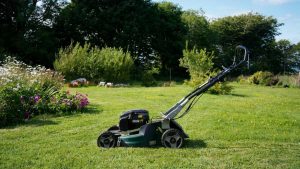
The first mow of spring is not about cutting the lawn short – it is about stimulating growth and clearing the debris that raking left behind. Set the blade high (5cm or more for the first cut, reducing gradually to your summer height over four to six weeks) and make sure the grass is dry before mowing. Cutting wet grass tears rather than cuts the blades cleanly, and wet clippings clump on the surface rather than dispersing, which can smother the grass beneath.
Frequency builds as the season progresses. In early spring when growth is slow, once a week or once a fortnight is sufficient. By May, most UK lawns are growing quickly enough to need cutting twice a week to stay at the right height without removing too much leaf at once. The general rule of never cutting more than one-third of the blade length in a single mow applies year-round but is particularly important in spring when the grass is still building root reserves.
Feeding and Treating Weeds
Spring lawn feed is one of the highest-impact treatments in the lawn care calendar. Applied at the right time – once soil temperature is above 8°C and grass is actively growing – a spring feed with a high-nitrogen formulation produces a visible improvement in colour and density within 7-10 days. The nitrogen drives leaf growth; the phosphorus and potassium in a balanced feed support root development and overall resilience through the season ahead.
Weed treatment follows feeding rather than preceding it. Selective herbicides applied to actively growing weeds are far more effective than those applied to dormant or slow-growing plants, which means waiting until the grass is genuinely in spring growth mode – typically late April or May – before tackling broadleaf weeds like dandelions, clover and plantain. Treating weeds at the same time as feeding, using a combined weed and feed product, is a practical approach on moderately weedy lawns. On heavily weedy lawns, a dedicated liquid selective herbicide gives better results than granular combined products.
Repairing Bare Patches and Edges
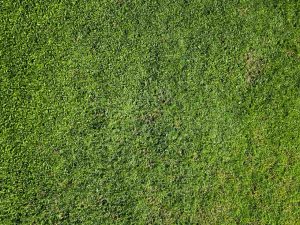
Spring is the best time to address bare patches that appeared over winter through frost damage, heavy use, or disease. The combination of warming soil, regular rainfall, and months of growing season ahead means grass seed sown in April to early May establishes well and fills in before the summer dry period. Preparation is the key factor: scratch up the bare surface with a hand fork to break the crust, apply a thin layer of top-dressing, sow seed at the recommended rate (around 50g per square metre for bare patches), and keep moist until germination appears in 10-14 days.
Lawn edges tend to deteriorate over winter as the soil freezes and thaws, leaving a ragged, sunken border. Repairing them is straightforward but makes a significant visual difference to the overall appearance of the lawn. A half-moon edging iron used on a dry day in April cuts a clean new edge; any turf removed can be replanted if needed or composted. Regular edging through the growing season after this initial spring cut keeps them neat with minimal effort.
Month-by-Month Spring Task Guide
The sequence of spring tasks matters as much as the tasks themselves. Feeding before raking is inefficient. Mowing before the grass is ready stresses the lawn. Overseeding into an unraked surface produces poor germination. The order below represents the optimal sequence for a typical UK spring, adjusted slightly based on whether yours is an early or late season.
Never apply a spring lawn feed during cold or frosty conditions. Nitrogen applied to cold, slow-growing grass cannot be taken up effectively and risks scorching the blades when temperatures swing between cold nights and warmer days. Always check the 5-day forecast before feeding – avoid periods with overnight temperatures below 5°C.
Share on socials: