At a glance
British winters are hard on grass. Cold temperatures, waterlogged soil, frost, and months of low light all put stress on a lawn that was growing strongly just weeks before. The instinct for many gardeners is to stop thinking about the lawn entirely until spring, but that passive approach often means starting March with a waterlogged, mossy, compacted surface that needs far more work to recover than it would have if a few simple winter tasks had been done.
Winter lawn care is not about intensive treatment. It is mostly about knowing which jobs are worth doing in mild conditions, which ones cause damage and should be avoided entirely, and how to read what the lawn is telling you over the cold months. Getting the balance right between doing too much and doing too little is the core skill of winter lawn management. Done right, a little winter attention produces a noticeably stronger lawn when growth restarts in spring.
What Happens to a Lawn in Winter
UK lawn grasses – predominantly ryegrass, fescue and bent – are cool-season species that do not go fully dormant in British winters the way lawns do in colder continental climates. Growth slows dramatically as soil temperatures drop below 5-6°C, but the grass remains alive and capable of recovering from stress when conditions improve. This matters because it means winter damage is not inevitable – it is the result of specific harmful actions or conditions that can largely be prevented with some basic awareness of what to avoid.
Mowing in Winter – When and How
Mowing does not stop entirely in winter – it stops when conditions make it harmful. The threshold is soil temperature, not calendar date. When soil temperature drops below 5°C, grass growth has effectively stopped and cutting it serves no purpose while adding stress. In milder parts of the UK, there may be weeks in December, January and February where a light cut is beneficial. In colder, wetter regions, the mower may not come out again after November.
When mild conditions do allow a winter cut, raise the cutting height significantly compared to summer – aim for 4-5cm rather than the 3cm or lower you might use in the growing season. Short grass going into a cold period is far more vulnerable to frost damage, disease and moss invasion. A longer sward retains more thermal mass and recovers from winter stress more effectively.
Frost – the Rules Every Gardener Needs to Know
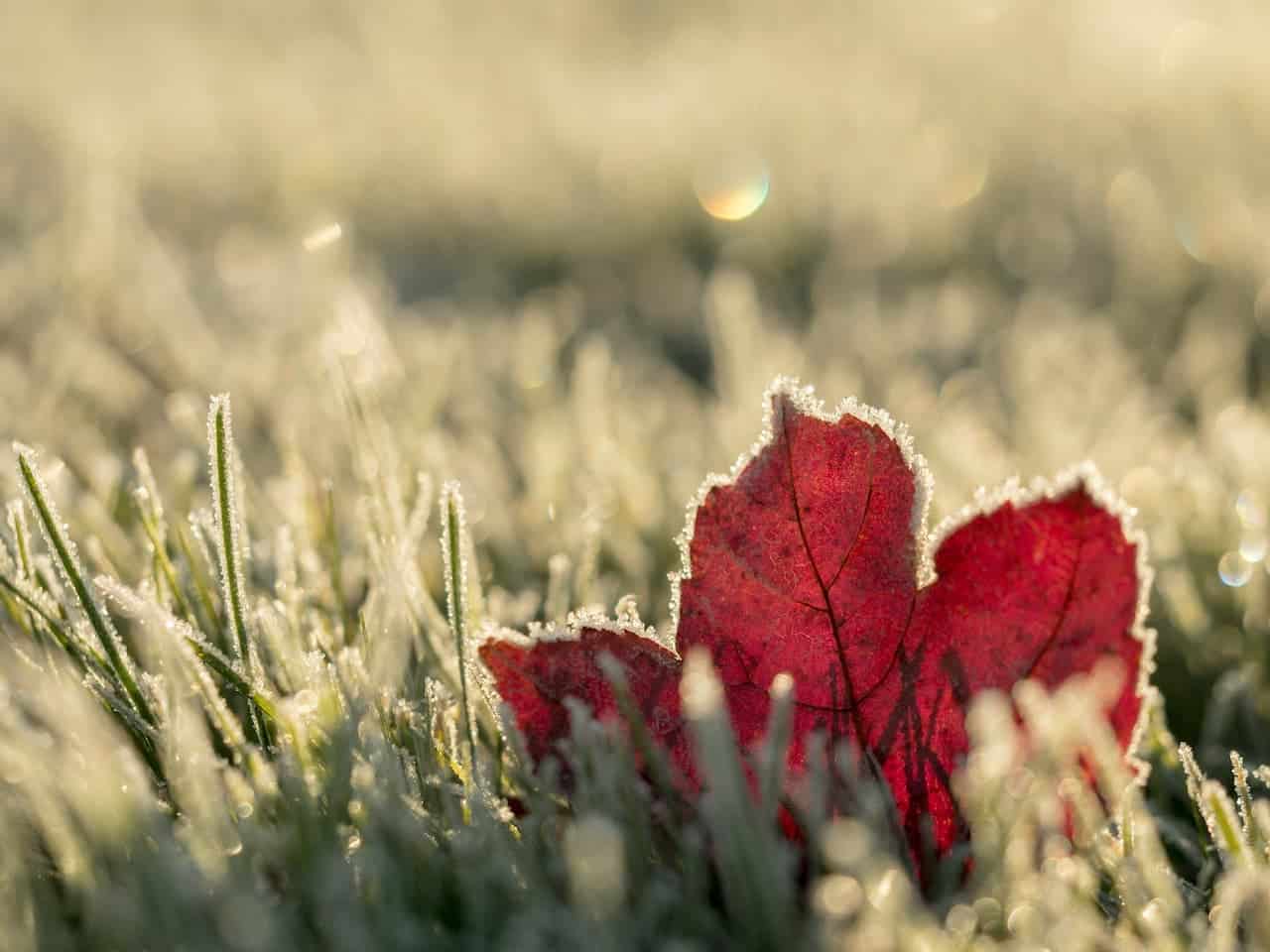
Frost is the single most misunderstood aspect of winter lawn care. Grass blades contain water, and when that water freezes it forms ice crystals within the plant cells. These crystals are fragile. Any weight or pressure applied to frosted grass – footsteps, a wheelbarrow, a lawn mower, even a dog – ruptures those crystals and destroys the cells. The resulting damage appears as brown or yellow footprint-shaped patches that can take weeks to recover, and on repeated frosts may not recover at all that season.
Never walk on frozen grass. Not to check on it, not to take a shortcut, not for any reason. Even light foot traffic on frosted grass causes visible damage within days. Wait until the frost has thawed and the grass is no longer crisp underfoot before using the lawn for any purpose.
Aeration and Drainage in Wet Winters
UK winters are typically wet, and waterlogged soil is one of the most damaging conditions for lawn health. Water sitting on the surface or in the root zone deprives grass roots of oxygen, promotes disease, encourages moss, and compacts the soil structure as it freezes and thaws repeatedly. If your lawn retains water for more than 24 hours after heavy rain, aeration is one of the most beneficial things you can do during a mild winter window.
Hollow-tine aeration – where small cores of soil are removed with a hollow fork or machine – is the most effective approach for compacted or waterlogged lawns. It creates channels for water to drain through and air to reach the roots, which benefits the grass throughout the entire cold period. November is usually the best month to aerate before the ground hardens, but on mild and dry days in December and January the job can still be done on unfrozen ground. Top-dress the holes with horticultural sand after aerating to keep the channels open over winter.
Moss and Disease in Winter
Winter is prime season for moss. The conditions that moss thrives in – shade, moisture, compaction, poor drainage, low soil fertility – are all at their worst between November and February. A lawn that coped fine through summer may look noticeably worse by January, with green moss spreading through the sward in wet, shaded areas. This is not necessarily a failure of lawn care – it is a predictable response to seasonal conditions that can be managed.
Iron sulphate applied in autumn or during mild winter spells is the standard UK approach to moss control. It blackens and kills moss quickly without harming grass, and the iron also slightly hardens the grass against frost. The dead moss should be raked out in late winter or early spring rather than being left to mat down and smother regrowth. Importantly, iron sulphate is not a permanent fix on its own. Addressing the underlying conditions – shade, compaction, drainage, soil acidity – is what prevents moss returning season after season rather than just treating the symptom each year.
Preparing the Lawn for Spring
The last weeks of winter – late February and early March in most of the UK – are a transitional period where the lawn begins to stir back into growth but the ground is often still cold and wet. Patience pays here. Starting spring treatments too early, when soil is still below 5°C and waterlogged, causes more harm than a late start would. The signs that spring treatments are safe to begin are: grass starting to grow noticeably, soil temperature above 8°C, and the ground firm enough to walk on without leaving footprints.
The first spring job is a thorough raking or light scarifying to remove the dead moss, thatch and debris that accumulated over winter. This opens up the lawn surface, lets light and air reach the base of the grass, and exposes bare patches that will need overseeding. Do this before applying any fertiliser – feeding a thatch-covered lawn is inefficient as nutrients cannot reach the roots effectively. A spring lawn feed in late March or early April, once growth is confirmed, sets the lawn up for the season ahead far more effectively than any amount of winter treatment could.
Share on socials: