At a glance
The difference between an average UK lawn and a genuinely impressive one is rarely about the grass variety or the products used on it. It is almost always about technique and consistency – mowing pattern, cutting height, edging discipline and a handful of habits applied regularly through the season. A well-established lawn of ordinary grass seed, cut correctly with sharp blades and edged consistently, looks dramatically better than a premium seed mixture neglected, scalped or left with ragged borders. The aesthetic potential of any lawn is largely determined by how it is maintained rather than what it was made of, and most of the techniques that make the biggest visual difference cost nothing beyond time and attention.
This is not about achieving a professional sports ground finish – that requires specialist equipment, intensive inputs and near-daily attention that is not realistic for a domestic garden. It is about the attainable improvements that take a standard UK family lawn from acceptable to genuinely attractive: crisp edges that define the boundary between lawn and border, a consistent mowing height that produces an even surface colour, and the occasional overseeding or topdressing that addresses thin areas and uneven ground. Done consistently across a growing season, these basics compound into a lawn that looks considerably better than most in a typical UK street, without significant additional cost or effort.
Mowing Technique and Stripes
The single most important mowing rule for lawn aesthetics is never to remove more than a third of the total grass leaf height in a single cut. Cutting below this threshold – often called scalping – stresses the grass plants, removes the growing points of the leaf, exposes the pale basal stems below the green leaf zone, and produces the brownish, straw-like appearance that many people blame on drought or disease. At a normal summer cutting height of 3-4cm, this means mowing before the grass exceeds 5-6cm. In peak growing season this typically requires mowing every five to seven days. Letting the lawn grow to 8-10cm and then cutting to 3cm in one pass is one of the most common causes of a lawn that looks poor despite regular attention.
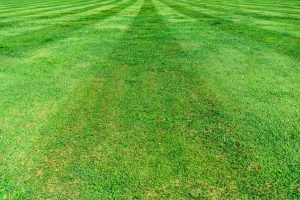
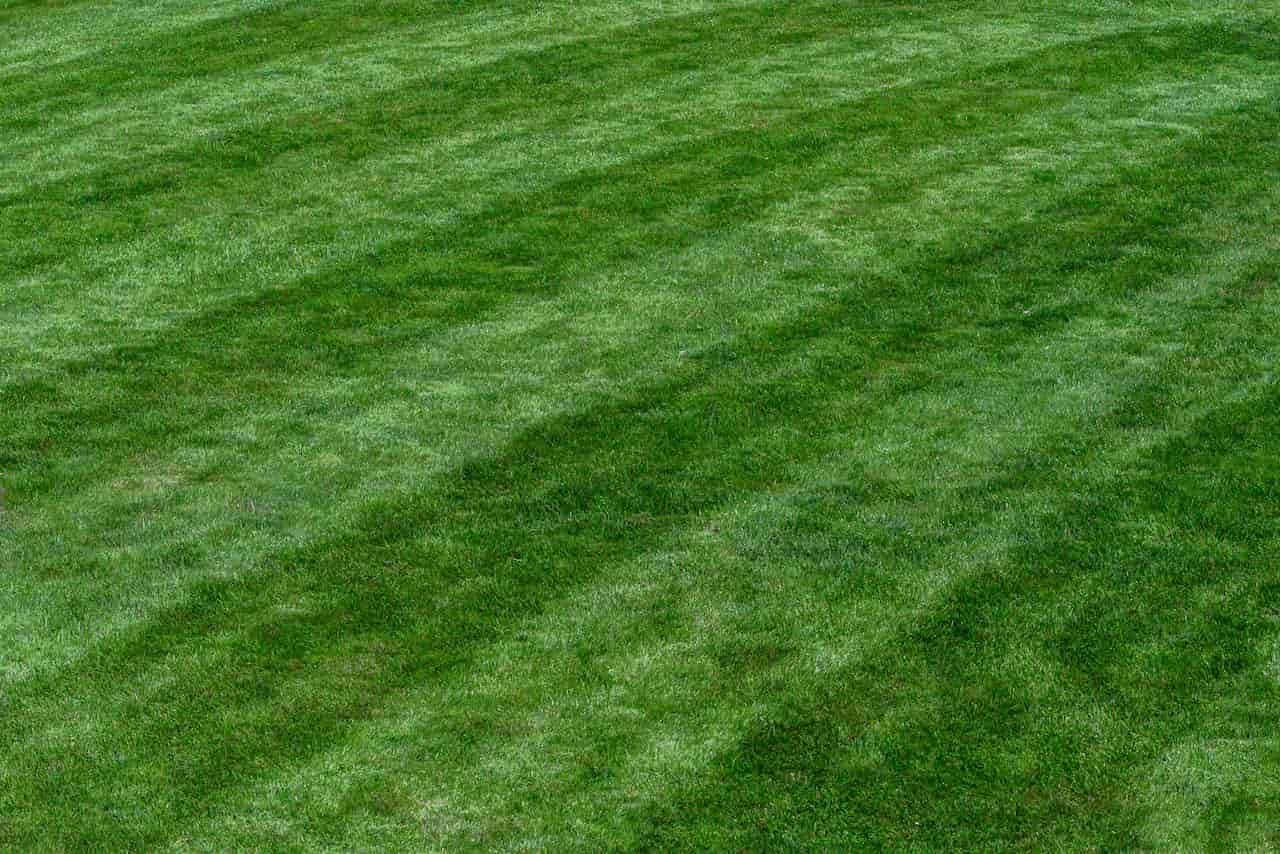
Lawn stripes are created by the bending of grass blades in alternating directions as the mower passes over them – light reflects differently off blades bent toward and away from the viewer, creating the alternating light and dark bands. A rear roller on the mower is what produces this bending effect, which is why rotary mowers without a rear roller produce no stripe regardless of how precisely they are driven. The stripe only appears when the grass is tall enough for the blade to visibly lean – at less than 2.5cm cutting height the blades are too short to bend significantly and no stripe forms. A rear-roller mower driven in straight parallel lines the stripes are clear and hold their appearance until the next mowing.
Always mow in straight lines aligned to the longest dimension of the lawn for the best stripe effect. Use a fixed reference point at each end – a fence post, garden edge or fixed object – to keep lines parallel as you work across the lawn. Alternate the direction of mowing by 90 degrees every few cuts to prevent the grass from developing a permanent lean in one direction, which eventually causes uneven growth and reduces stripe contrast.
Lawn Edging for a Sharp Finish
Sharp lawn edges have a disproportionate visual impact on the overall appearance of a garden. A lawn with perfectly crisp edges between the turf and adjacent borders or paths looks cared-for and intentional even if the grass itself is ordinary. The same lawn with ragged, overgrown edges looks neglected regardless of how well the grass is maintained. Edging is one of the highest-impact, lowest-cost improvements available to any lawn owner, and the technique is simple – what it requires is consistency rather than skill.
The correct method for establishing new lawn edges is to use a half-moon edging tool or a flat spade to cut a clean vertical face along the edge of a straight-edge board or a marked string line. This produces a crisp, defined transition between lawn and bed. Once the vertical edge is established, maintaining it requires only a pair of long-handled edging shears or a powered lawn edger used after every mowing. Edging after every cut takes a few minutes and keeps the edge defined. Leaving it for several weeks allows the grass to grow horizontally over the border, thatch builds up at the edge, and restoring a clean vertical face requires the more disruptive half-moon cut again. The discipline of edging consistently is more important than the tool used to do it. A battery-powered lawn edger makes the task faster and more precise than shears and is a worthwhile investment for any garden where lawn edges form a significant visual boundary, but hand shears used diligently after every mow produce results that are indistinguishable from powered edging.
Improving Density and Colour
A thin, sparse lawn with visible bare soil patches looks poor regardless of how well it is mowed or edged. Density – the number of grass plants per square centimetre – determines whether a lawn looks lush and full or thin and patchy. Density declines over time through wear, drought stress, disease, moss and natural plant loss, and the only way to restore it is by introducing new grass plants through overseeding. This does not require lifting the existing turf – simply scarifying to open the soil surface, sowing new seed over the existing lawn at the manufacturer’s recommended rate, and keeping the surface moist until germination is sufficient to introduce new plants into the existing sward and increase density markedly within four to six weeks. The best time to overseed for density improvement in the UK is September, when soil temperatures are still warm enough for reliable germination but conditions are cooler and moister than summer, reducing the watering needed to establish the seedlings.
Lawn colour – the depth and uniformity of green – is primarily determined by nitrogen availability and mowing frequency. A lawn that is well fed in spring with a high-nitrogen feed and mown regularly at the correct height will be noticeably deeper green than an unfed, infrequently cut lawn of the same grass variety. The difference is visible and significant. Iron treatments applied in autumn deepen the colour further and produce the very dark green associated with high-quality turf, without promoting the excessive growth that nitrogen causes – this is why a combined iron and autumn feed applied in September produces lawns that look their best through the autumn months when most neighbours’ lawns have faded.
Topdressing for a Level, Smooth Surface
Topdressing – the application of a thin layer of sandy loam or specialist topdressing mix over the existing lawn surface – is the most effective way to level minor bumps and hollows, improve surface drainage, and over time improve the overall soil structure in the root zone. Applied at 2-3kg per square metre brushed firmly into the sward, topdressing settles into the hollows of an uneven surface and creates a gradually improving level without disturbing existing grass. The process must be done annually over several years to produce a fully level surface – single applications improve but do not fully correct an uneven lawn in one season.
The correct timing for topdressing is immediately after autumn scarification, when the surface is open and the material can penetrate between the remaining grass plants rather than sitting on top of a dense sward. The topdressing material should match the existing soil type – sandy loam for most UK garden soils, with a higher sand content for soils that drain poorly. Avoid heavy clay-based materials which compact and make drainage worse. Brush the topdressing in thoroughly with a stiff broom, working it into the surface until it is no longer visible as a layer above the grass level. Any excess left sitting on the surface blocks light from the grass beneath and causes yellowing. Watering the lawn after brushing in helps the material settle further into the sward and accelerates its incorporation into the surface layer.
Do not apply topdressing deeper than 1cm in a single application. Applying too thick a layer smothers the existing grass beneath it, particularly fine-leafed species that cannot push through more than a centimetre of material. Multiple thin applications over successive autumns produce a better result than a single heavy application, and the grass remains healthy throughout the levelling process.
Share on socials: