At a glance
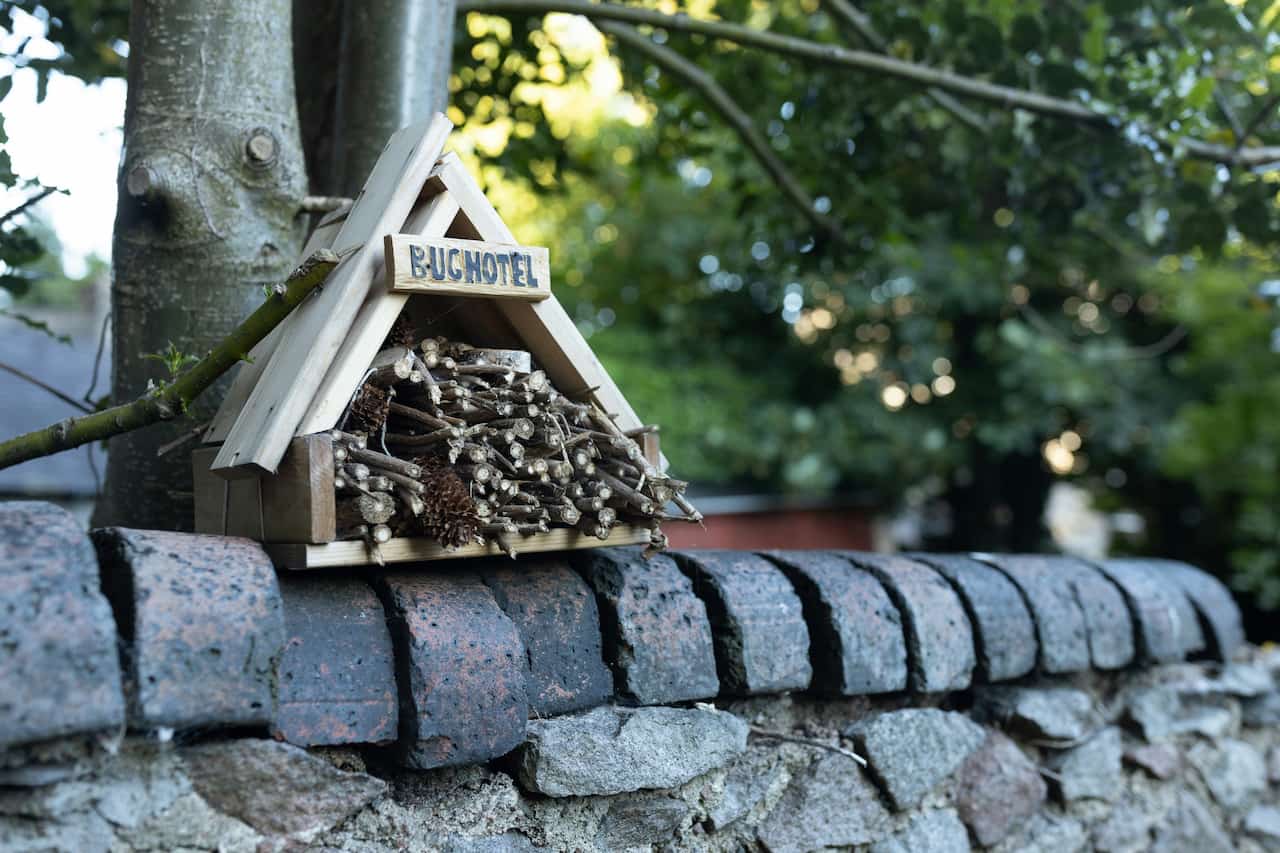
A bug hotel is one of the most genuinely useful things you can add to a UK garden for wildlife. Unlike many garden wildlife features that primarily benefit a single species, a well-built bug hotel provides overwintering habitat, nesting sites and refuge for a wide range of beneficial insects – solitary bees, lacewings, ladybirds, ground beetles, earwigs and more. These are the insects that pollinate your crops, prey on aphids and other pests, and form the base of the food chain that supports the birds and hedgehogs higher up.
The best part is that a bug hotel costs almost nothing to build if you are willing to use garden waste and natural materials. Old pallets, bamboo offcuts, hollow stems from perennials, loose bark, dry leaves, pinecones and straw are all ideal filling materials. A basic structure built from a few pallets stacked and filled with foraged materials is more effective than many expensive proprietary versions, which often use materials that are too smooth, too wet or too uniform to be genuinely useful. The same approach to creating layered habitat applies across the garden – a wildlife pond combined with a well-sited bug hotel addresses the needs of a much wider range of species than either feature alone.
Why build a bug hotel
Intensive land management, tidier gardens and the loss of old trees and decaying wood have dramatically reduced the availability of the nooks, crevices and hollow stems that most beneficial insects depend on for nesting and overwintering. A bug hotel directly addresses this by providing a concentrated, accessible alternative in your garden. The benefits feed back into the garden itself – solitary bees are highly effective pollinators, lacewings and ladybirds consume enormous numbers of aphids in their larval stages, and ground beetles are significant predators of vine weevil grubs, slug eggs and other soil pests.
For gardeners with children, a bug hotel is also one of the most engaging educational features a garden can contain. The insects that move in are large enough to observe easily, safe to handle in most cases, and genuinely interesting. Regular checking of the hotel through spring and summer – looking for leaf-cutter bee cells, lacewing eggs and emerging ladybird larvae – is the kind of direct wildlife encounter that is increasingly rare for children growing up in urban and suburban areas.
Best materials to use
Always use untreated wood for any structural elements and fillings. Pressure-treated timber contains preservatives that are toxic to insects. If buying new timber specifically for the structure, look for FSC-certified untreated softwood. Old pallets are ideal if you can confirm they are heat-treated (marked HT) rather than chemically treated (marked MB, which indicates methyl bromide treatment – avoid these entirely).
Building step by step
The simplest effective bug hotel starts with two or three wooden pallets stacked vertically. Stand them on end and stack them directly on top of each other, securing with short screws through the frame. This creates an instant series of compartments ready to fill. Add a weatherproof roof – a piece of corrugated roofing sheet, old slates or thick bark slabs – overhanging the front by at least 10cm to keep rain off the filling materials. Wet fillings rot quickly and provide poor habitat.
For a smaller, neater version, build a simple frame from untreated timber – a box roughly 50x50cm with internal dividers creating four to six compartments of different sizes. Screw the frame together securely and add a back panel. Fill each compartment with a different material before fitting a mesh or wire front to hold contents in place while allowing access for insects. Either approach works well – the pallet version is faster and larger, the built version is tidier and better suited to smaller gardens or patios.
Cut bamboo canes so the node (solid joint) forms the back wall of each tube. Bees need a sealed back to their nest tube to lay eggs against. Bamboo cut with a node at one end and an open end at the front is perfect. Bamboo cut open at both ends is used far less frequently. Check each section before bundling – the node should be intact and the open end smooth and free of splinters.
Filling each section
Pack bamboo canes and hollow stems tightly into one section – dense packing prevents them shifting and falling out, and gives bees the sense of security they need before they will nest. Drill a log section with 6mm and 8mm holes, 8-10cm deep, at a slight upward angle so rainwater cannot pool inside. Keep holes smooth at the entrance – rough, splintered edges deter use. Pack loose bark and wood chunks into a lower section where moisture will not cause problems for the drier upper sections.
Fill one section with dry straw or leaves loosely packed – not compressed, as lacewings and ladybirds need to be able to push inside. Pinecones wedged tightly into a section fill the gaps between scales with shelter. Vary the height of different sections if building from pallets – a ground-level section of loose stone or broken pot pieces adds habitat for ground beetles and bumblebee queens looking for nesting sites in spring.
Where to site it
Site the bug hotel in a position that receives morning sun – an east or south-east facing aspect warms the structure early in the day and is particularly important for solitary bees, which need warmth to become active. Avoid full shade – a hotel in permanent shade will be damp and cold, conditions that suit only a limited range of species. The ideal position is against a south-facing fence or wall, protected from prevailing wind and rain but with good sun exposure to the front.
Height matters for different users. Ground level sections attract beetles and bumblebees. Sections at 1-1.5m height attract solitary bees and lacewings. If the structure is tall enough to span both heights, it covers the widest range of species. Stability is important – the structure must not rock or move, as bees will abandon nests disturbed by movement. Fix to a fence post or wall if necessary.
Which insects will move in
Red mason bees (Osmia bicornis) are the most frequent users of bamboo and drilled log sections in UK gardens. They are active from March to June, are highly effective pollinators – significantly more so per individual than honeybees – and are completely harmless. Leafcutter bees use sections of leaf to seal their nest cells in the same tubes from June onwards, leaving neat circular cuts in garden plant leaves as the only evidence of their activity.
Lacewings overwinter in dry leaf and straw sections in large numbers and emerge in spring to lay eggs on aphid colonies. A single lacewing larva consumes hundreds of aphids during its development – their presence in a bug hotel translates directly into reduced aphid pressure on nearby plants. Ladybirds similarly overwinter in the structure and emerge to predate aphids, scale insects and mites through the growing season.
Maintenance through the year
A bug hotel requires minimal maintenance but benefits from an annual autumn check. Replace any bamboo sections that have become damaged, mouldy or compacted – fresh bamboo and hollow stems are colonised much more readily than old degraded material. Top up dry leaf and straw sections that have compressed or blown away. Do not disturb filled bamboo cells – the sealed ends indicate active nests containing eggs or pupae that will emerge the following spring.
Never move a bug hotel once solitary bees have begun nesting in it. Moving a structure even a short distance causes returning bees to lose the precise location they have memorised. They will continue searching for the original position, unable to find their nest, and the larvae inside will die without the further provisioning they need. If the hotel must be moved, do so only in winter when no active nesting is taking place.
Share on socials: