At a glance
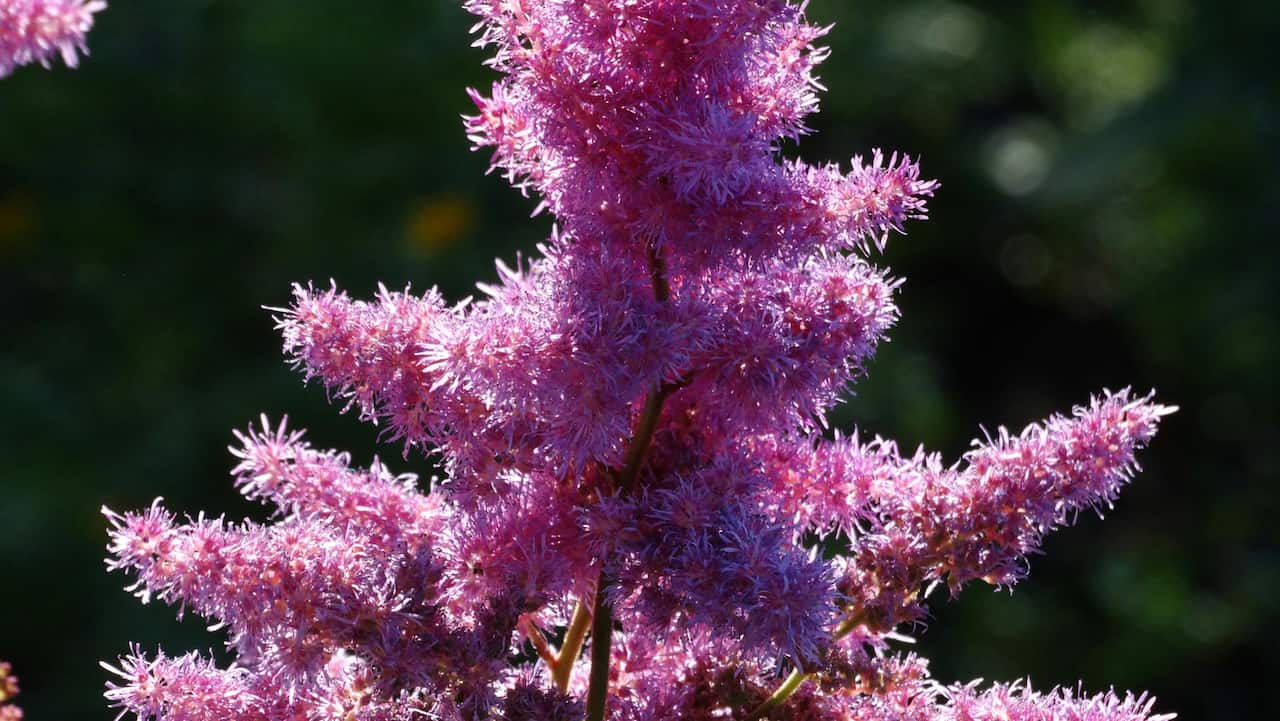
Astilbe is one of those plants that earns its place in a UK garden by doing something that few ornamentals manage well: producing genuinely showy flowers in shade and persistently damp conditions. Its feathery plumes – held on upright stems above deeply cut, fern-like foliage – come in shades from white through pale pink to deep crimson and purple, and they appear from June to August depending on variety. The flowering display is followed by attractive seed heads that hold their structure through autumn and well into winter, extending the plant’s seasonal interest significantly beyond the summer flush.
The critical requirement for astilbe is moisture. It originates from streamside and woodland edge habitats in Asia and North America where the soil is consistently damp and humus-rich, and it performs poorly in dry conditions regardless of how shaded the position is. In a UK garden that can provide consistent moisture – a shaded border, a waterside planting, a north or east-facing bed amended with plenty of humus-rich material – astilbe is an exceptionally reliable and low-maintenance perennial. Where the soil dries out in summer, the plant struggles badly, the foliage scorches and the flowering display is significantly reduced. Understanding this single critical requirement is the key to growing astilbe successfully in UK gardens.
About astilbe
Astilbe belongs to the Saxifragaceae family and is closely related to several other shade-loving garden plants. The genus contains around 20 species, but almost all garden astilbes are hybrids – primarily derived from species native to China, Japan and Korea – bred to produce the range of flower colours and sizes available to UK gardeners today. The plants are fully hardy in the UK and, once established in suitable conditions, are among the most trouble-free perennials available. They die back completely in winter, producing new growth from the crown each spring, and increase steadily in size to form handsome clumps that can be divided every few years to produce additional plants. The foliage itself is a garden asset independently of the flowers – deeply cut, glossy and often tinged bronze or red in some varieties, it provides textural interest from the moment it emerges in spring through to the first hard frosts of autumn.
Best varieties for UK gardens
The range of astilbe varieties available in the UK is extensive and covers a wide spread of heights, flower colours and flowering times. Choosing varieties with different flowering periods extends the display significantly – early varieties in late June give way to mid-season types in July, with late varieties carrying the plumes into August. Mixing tall backdrop varieties with compact front-of-border types also creates a more naturalistic layered planting. Flower colour does not fade as quickly in shade as it does in full sun, which means the rich reds and deep crimsons of varieties like ‘Fanal’ remain vibrant for longer in the conditions astilbe prefers.
Astilbe chinensis varieties, including ‘Vision’ and ‘Visions in Red’, are worth noting for their slightly better tolerance of drier conditions compared to other astilbe groups – not drought-tolerant in the conventional sense, but noticeably less likely to scorch in a warm summer than the arendsii hybrids. For gardens where consistent moisture is difficult to maintain, the chinensis group offers a more forgiving starting point. They are also generally later flowering, extending the display into August when many other shade plants have finished.
Planting and position
Astilbe is planted in spring or autumn. Spring planting allows the roots to establish during the growing season before facing their first winter; autumn planting works well in milder parts of the UK but needs to be completed by October to allow sufficient root establishment before frost. Container-grown plants can be planted at any time if watering is consistent, but spring remains the ideal for most UK gardens. Bare root divisions – which are available more cheaply from mail order nurseries – should be planted in spring as soon as the ground can be worked, before the crowns begin to produce new shoots.
Prepare the planting area by digging in generous amounts of garden compost or well-rotted leaf mould – both improve moisture retention and provide the humus-rich soil structure astilbe needs. Plant with the crown at soil level, not buried deeper. Space plants 45-60cm apart for medium varieties and 30cm for compact types. Water in thoroughly and apply a mulch of compost or leaf mould around the base immediately after planting, keeping it clear of the crown, to help retain moisture through the first growing season. In very free-draining soils, working in water-retaining gel crystals alongside the compost can help maintain consistent moisture between waterings during the first summer after planting.
Astilbe crowns rise above the soil as the plant matures. This is natural and not a sign of incorrect planting. Exposed crowns can be vulnerable to frost damage in harsh winters – in colder parts of the UK, mulch the crowns generously in late autumn to provide insulation. Do not bury the crown when topdressing or mulching, as this can cause it to rot.
Care through the seasons
Once established in appropriate conditions, astilbe requires very little maintenance. The key ongoing task is keeping the soil consistently moist, which in a UK garden usually means supplementary watering during dry spells in summer and ensuring the soil has been well enriched with organic matter to retain moisture between rain events. A thick mulch applied in spring helps considerably with moisture retention through the summer months. Feeding is straightforward – a single application of a balanced slow-release granular fertiliser in spring, worked lightly into the soil surface around the clump, provides all the nutrients needed for a full season of growth and flowering. Astilbe does not need deadheading; the spent plumes are best left in place as they develop into attractive seed heads that extend the plant’s season well into autumn and provide food for small birds through winter.
Problems and companions
Astilbe in appropriate growing conditions has very few problems. The most common issue is simply drought stress – the foliage browning and becoming crisp at the edges is the classic symptom of insufficient moisture and can look alarming but rarely kills an established plant. Cutting back the scorched foliage and watering deeply usually allows the plant to produce new leaves, though the flowering display for that season will be reduced. The remedy is always the same: improve soil moisture retention and water more consistently the following year. Slugs are the other main pest to watch for, targeting the emerging shoots in April and May when the new growth is at its most tender. Organic slug pellets or copper tape around individual crowns provides effective protection through the most vulnerable period. Once the foliage has hardened – usually by late May – slug damage becomes much less of a concern.
Astilbe associates beautifully with other shade and moisture-loving perennials and works particularly well in mixed borders where its feathery plumes provide textural contrast to broader-leaved companions. Heuchera provides contrasting foliage colour and texture at the front of the border while astilbe holds the midground and background with its vertical plumes. Astrantia thrives in similar damp, partially shaded conditions and its intricate white and pink flowers combine well with astilbe plumes. Hostas, ferns and hydrangeas all share astilbe’s preference for shade and consistent moisture, making them entirely natural companions in a cohesive planting scheme.
Share on socials: