At a glance
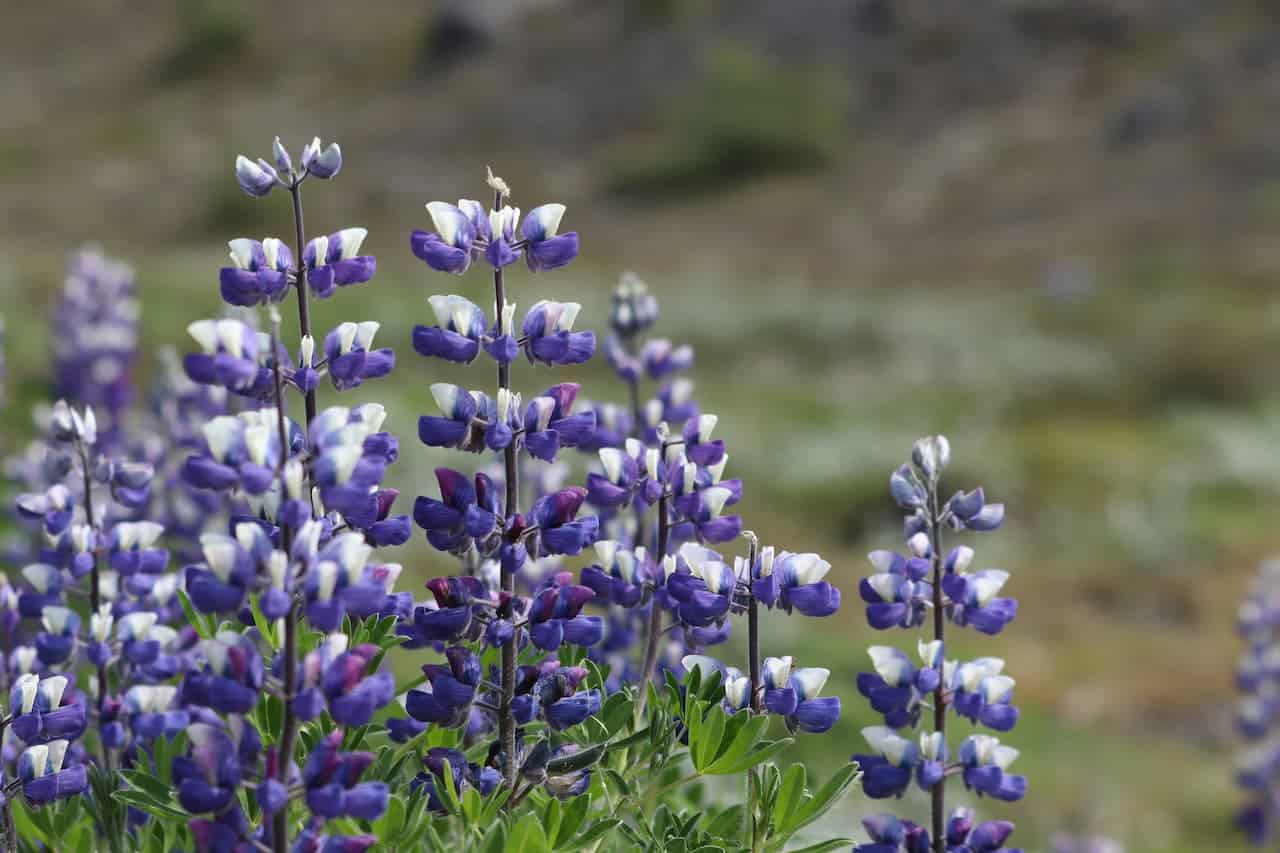
Lupins are one of the defining plants of the British early summer border. Their dense conical flower spikes in purple, pink, red, orange, yellow, white and bi-colour combinations rise above bold palmate foliage from late May through to July, providing vertical presence that few other herbaceous perennials can match at the same season. They are perennials, though short-lived ones: most plants perform well for four to six years before declining and needing replacement. Within that period they return and expand year after year, producing more flowering spikes each season as the crown increases in size. Get three things right from the start and lupins will thrive: acid to neutral soil, good drainage and correct deadheading.
Soil and site
Soil pH is the single most important factor in lupin success. Lupins require acid to neutral soil, ideally between pH 6.0 and 7.0. On chalky or limestone soils, which push pH well above 7.0, lupins cannot absorb iron and manganese from the soil. The result is lime-induced chlorosis: leaves turn yellow between the veins, the plant fails to thrive regardless of feeding or watering, and eventually declines. This is not a recoverable situation on strongly alkaline soils. If your garden has chalk or limestone subsoil, grow lupins in raised beds or large containers filled with ericaceous compost.
Lupins do not need particularly fertile soil. Their root nodules fix atmospheric nitrogen, meaning they manufacture their own nitrogen supply and do not benefit from high-nitrogen feeding. A soil heavily enriched with manure or nitrogen fertiliser produces lush leafy growth with fewer flowers. On neutral or slightly acid soils, working in well-rotted organic matter before planting improves moisture retention without adding excess nitrogen. Good drainage at the crown is essential for winter survival. Lupins tolerate frost without any problem but do not tolerate sitting in waterlogged soil through winter. Crown rot in poorly drained positions is the most common cause of lupin death in UK gardens.
Varieties
The Russell lupin hybrids remain the dominant form in UK cultivation, offering an extraordinary range of colours in reliably hardy perennial plants that perform well in most British gardens.
Named varieties bought as plants or plug plants guarantee the colour you expect. Unnamed mixed seed strains are more economical but produce variable results. They occasionally produce something outstanding that no named variety offers, and experienced growers who save seed from their best performers over successive seasons often develop well-adapted selections that suit their specific soil and conditions.
Sowing from seed
Lupin seed has a hard coat that inhibits germination. Scarify each seed lightly by nicking the coat with a sharp knife or rubbing on sandpaper, or soak in warm water overnight. Either treatment significantly improves germination rate and speed compared to unscarified seed sown dry. Sow individually in small pots or deep module cells rather than trays. Lupins develop a long tap root from the earliest seedling stage and dislike root disturbance. A module cell that is too shallow causes the tap root to curl, which weakens the plant.
Sow one seed per pot at a depth of around six millimetres in a good-quality seed compost. Keep at ten to twenty degrees Celsius. Germination typically takes ten to fourteen days from scarified seed. Grow on in pots, keeping well-watered, and harden off before planting out after the last frost risk has passed.
Planting out
Plant out from late April in southern England to late May in Scotland and northern England. Handle the root ball carefully and avoid disturbing the tap root. Plant at the same depth as the plant was growing in its pot. Space at sixty to ninety centimetres apart, as established clumps spread considerably at the base over successive seasons.
Choose the planting position with care. Lupins resent being moved once established because the deep tap root is easily damaged during transplanting of mature plants, often killing or severely setting back the plant. The position you choose at planting is, in most cases, the position for the life of the plant. Water in well after planting and apply a layer of mulch around the base to retain moisture. Do not mulch onto the crown itself.
Care through the growing season
Deadheading for a second flush
Deadheading lupins correctly produces a second flush of smaller flowering spikes that extends the total display by three to four weeks. When the lowest flowers on a main spike begin to fade and drop, cut the entire spike down to just above the basal leaves. The plant redirects energy into side shoots that develop into secondary spikes. The timing of this cut matters. Cutting too early removes flowering potential. Cutting too late, after the spike has formed seed pods, means the plant has committed energy to seed production and the secondary flush will be weaker. The correct moment is when the lowest quarter to third of flowers on the spike have faded.
If seed saving is wanted, leave one or two spikes on the best plants to ripen fully. Lupin seed pods split explosively when ripe and scatter seed at some distance, so collect the pods just before they open if control over placement is needed. Lupins grown from saved seed from named varieties will not come true to colour due to crossing, but mixed seed strains selected over several seasons often develop well-adapted plants suited to the specific garden.
Late summer cut-back
After all flowering is finished, cut the whole plant down to the basal rosette of leaves. Do not remove the basal leaves entirely. Leave the low rosette in place through the remainder of the growing season so the plant can continue photosynthesising and building the reserves it needs for next year. Apply a light mulch of well-rotted compost around the base after cutting. Lupins are fully hardy in the UK and require no winter protection in most regions. The basal foliage typically persists through winter as a low evergreen rosette.
Dividing and propagation
Taking basal cuttings in spring is a more reliable method of propagation than dividing the whole clump. In March or April, when new basal shoots are eight to ten centimetres tall, cut them cleanly from the base with a sharp knife, taking a small piece of the woody root crown with each cutting. Root in pots of gritty compost in a cold frame or sheltered position. Rooting takes three to four weeks.
Full division of the root clump is possible but disruptive to the tap root. If division is attempted, do it in early spring before significant growth has occurred, replant divided sections immediately into well-prepared soil, water thoroughly and expect reduced flowering in the first season after division as the plants re-establish. Most growers find it more effective to take basal cuttings from established plants and grow new replacements alongside aging ones, rather than dividing clumps that are performing well.
Toxicity
All parts of lupins are toxic, particularly the seeds and seed pods. The alkaloids in lupin seeds cause nausea, vomiting and in significant quantities can affect the central nervous system. Keep children and pets away from the seed pods. Wear gloves when handling the plants and wash hands afterwards. The toxicity does not transfer through the soil.
Pests and problems
Lupins face a handful of recurring problems in UK gardens. Each has a distinct pattern that makes identification straightforward.
Lupins fix their own nitrogen through root nodules. Like all legumes, lupins host nitrogen-fixing bacteria in nodules on their roots. This means they do not need high-nitrogen feeding. A balanced or slightly high-potassium feed in spring is all they need. When you cut lupins back after flowering, leaving the roots to decompose releases the fixed nitrogen, which benefits surrounding plants.
Share on socials: