At a glance
March is the month the UK garden comes back to life – and it demands your attention like no other month in the calendar. The days are lengthening, soil temperatures are creeping upward, and there is a long list of tasks that need doing now to set up a productive season ahead. Get March right and you’ll be harvesting early salads in May, have a lawn that’s already strengthening and borders that are weed-free before the main growing season starts.
But March in the UK also still carries frost risk – particularly in the north, Scotland and higher ground – and the classic mistake is getting carried away with outdoor sowing and planting before conditions are reliably safe. This guide covers what to do, what to hold back on, and the regional differences that matter.
Vegetable garden jobs
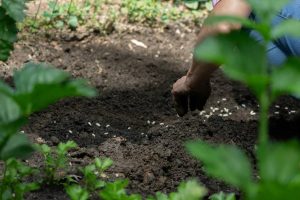
The vegetable garden is where March demands the most attention. Indoor sowing season is well underway, and the list of what can now go directly outdoors expands as the month progresses.
| Crop | What to do in March | Notes |
|---|---|---|
| Broad beans | Sow direct outdoors from mid-March | Hardy – can go in even if light frosts still possible |
| Peas | Sow direct from mid-March, or indoors in guttering | Cold-tolerant but not frost-hardy – use fleece if needed |
| Onion sets | Plant from mid-March when soil is workable | Sets establish faster than seed-raised onions |
| Garlic | If not planted in autumn, plant now – last chance | Spring-planted garlic produces smaller bulbs than autumn-planted |
| Salad leaves | Sow indoors from early March, outdoors late March under fleece | Sow every 2-3 weeks for continuous harvest |
| Tomatoes | Sow indoors on a warm windowsill from mid-March | Need 6-8 weeks indoors before planting out in May/June |
| Chillies and peppers | Sow indoors – earlier the better in March | Slow germinators needing warmth – heat mat helps |
| Courgettes | Sow indoors from late March | Fast growing – don’t sow too early or they’ll be huge before planting out |
| Potatoes | Chit early varieties now – plant late March to April | Stand upright in egg boxes in a cool, light, frost-free place |
Sow peas in lengths of guttering for a no-disturbance transplant. Half-fill a length of guttering with compost, sow peas 8cm apart, and grow on indoors. When ready to plant out, simply slide the whole row out of the guttering into a prepared trench. Peas hate root disturbance – this method avoids it entirely and gives you a 3-4 week head start on direct sowing.
Lawn care jobs
March is the start of the lawn care season in most of the UK. The grass is beginning to grow again and there are several jobs that are best done now before the main growing season gets into full swing.
- Apply the first lawn feed of the year – use a spring/summer feed with high nitrogen from mid-March onwards when the grass is actively growing. Never feed dormant or frozen grass – the fertiliser burns rather than feeds.
- First mow of the year – when grass reaches about 6-7cm, cut it back to 5cm on the highest mower setting. Never cut more than a third of the blade length in one pass. The first cut of the year should be high – scalping weakens the grass and invites moss and weeds.
- Rake out dead moss and thatch – a vigorous raking or light scarifying in March removes the dead material that’s accumulated over winter and allows air and nutrients to reach the roots.
- Repair bare patches – March is an excellent time to overseed bare or worn areas. Scratch the surface with a rake, apply seed at the recommended rate, and keep moist. Growth should show within 10-14 days.
- Apply lawn weed treatment – from late March when temperatures are consistently above 10°C, selective lawn weedkillers become effective. Earlier application in cold conditions wastes product and may damage grass.
Border and planting jobs
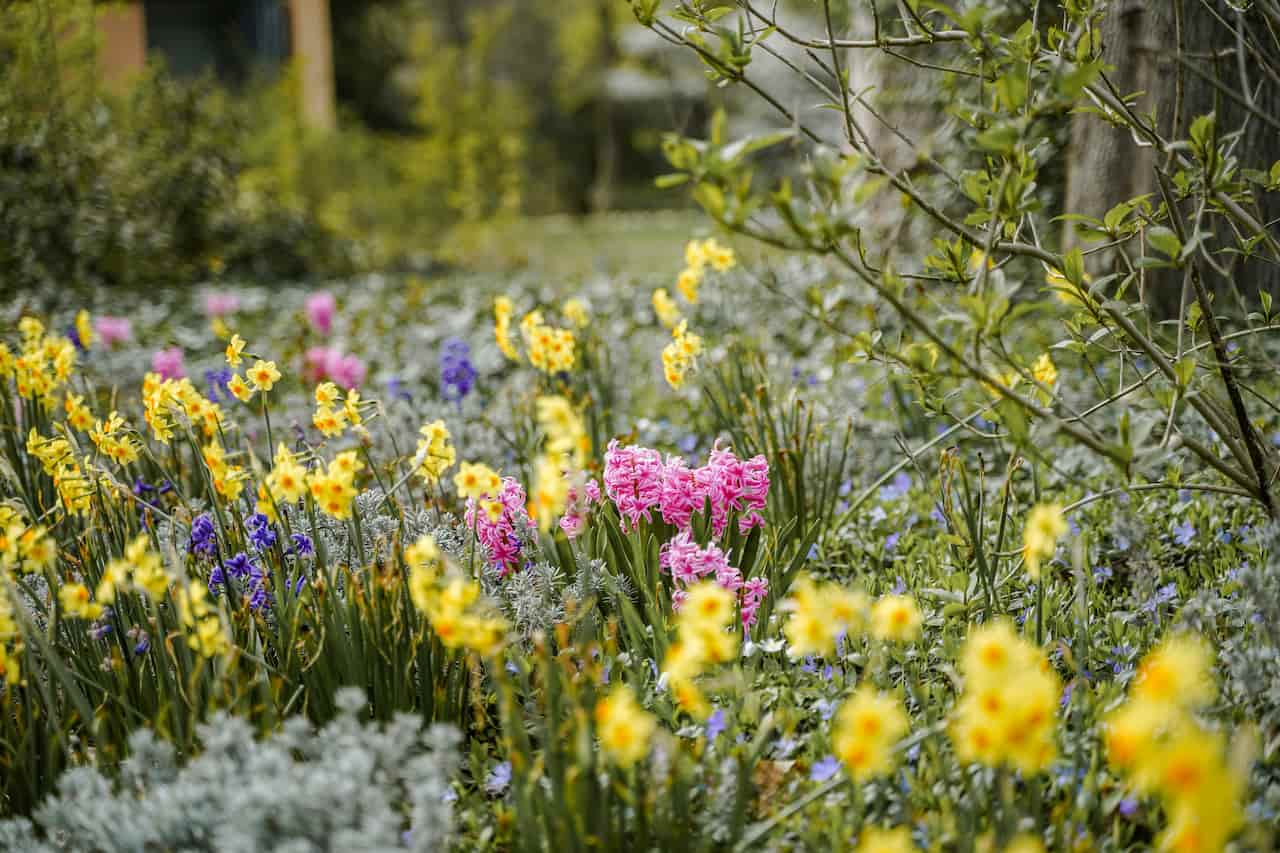
March borders are busy places. Many early perennials are already showing growth and there is important preparation work to do before the main planting season begins.
- Remove winter mulch from perennials – pull back any mulch you applied in autumn to protect tender crowns, now that hard frosts are becoming less likely. Leaving thick mulch in place as growth begins can cause crowns to rot.
- Divide established perennials – clump-forming perennials such as hostas, crocosmia, rudbeckia and ornamental grasses can be divided in March as they come into growth. Dig the clump, split it with a spade or two forks back-to-back, and replant sections with space to develop.
- Plant summer bulbs – dahlia tubers, gladioli and begonias can be started in pots indoors in March for earlier flowering, or planted directly outdoors from late March in the south.
- Weed borders thoroughly – March is the best time to clear borders before weeds establish. Annual weeds are easiest to remove now while small. Perennial weeds like dandelions, bindweed and ground elder are just coming into growth – tackle them now before they strengthen.
As an Amazon Associate I earn from qualifying purchases. Prices correct at time of publishing.
Pruning jobs
March is one of the most important pruning months in the UK gardening calendar. Several key plants need pruning now – before growth gets underway properly – and leaving it later makes the job harder and can reduce flowering.
- Roses – prune hybrid tea and floribunda roses hard in March, cutting back to outward-facing buds about 30cm above the ground. Remove all dead, diseased and crossing stems. This is the most important pruning job of the month.
- Hardy fuchsias – cut back all last year’s growth to ground level or to the lowest pair of healthy buds. Hardy fuchsias regenerate strongly from the base and pruning now encourages dense, bushy growth.
- Buddleja – cut back hard to a low framework of branches, leaving two or three buds on each main stem. Buddleja flowers on new wood so hard pruning produces the best display.
- Ornamental grasses – cut deciduous grasses back to 10-15cm above the ground before new growth begins. Don’t cut evergreen grasses hard – just comb out dead material with your fingers.
Don’t prune spring-flowering shrubs in March. Forsythia, flowering currant, magnolia and other spring-flowering shrubs are either in flower or about to flower in March. Pruning them now removes this season’s flowers entirely. Wait until immediately after flowering to prune spring-bloomers – the rule is prune after flowering, not before.
Regional differences – north vs south
| Task | South England and Wales | North England and Scotland |
|---|---|---|
| First outdoor sowings | Early to mid-March | Late March to April – soil still cold |
| Potato chitting | Chit now, plant late March | Chit now, plant April |
| Rose pruning | Early to mid-March | Mid to late March |
| First lawn feed | Mid-March when growing | Late March to early April |
| Dahlia tubers outdoors | Late March under fleece | April – frost risk too high in March |
| Frost risk | Reducing but still possible | Significant frost risk all month |
March gardening checklist
- Sow tomatoes, chillies and peppers indoors on a warm windowsill
- Sow broad beans and peas direct outdoors from mid-month
- Plant onion sets and garlic
- Begin chitting potatoes
- Apply first spring lawn feed when grass is actively growing
- First mow of the year on the highest setting
- Repair bare lawn patches with fresh seed
- Prune roses, buddleja, hardy fuchsias and ornamental grasses
- Remove winter mulch from tender perennials
- Divide overgrown perennial clumps
- Clear borders of weeds before they establish
- Check stored dahlia tubers and begonia bulbs for rot
- Keep fleece handy for cold snaps – especially in the north
March sets the tone for the whole gardening year. Everything you do this month – the seeds you sow, the lawn care you start, the pruning you complete – determines what you’re harvesting and enjoying from May onwards. For what’s coming up next month, read our February gardening jobs UK guide to see what should already be done, and plan your April tasks accordingly.
As an Amazon Associate I earn from qualifying purchases. Prices correct at time of publishing.
Share on socials: