At a glance
Sunflower hearts are the single most versatile and widely appreciated food for UK garden birds – taken by over 20 common species including finches, tits, sparrows, nuthatches and even blackbirds when offered on a ground tray. They produce no husks so there is no mess beneath the feeder, and they are nutritionally dense. If you stock only one food, sunflower hearts are the right choice. Peanuts are the second best all-round food – high in fat and protein, taken eagerly by tits, sparrows, nuthatches and greater spotted woodpeckers. Peanuts must be offered in a mesh feeder rather than loose, to prevent whole nuts being fed to nestlings which can choke them.
Fat balls provide concentrated energy particularly valuable in cold weather and are taken by a very wide range of species. Buy good quality fat balls without net bags – the mesh can trap birds’ feet and cause injury or death. Nyjer seeds attract goldfinches reliably and are available year-round – a dedicated nyjer feeder is one of the most effective ways to establish a resident goldfinch flock in the garden. Mealworms are essential if attracting robins is a priority, as robins strongly prefer live invertebrate food over seed of any kind.
The best foods for UK garden birds
Understanding which foods attract which species makes it possible to target the birds you most want to see rather than relying on a single food that only suits a handful of species. The foundation of any productive feeding station is a high-quality seed mix or straight sunflower hearts at the primary hanging feeder, a peanut mesh feeder for tits and woodpeckers, and a ground tray stocked with mealworms and soft food for the ground-feeding species that make up a significant proportion of the garden bird community.
Feeder types and placement
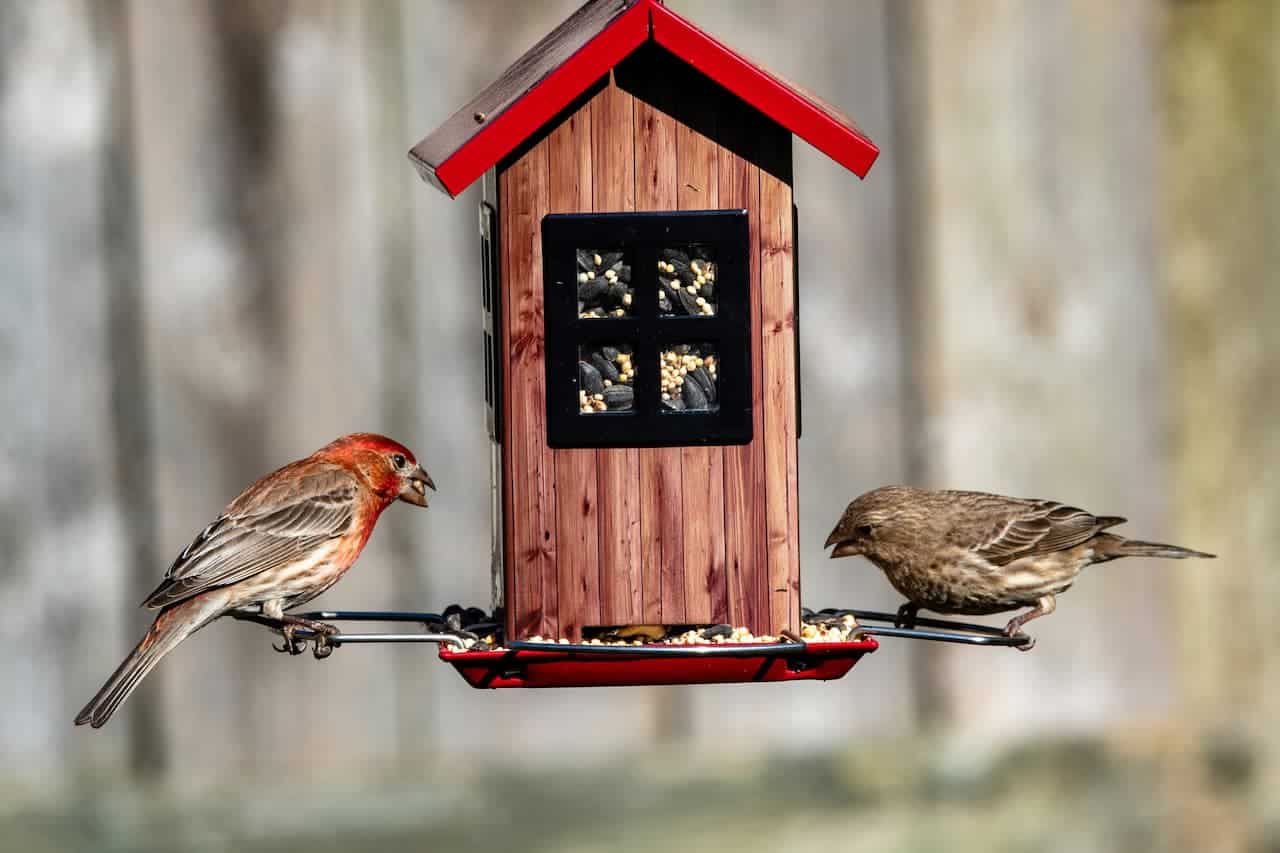
Different feeder types attract different species and present food in different ways. Tube feeders with small ports suit sunflower hearts and nyjer and attract tits, finches and nuthatches. Peanut mesh feeders allow tits, sparrows and woodpeckers to pull small pieces through the mesh. Fat ball holders provide suet and attract a broad range. Ground feeding trays are essential for blackbirds, thrushes, dunnocks and robins – species that rarely use hanging feeders. A well-stocked station includes at least one hanging feeder and a ground tray to cover the full range of common garden bird species.
Placement should balance accessibility for birds and safety from cats. Position feeders at least 2 metres from any potential jumping platform – fences, walls, trees – that a cat could use to launch an ambush. Some cover within 2-3 metres is valuable so birds can retreat quickly, but direct concealment by dense vegetation allows cats to approach unseen. A feeding station pole positioned in the centre of a lawn with a squirrel and cat baffle fitted below the feeder bracket is the most practical arrangement. A bird bath placed 1-2 metres from the feeding station creates a natural complementary resource that increases the total time birds spend in the garden.
Vary feeder heights to reduce competition. Dominant species like starlings will monopolise a single ground tray and exclude smaller birds. Positioning sunflower heart feeders at different heights – some hanging high, some in a low cage feeder designed to exclude large birds – allows smaller species like siskins, long-tailed tits and coal tits to feed without being displaced.
Feeder hygiene
Dirty feeders are a major source of disease transmission among garden birds. Salmonella, trichomoniasis and avian pox can all be spread through contaminated feeders and ground feeding areas. The minimum hygiene standard is to clean feeders with a dilute disinfectant solution – 1 part bleach to 10 parts water – every two weeks, rinse thoroughly and allow to dry completely before refilling. High-traffic stations in summer may need weekly cleaning. Remove and discard uneaten wet food daily – wet seeds and fat in warm weather harbour bacteria rapidly. Move the ground feeding area to a fresh patch of ground weekly to prevent a build-up of droppings and discarded food in one spot.
Seasonal feeding adjustments
Year-round feeding is now recommended by the RSPB and BTO rather than winter-only feeding, as birds become habituated to supplementary food sources and depend on their reliability. However, the type of food appropriate changes with the season. In spring and early summer during the breeding season, avoid offering whole peanuts, large fat chunks and very dry food – these can be fed to nestlings by adult birds and cause choking. Mealworms, small sunflower hearts and soft fat pellets are safer breeding-season foods. In late summer and autumn, high-energy fat and oil-rich foods help birds build fat reserves before winter.
The composition of the ideal food offering changes meaningfully across the year. From November through February, the priority is high calorie density – suet, peanuts and fat-rich foods that help birds maintain body temperature through cold nights. A small garden bird can lose up to 10% of its body weight on a single cold night and needs to replenish that at the feeder the following morning. From March through July, the priority shifts to softer, safer foods that adults can carry to nestlings without risk of choking – mealworms, soft fat pellets and finely broken sunflower hearts. From August through October, the focus returns to building fat reserves in preparation for the coming winter, making this one of the most important feeding periods of the year even though natural food is still relatively available. Birds that arrive at winter with good fat reserves survive cold snaps that kill under-prepared individuals.
Common mistakes that harm birds
The most common feeding mistakes are not failing to provide enough food but providing the wrong food or in the wrong way. Well-meaning kitchen scraps cause serious harm – bread, milk, salted nuts and cooked oats are among the most frequently offered and most damaging foods that regularly reach garden feeders. Understanding specifically why each harmful food causes problems is more useful than a simple list of things to avoid, because the reasoning sticks where a list alone does not. The feeder hygiene section above covers disease risks from dirty equipment. The food list below covers the harm caused by the food itself, regardless of feeder cleanliness.
Never feed birds bread, milk, salty food, desiccated coconut or cooked porridge oats. Bread has almost no nutritional value and fills birds up without meeting their needs. Milk is harmful to birds which cannot digest lactose. Salt is toxic. Desiccated coconut expands in the stomach and can kill. Cooked oats dry hard and can seal a bird’s beak. All are common kitchen scraps that well-meaning people offer – all should be avoided entirely.
Share on socials: