At a glance
The Drayton Wiser Smart Heating System occupies a distinct position in the UK smart thermostat market. Where the Hive Active Heating System and Google Nest focus on making a single-zone thermostat as smart as possible, Wiser’s key differentiator is genuine room-by-room heating control through individual smart TRV heads on radiators. For a three or four bedroom home where different rooms have very different heating requirements, this multi-zone approach can deliver significantly better energy savings and comfort than any single-zone system.
Drayton is a well-established UK heating controls brand with decades of experience in radiator valves and thermostats – the Wiser system reflects that heritage. We tested the starter kit on a four-bedroom detached property with six radiators over four weeks, assessing the multi-zone capability, app quality, installation process and day-to-day reliability. For context on how it compares to the wider smart thermostat market, our smart meter provided useful baseline data on total heating consumption before and during the test period.
Overview and first impressions
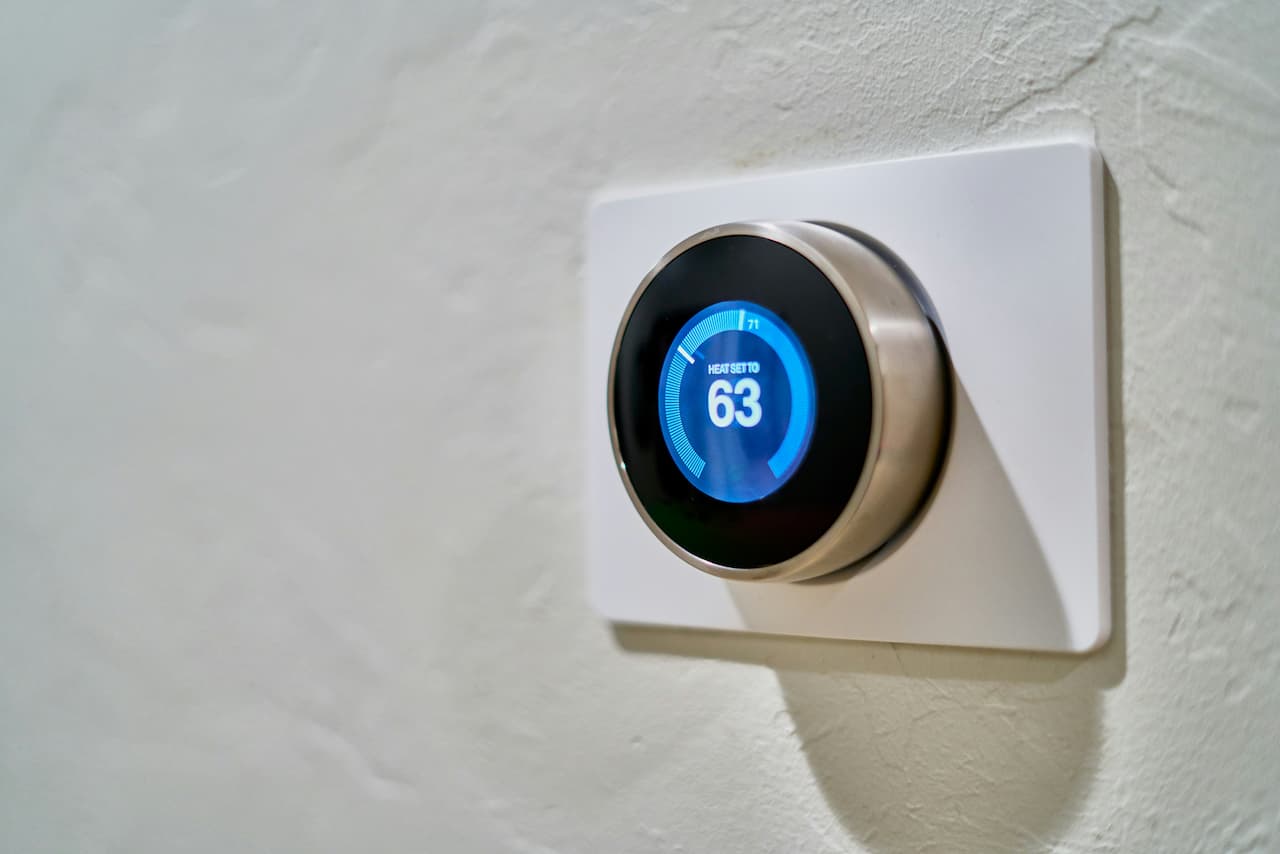
The Wiser starter kit includes the main thermostat, a hub and two smart TRV heads for individual radiators.
Build quality is solid throughout. The thermostat unit is less premium-feeling than the Hive or Nest devices but competently made, and the TRV heads fit standard radiator valve fittings with adapters included for the most common UK types. Installation of the thermostat follows a similar process to any smart thermostat – replacing the existing controller – but adding the TRV heads to each radiator adds around 20-30 minutes to the total installation time. The hub needs to be positioned within reasonable range of both your router and the TRV heads, which is straightforward in most UK homes but worth planning before you start. Each TRV head requires two AA batteries and these are not supplied with the kit, so have them to hand before the installer arrives.
The Wiser app is clean and functional. The home screen shows each zone’s current and target temperature individually, giving a clear overview of how different rooms are performing at any given time. Setting individual schedules per room is the core capability and it works well, though the interface requires more setup time than a single-zone system given the number of zones to configure. First-time setup for a six-zone installation takes around 45 minutes including the physical TRV fitting and app pairing.
TRV heads require specific radiator valve types. The Wiser TRV heads include adapters for the most common UK radiator valve types, but some older or non-standard valves may not be compatible. Check your existing radiator valves before purchasing the full kit – Drayton’s compatibility checker on their website covers the most common types and should be your first stop before ordering.
Specifications and scores
How it performed in our tests
Over four weeks of testing in a four-bedroom detached property, the Wiser system performed reliably with no connectivity issues across any of the six TRV heads or the main thermostat. The Zigbee mesh network that connects the TRV heads to the hub proved robust – even in rooms furthest from the hub, signal quality was consistent and temperature control accurate to within half a degree of the target in normal conditions.
The app performed well for day-to-day use. Adjusting individual room temperatures remotely is responsive and the per-room schedule interface, while requiring more initial setup than a single-zone system, provides genuinely granular control once configured. The heat demand indicator – which shows the system working to reach target temperature – gave useful real-time feedback during testing and helped confirm that individual room adjustments were being acted on promptly.
Set bedroom TRVs to a lower temperature overnight. The biggest energy saving from a multi-zone system comes from reducing bedroom temperatures during sleeping hours while keeping living areas comfortable in the evenings. A bedroom set to 16C overnight versus a whole-house 20C setting can reduce heating energy significantly over a winter and represents the core of the Wiser value proposition.
Multi-zone control in practice
The multi-zone capability is where Wiser genuinely differentiates itself. In a typical UK home, the living room and kitchen are occupied from early evening until late, bedrooms are only used overnight, and spare rooms or home offices may only need heating during specific hours. A single-zone thermostat heats everything to the same temperature all the time – Wiser heats each room to its individual schedule, allowing a far more precise match between heating output and actual occupancy.
During testing, this translated into measurable differences in heating behaviour across the property. The spare bedroom TRV remained at 14C for the majority of the week with a brief period of heating on weekend afternoons. The home office heated on weekday mornings only. The living room followed a conventional evening heating schedule. None of this is achievable with a single thermostat – even one paired with manually adjusted TRVs – without constant manual intervention that most households simply do not sustain in practice.
The Away mode, triggered by geolocation when all household members leave, drops all zones to a frost protection temperature simultaneously. This worked reliably during testing and represents one of the most practical energy saving features for households that are out during the day. The geolocation-based return-home function, which begins heating the home as you approach, also performed well in testing – the house was at target temperature within a typical commute time, requiring no manual intervention from the car or at the front door.
Zone configuration options extend to 16 rooms, which exceeds the requirements of all but the largest UK properties. In practice, most households will use 4-8 zones, which keeps the app manageable and the setup time reasonable. Each zone can have its own weekly schedule with up to 16 time slots per day, providing more scheduling flexibility than any competing system at this price point.
Performance and limitations
The complexity of the Wiser system is its main limitation as well as its strength. For a single-person household in a small flat, the multi-zone capability offers little benefit and the higher cost and setup time are not justified. For a family in a larger home with genuinely varied room usage patterns, it is the most effective smart heating solution available at the price point. The system rewards households that take the time to configure individual room schedules properly – the energy savings come from accurate scheduling and discipline in maintaining those schedules, not from the hardware alone.
The app, while functional, is less polished than Hive’s. Navigation between zones requires more taps than ideal and the overall interface feels slightly dated compared to the competition. Drayton has improved it significantly over successive updates but it remains behind the best-in-class apps from Hive and Nest. This is unlikely to matter to the core Wiser buyer – someone choosing this system on the strength of its multi-zone capability rather than app aesthetics – but it is worth knowing before purchase.
- Genuine room-by-room control
- No subscription required
- Excellent energy saving potential
- Works offline on last schedule
- Established UK heating brand
- More complex to set up than single-zone
- App less polished than Hive or Nest
- Higher total cost for full installation
- No self-learning capability
- Not suited to small properties or flats
- Larger homes with 3+ bedrooms
- Households with varied room usage
- Those wanting no ongoing subscription
- Small properties or flats
- Those prioritising app polish over features
- Budget-conscious buyers with one zone
Final verdict – is it worth it?
The Drayton Wiser Smart Heating System is the right choice for households where different rooms genuinely need different heating schedules. In a four-bedroom home where bedrooms, a home office and living spaces all have distinct usage patterns, the multi-zone approach delivers energy savings and comfort improvements that no single-zone thermostat can match regardless of how sophisticated its app is. This is not a marginal difference – used properly, a correctly configured Wiser installation can meaningfully reduce heating bills over a full winter season.
The starter kit is competitive but the full cost of equipping a larger home with individual TRV heads on every radiator pushes the total investment up. This is justified if you use the multi-zone features properly – the energy savings in a larger home can be substantial. If you would not actively manage individual room schedules, the simpler and cheaper single-zone alternatives like the Hive Active Heating System are the better choice. The Wiser rewards engagement; it does not deliver savings automatically through clever algorithms the way self-learning systems attempt to, and households who set it up and then leave it on default schedules will see far less benefit than those who take time to configure each zone accurately.
The absence of a subscription requirement – all features included with the hardware – is a genuine differentiator against Hive, and the energy saving potential when used well is the highest of any smart thermostat we have tested. Pair it with broader energy saving measures across the home for maximum impact on your heating bills – the Wiser controls when rooms are heated, but insulation and draught-proofing determine how much energy that takes.
The Drayton Wiser is the best multi-zone smart thermostat for UK homes – no subscription, genuine room-by-room control and excellent energy saving potential in larger properties. For a three or four bedroom home with varied room usage, it outperforms single-zone alternatives on the metrics that matter most.
Share on socials: