At a glance
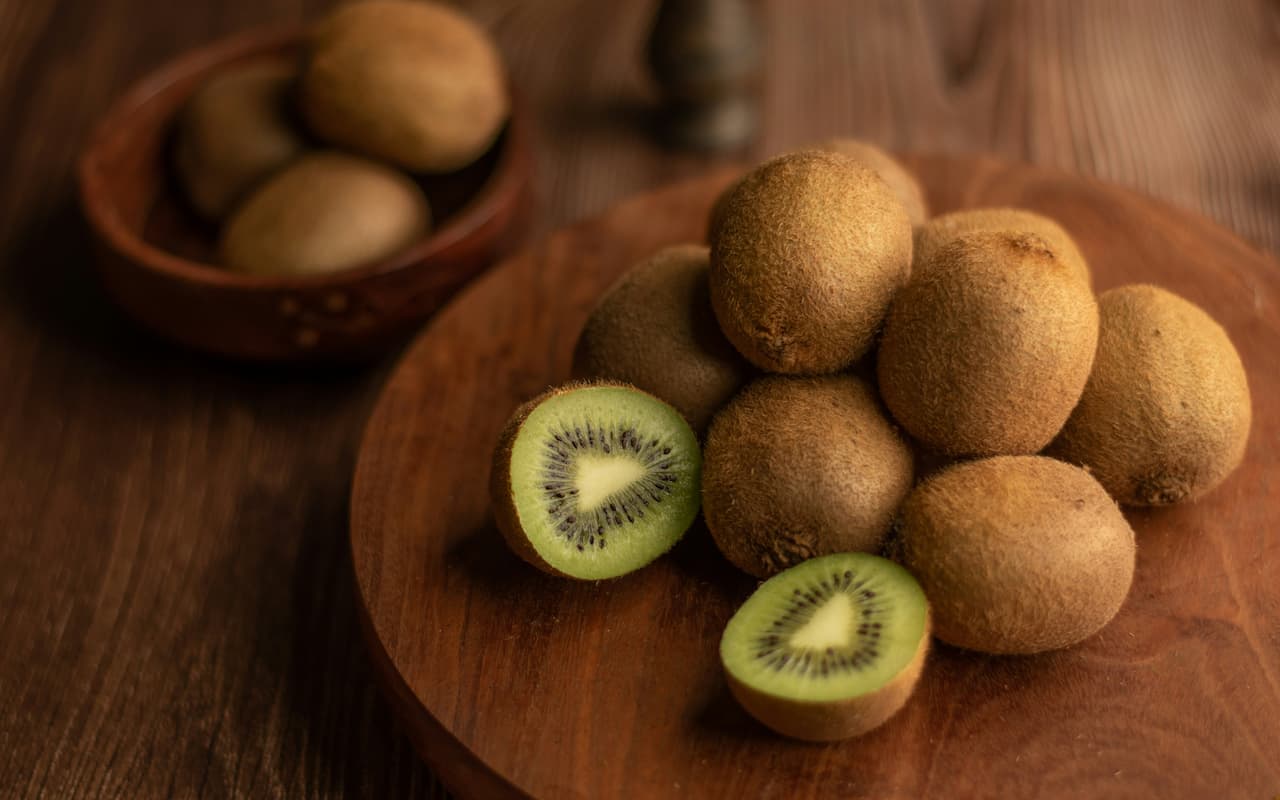
Kiwi fruit are far hardier than most UK gardeners realise. The familiar fuzzy brown kiwi sold in supermarkets (Actinidia deliciosa) needs greenhouse conditions in all but the mildest British gardens, but its close relative the hardy kiwi (Actinidia arguta) will grow and crop reliably outdoors across most of England and Wales. Hardy kiwi produces small, smooth-skinned fruit eaten whole without peeling, with a sweeter, more intense flavour than the commercial variety. A well-established vine is capable of cropping for thirty years or more and can produce an extraordinary volume of fruit from a surprisingly compact wall space once trained properly.
The main challenge is patience. Vines typically take three to five years from planting before they produce a significant crop, and the training decisions made in those early years determine how productive the vine will be for the rest of its life. The second challenge – which catches many growers out – is that most kiwi varieties need both a male and a female plant to fruit. Get those two things right and kiwi growing in the UK is genuinely straightforward. The summer pruning routine is the one task that must not be skipped – without it, the vine becomes an unmanageable tangle of leafy growth within a few seasons.
Varieties to grow in the UK
Actinidia arguta, the hardy or baby kiwi, is the correct choice for outdoor growing across most of the UK. It tolerates temperatures down to around -15C in a normal UK winter without any special protection, making it fully hardy in the ground in England and Wales. The named varieties available include Issai, which is partially self-fertile and the practical choice where only one plant is possible; Weiki, a vigorous and reliable heavy-cropper widely grown commercially in northern Europe; and Ken’s Red, a red-fleshed variety with exceptional sweetness. Actinidia kolomikta, the Arctic kiwi, is even hardier and produces smaller, very sweet fruit, but is mainly grown as an ornamental for its striking variegated foliage. Actinidia deliciosa, the standard supermarket kiwi, can only be grown outdoors in the very mildest south-western gardens and performs better under glass for most UK conditions.
Male and female plants
Most kiwi varieties produce male flowers on one plant and female flowers on another. The male produces pollen but no fruit; the female produces fruit but cannot set it without pollen from the male. This is the most common reason for kiwi vines that flower abundantly but never produce fruit – either the buyer planted only a female, or the male and female are different species that do not flower at the same time. Both plants must be the same species – an A. arguta male will not reliably pollinate an A. deliciosa female because their flowering times do not always coincide.
Planting and position
A south or south-west facing wall or sturdy fence is the ideal position. Kiwi vines need full sun and shelter from strong winds – the young shoots are particularly frost-tender in spring and a wall that offers some shelter from frost pockets is valuable. In exposed northern gardens, fleece new growth in April and May until the risk of hard frosts has passed. North or east-facing positions produce poor crops. Fix horizontal training wires at 40-50cm intervals up the full height of the wall before planting – these must be in place before the vine goes in, as retrofitting wires around established growth damages the stems. Vine eyes hammered into mortar joints with galvanised wire stretched between them is the standard method.
Soil should be fertile, well-drained and slightly acidic to neutral – a pH of 5.5 to 7.0. Kiwi vines have shallow, fleshy roots that are sensitive to waterlogging; heavy clay soil must be improved with significant additions of grit and organic matter before planting, or the vine will struggle regardless of any other care. Dig in a generous amount of well-rotted compost before planting and ensure drainage is genuinely free. Avoid ground where tree roots are competing for moisture and nutrients. Kiwi vines can be very long-lived – thirty or forty years is realistic – so the time spent improving the soil at planting is repaid many times over. Plant in spring once the risk of hard frost has passed. Space A. arguta vines 2-3m apart; A. deliciosa vines need 3-4m to avoid overcrowding.
Container growing is possible for A. arguta varieties, particularly Issai, in a pot of at least 50 litres using John Innes No. 3 compost. Container vines will not reach the vigour or yield of a planted vine, but they can be moved under cover in winter to protect the new shoots from late spring frosts. Feed container vines with a high-potassium liquid feed every two weeks from when growth begins in spring until fruit is harvested. Repot every two to three years as the root system fills the container.
Watch out for cats. Actinidia varieties – particularly A. kolomikta and young A. arguta – contain actinidine, a compound that attracts cats in the same way catnip does. Cats will roll on and bite young vines, and can destroy a new planting within hours. Protect newly planted vines with chicken wire or pea netting until they are well established and the main stems have become woody.
Training and pruning
The training structure for kiwi vines follows an espalier principle: one main vertical stem (the leader) runs up the wall, with horizontal arms extending along the training wires at 40-50cm intervals. From these permanent arms, short fruiting spurs are maintained – and it is from these spurs that the annual fruiting shoots grow. Kiwis fruit on shoots produced from the base of the previous year’s growth, so the pruning system always aims to renew this one-year-old wood while preserving the permanent arm structure underneath it.
Each winter, the one-year-old fruited shoots are cut back to 2-3 buds and each horizontal arm is shortened by one third. Over time, old unproductive arms can be removed entirely at the base and replaced by new growth from lower on the vine. A well-maintained kiwi framework should never become congested – if you cannot see individual spurs clearly, the vine needs thinning. One quarter to one third of the oldest arms can be removed each year during the renovation of an overgrown vine, and new growth from lower on the stem will replace them within two to three seasons.
Feeding and care through the year
Kiwi vines are vigorous and hungry. In late February, apply a balanced general fertiliser around the base of each vine before growth begins. From June, switch to a high-potassium liquid feed applied fortnightly until harvest – potassium is the key nutrient for fruit development, sweetness and good skin quality. Avoid high-nitrogen feeds after June as they push leafy growth at the expense of fruit and make the subsequent winter pruning harder work. Mulch the root zone each spring with well-rotted compost or bark, keeping the material clear of the main stem. The shallow root system benefits enormously from this – kiwi roots run horizontally near the surface and are easily damaged by cultivation, so mulching is a much better option than hoeing around the base.
Watering during fruit swelling is important. The vines are against walls and their root zone is often in the driest part of the garden – check the soil during dry summer spells and water deeply when needed. Inconsistent watering when fruit is developing causes splitting and premature drop. Established vines planted in good soil in a sheltered position need relatively little other attention once the pruning routine is established. Young vines in their first and second seasons should be watered more regularly until the root system is established.
Harvesting and storing
Hardy kiwi (A. arguta) fruit are ready to pick from late September to November. Unlike the fuzzy kiwi, the arguta types do not ripen further once they show colour – check readiness by feel rather than colour. Fruit is ready when it gives slightly to gentle thumb pressure and the seeds are black when a fruit is cut open. The skin of arguta fruit is thin and the fruit itself is soft when ripe, so handle carefully. Do not leave them on the vine past the first hard frost – the thin skin does not protect the flesh from freezing damage and the fruit will turn to mush overnight. Harvest the entire crop before the first forecast frost of autumn, even if some fruit feels slightly firm – it will ripen over the following week indoors at room temperature.
Hardy kiwi can be eaten skin and all – rinse and eat straight from the vine, or slice into halves. The flavour is richer and sweeter than the supermarket kiwi with a grape-like intensity that makes them excellent fresh or in fruit salads. Ripe fruit keeps for two to three weeks refrigerated. For longer storage, spread on a tray and freeze individually before transferring to freezer bags – frozen hardy kiwi keeps for up to a year and works well in smoothies, crumbles and jam without any loss of flavour. Unlike many fruits, kiwi requires no sugar or preprocessing to freeze successfully, which makes them one of the most straightforward garden surplus crops to handle. Standard kiwi (A. deliciosa) grown outdoors in UK conditions should be harvested before frost and brought indoors to ripen over two to four weeks – the fruit will be smaller than commercial kiwis but perfectly edible once fully ripe.
A kiwi vine that is properly positioned, correctly paired and consistently pruned will reward the initial patience with reliable crops for decades. The summer pruning is the task that separates the growers who get results from those who give up – it feels counterintuitive to remove so much growth, but the vine responds immediately with better fruit size, better ripening and a manageable structure the following winter. Do it every year without fail and this is genuinely one of the most productive climbers a British garden can grow.
Never use treated timber near kiwi roots. Kiwi vines are sensitive to root disturbance and chemical leaching. If building raised beds or border structures near the vine, use untreated or pressure-treated timber certified for ground contact, and avoid creosote-treated materials entirely.
Share on socials: