At a glance
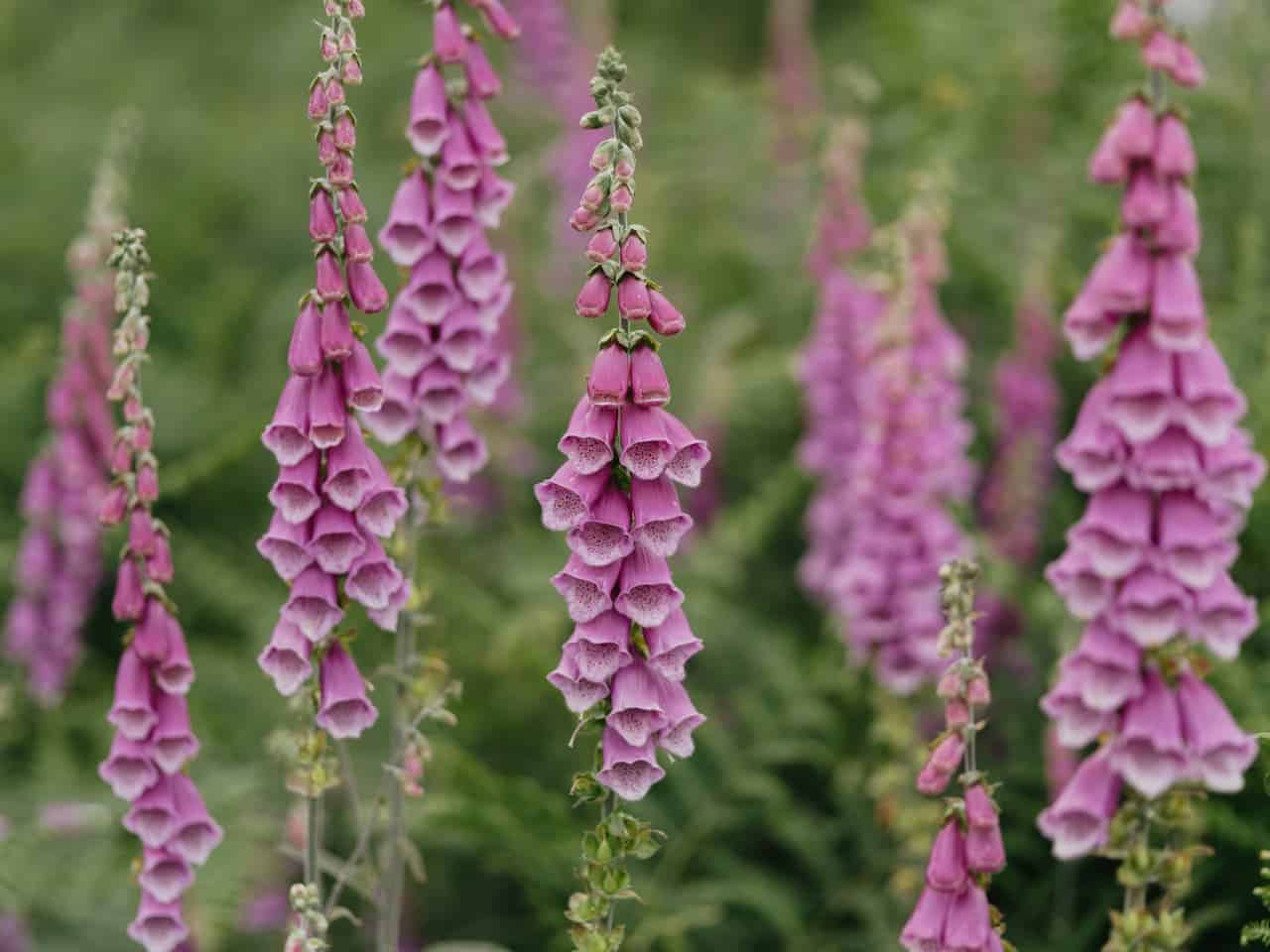
Foxgloves are one of the most rewarding plants a UK gardener can grow. Their tall spires of tubular flowers reach one to two metres in a good season, bring serious architectural drama to a border, attract bumblebees in numbers that few other plants can match, and establish self-seeding colonies that require almost no annual effort once they are running. The seed costs almost nothing, the plants tolerate a wide range of soils and conditions, and a colony managed correctly will provide cut flowers, wildlife value and border structure for years from a single packet of seed.
Varieties
The choice of variety shapes what the garden looks like and how much annual effort is needed to maintain it. The table below covers the main options available to UK gardeners.
Digitalis purpurea in its wild purple form is the best choice for wildlife gardens and naturalistic planting. It self-seeds the most generously of all varieties and attracts more bumblebee species than most cultivated forms. The Excelsior Group is particularly useful in formal borders because its flowers face outward horizontally rather than drooping downward, giving a better display from the front of a bed. For gardeners wanting a foxglove that returns reliably each year without resowing, Digitalis lutea is the most straightforward perennial option, returning and expanding its clump year after year. Digitalis ferruginea is a short-lived perennial or biennial that needs replacing every few years but self-seeds moderately to maintain itself.
The biennial cycle
Understanding the biennial cycle is the single most important thing for getting consistent flowers from foxgloves. A plant that is not expected to flower in its first year will not be a disappointment. A garden with both first-year and second-year plants simultaneously will never have a gap year.
In year one the plant germinates, establishes and produces a large flat rosette of leaves. In year two it sends up the tall flowering spike, flowers, sets seed and typically dies. A first-time sowing produces no flowers until the second summer after sowing. To avoid a gap year, sow in two consecutive years. After that the self-seeding of established plants keeps the cycle going automatically.
The vernalisation requirement is worth understanding. Foxgloves need a period of cold winter temperatures to trigger the hormonal changes that initiate flowering the following summer. A plant that does not experience sufficient cold will produce only a rosette in year two rather than a flowering spike. In most UK gardens this happens naturally. In very sheltered, warm microclimates or if plants are accidentally kept too warm through winter, vernalisation may be insufficient and plants may not flower as expected.
Sowing from seed
Sow foxglove seed from May to July for flowers the following summer. The single most important technical point is that foxglove seed requires light to germinate. Do not cover it with compost, vermiculite or soil. Surface sow and press the seed gently into contact with the growing medium, then leave it exposed to light.
Indoor sowing in trays or modules
Fill a seed tray or module tray with moist peat-free seed compost. Scatter seed thinly across the surface, press down gently with a flat board, and do not cover. Place in a bright position out of direct midday sun. Keep the surface consistently moist using a fine mist spray rather than a watering can, which can wash tiny seeds together. Germination typically takes two to three weeks at fifteen to twenty degrees Celsius.
Direct outdoor sowing as an alternative
In June or July, prepare a small patch of bare weed-free soil in a border. Scatter seed thinly, rake very lightly to ensure contact with the soil surface, and water gently. Thin emerging seedlings to thirty centimetres apart when large enough to handle. This is the least effort approach and produces strong plants, though germination rates are lower than indoor sowing and there is less control over final planting positions.
Earlier sowing for larger plants
Sowing in March or early April indoors in a frost-free glasshouse or on a warm windowsill produces larger, more vigorous first-year plants that flower more freely in year two. Plants sown early can be very substantial by autumn planting time. The seed is sown in the same way, surface sown without covering, but at the higher temperatures available indoors in early spring germination is faster and seedling growth more vigorous.
Pricking out and growing on
When indoor-sown seedlings have developed two or three true leaves they are ready to prick out. Handle each seedling by a leaf rather than the fragile stem. Use a dibber or pencil to ease the seedling out of the compost and transfer it to an individual small pot or module cell filled with peat-free multipurpose compost. Grow the pricked-out plants on in a sheltered outdoor position or cold frame through summer. They do not need high temperatures and grow most vigorously in a cool bright position. Water regularly but allow the compost surface to dry slightly between waterings. By September, well-grown plants should have a rosette of five to eight leaves and be ready for planting out.
Planting out
Plant out in autumn, ideally September or October, at a spacing of thirty to forty-five centimetres. Foxgloves tolerate a wide range of soils from sandy to clay and acidic to mildly alkaline. They grow in full sun, partial shade and even fairly deep shade, though flowering is most generous in positions that receive at least half a day of sunlight. In deep shade, plants flower but produce shorter, leggier spikes with fewer open flowers simultaneously. Dig in well-rotted compost or leaf mould before planting in very poor or compacted soils. In average garden soil no preparation is needed beyond removing weeds.
Water in after planting and mulch around the base of each plant with a five to seven centimetre layer of garden compost or bark chips to retain moisture and suppress weed competition through the first winter. Plants can alternatively be overwintered in pots in a cold frame and planted out in March or April, though autumn-planted foxgloves generally produce taller and earlier-flowering plants the following summer because they have had more time to establish their root system.
Care through the growing season
Foxgloves are not heavy feeders but a single application of balanced granular fertiliser in March supports strong stem development and more vigorous flowering. Sprinkle around the base of each plant and water in. Staking is only needed for taller varieties in exposed or windy positions. A single bamboo cane pushed into the soil beside the plant and tied loosely with soft twine at one or two points up the stem is sufficient. Stake early, before the spike leans, rather than after.
Deadheading and the second flush
When the lowest flowers on the main spike begin to fade and drop, cut the entire main spike down to just above the lowest set of side shoots. The plant redirects its energy into developing these secondary stems, which typically flower three to four weeks after the main spike is removed. Without this intervention, the plant sets seed and declines rapidly. The secondary spikes are smaller than the main spike but numerous enough to extend the total flowering period significantly, and the effort involved is a single cut per plant.
For self-seeding, leave one or two selected spikes on the strongest plants to ripen fully before cutting. A single foxglove spike produces hundreds of viable seeds that shatter naturally in late July or August and germinate freely in surrounding soil. If self-seeding is not wanted, deadhead all spikes completely before the seed capsules open and ripen. This is the most effective method of controlling spread.
Toxicity
All parts of the foxglove are toxic. Digitalis contains cardiac glycosides that are poisonous to humans, dogs, cats and livestock if ingested. Ingestion of any part of the plant requires medical attention. The toxicity does not transfer through the soil or through nectar, so the plant is safe for bees and safe to grow near vegetables.
Always wear gloves when handling foxgloves, particularly when cutting or deadheading. Wash hands thoroughly after contact with the plants. Keep children and pets away from plants in flower and from ripening seed heads. Dispose of removed foliage and spent spikes promptly rather than leaving them on the ground where animals or children might contact them.
Pests and problems
Foxgloves are generally healthy plants but a handful of problems occur regularly in UK gardens. Each has a distinct pattern that makes identification straightforward.
Self-seeding and long-term management
The self-seeding of established foxgloves is one of the plant’s greatest assets but requires a small amount of annual management to prevent it becoming overwhelming. Self-sown seedlings appear in late summer and autumn around parent plants and sometimes at some distance, carried by wind or water. The key annual task is to thin these seedlings in autumn and early spring, keeping those in good positions and removing the rest while they are still small and easy to pull.
Self-sown seedlings can be transplanted when small, moving them from where they have germinated in inconvenient positions to gaps in the border or to areas where more foxgloves are wanted. They transplant readily at this young stage and rarely suffer any setback from being moved, particularly in cool autumn weather with adequate watering afterwards. For bare-soil germination to occur, leave small patches of uncovered soil around established plants rather than mulching right to the base. Heavy mulch suppresses self-seeding almost entirely.
Over time an established self-seeding colony develops its own momentum. The gardener’s role shifts from active cultivation to editing: encouraging well-positioned plants, removing those in the wrong place, and occasionally introducing a new cultivar to refresh the planting. This is genuinely low-effort gardening once the initial colony is established, with results that are difficult to achieve with equal simplicity by any other means.
All parts of the foxglove are toxic to humans, dogs, cats and livestock. Wear gloves when handling the plants and wash hands thoroughly afterwards. Keep children and pets away from plants in flower and from ripening seed heads. Ingestion of any part requires immediate medical attention.
Share on socials: