The assumption that productive gardening requires significant space is one of the most persistent myths in UK horticulture. Some of the most abundant kitchen gardens in the country occupy less than 20 square metres and produce vegetables, herbs and cut flowers through eight or nine months of the year. The difference between a small garden that produces very little and one that produces abundantly is not size. It is planning, crop selection and a willingness to use vertical space, which in most small gardens is completely wasted.
A productive small garden demands a different mindset to a conventional large kitchen garden. Every decision needs to be justified by yield per square metre. Sprawling vegetables that occupy ground for months and deliver a modest harvest have no place in a tight space. The plants that earn their position produce heavily relative to the ground they occupy, can be harvested over a long period rather than all at once, and are genuinely used in the kitchen. Getting this crop selection right before the season starts is the single most important decision in small-space growing.
Planning and design
Every productive small garden starts with an honest assessment of what the space offers. The four decisions below determine the structure of everything that follows, and getting them right before spending money or breaking ground saves significant wasted effort later in the season.
Design decisions before you start
Before anything else
Map your sun
Track which areas receive full sun, partial shade and deep shade across a full day in May or June. Productive vegetables need a minimum of six hours of direct sun to crop reliably. Below this, yields drop significantly. In a garden with mixed light, concentrate all edible growing in the sunniest spots. Use shaded areas for shade-tolerant crops: salad leaves, mint, parsley and chives all manage without full sun.
Do first
Structure
Choose raised beds over open ground
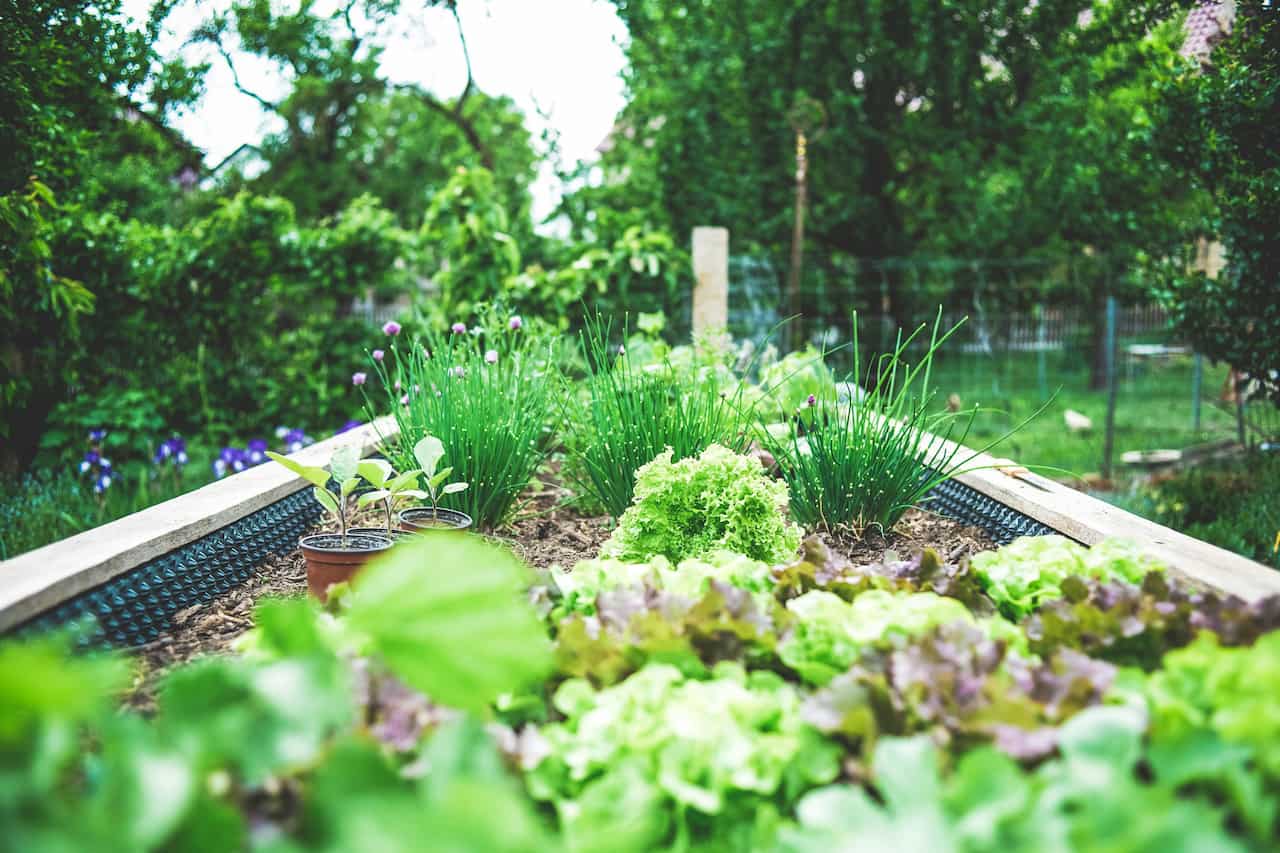
Raised beds offer better drainage, warmer soil in spring, easier weed control and the ability to fill with quality growing medium regardless of what sits underneath. Build beds to 1.2 metres width maximum, the comfortable reach from either side without stepping in. This width is critical: beds narrower than this waste the structural investment by reducing growing area, and beds wider than this require stepping onto the growing surface, which compacts the soil and undoes most of the benefits. Run beds north to south so taller plants at the northern end do not shade shorter ones.
High value
Vertical space
Use every wall and fence
A south or west-facing fence is among the most valuable growing space in a small garden. Fix horizontal galvanised wires at 30 centimetre intervals or attach a trellis and train climbing beans, cucumbers, cordon tomatoes or espaliered fruit trees against it. Vertical growing produces yield from a footprint of a few centimetres of ground. A three metre run of fence can support a substantial harvest without occupying any of the ground below it.
High value
Planning
Plan for succession, not single harvests
A bed that delivers one large harvest and then sits empty for two months is a waste of space. As one crop finishes another goes in immediately. Successional sowing of fast crops like radishes, salad leaves and spring onions every two to three weeks provides continuous harvests from the same area. Follow early peas with French beans. Follow spring lettuce with autumn kale. The bed should rarely be bare.
Plan ahead
Fill raised beds with a mix of topsoil and peat-free compost in roughly equal parts. Add a generous layer of well-rotted manure or garden compost each autumn as the main fertility input. A minimum depth of 20 to 25 centimetres of growing medium is needed for most vegetable crops. For root vegetables, 30 centimetres.
Choosing crops
The central principle of small-space growing is to grow what is expensive or difficult to buy, and what produces continuously over a long season. The table below ranks common crops by how well they earn their ground in a small productive garden.
Crops ranked by value in a small garden
Crop
Space
Value
Notes
Cut-and-come-again salad
Very low
Excellent
Harvests every 2-3 weeks for months from a tiny area
Mixed herbs
Very low
Excellent
Saves more money per square metre than almost any other crop
Climbing French beans
Very low
Very good
Vertical, heavy crop over 6-8 weeks from a tiny footprint
Cordon tomatoes
Low
Very good
Train vertically, remove sideshoots weekly, high yield per plant
Chillies
Low
Very good
Long harvest, dry or freeze for year-round use
Courgettes
High
Good
One or two plants maximum, prolific but space-hungry
Potatoes
Very high
Poor
Cheap to buy, occupy ground all season. Avoid as main crop
Parsnips, maincrop carrots
Very high
Poor
In ground 6-9 months, cheap in shops. Avoid
Cut-and-come-again salad leaves are among the best value crops in any small garden. A single 30 centimetre row of mixed leaves sown in March provides harvests every two to three weeks until October, and fresh mixed salad costs a significant amount in supermarkets relative to the few pence worth of seed required. Sow a short row every three weeks from March to July for a continuous supply.
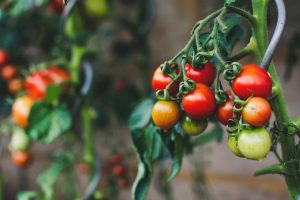
Herbs return exceptional value from minimal space. A 30 centimetre square patch of mixed herbs used regularly through the cooking season saves more money per square metre than almost any other planting. Basil, parsley, coriander, chives, mint in a container to prevent spreading, and thyme form a productive herb collection in a very small footprint. Cordon tomatoes trained to a single stem against a warm fence combine high yield with minimal ground use: one plant per 40 to 50 centimetres of fence line. Remove all sideshoots from the leaf axils as they appear and pinch out the growing tip once four to five trusses have set.
Main-crop staples like potatoes, parsnips and maincrop carrots make poor choices. They occupy ground for the entire growing season and produce a harvest that costs very little to buy. The space could deliver multiple successive crops of higher-value vegetables over the same period. New potatoes grown in a bag or container in May are worth growing as a treat, but as a main-bed crop they represent poor return on the ground they take.
Space-saving techniques
Four techniques separate a small garden that uses its space well from one that underperforms. Used together, they can effectively double the productive output of a given area.
Space-saving techniques
Vertical growing
Climbing plants produce from a footprint of a few centimetres. Fix galvanised wire horizontally across fences at 30 centimetre intervals or use a freestanding obelisk or wigwam in the centre of a bed. A single wigwam of climbing French beans provides harvests for six to eight weeks from a ground footprint of roughly half a square metre. Train cordon tomatoes to a single vertical stem against a warm fence for the same benefit.
Intercropping
Grow fast-maturing crops in the gaps between slower ones. Radishes sown between brassica transplants are ready and cleared long before the brassicas need the space. Lettuce planted between young courgettes provides weeks of harvest before the courgettes spread. The fast crop must finish before the slower crop needs the room. With practice, intercropping can effectively double the productive use of a bed over a season.
Succession sowing
Sow small amounts every two to three weeks rather than a large amount all at once. A short row of salad leaves sown in March, another in April, another in May provides continuous harvests from the same total area rather than a glut followed by nothing. This is particularly effective with radishes, spring onions, coriander, spinach and salad leaves, all of which bolt quickly if left too long.
Container growing
Paved areas and patios that cannot support raised beds still contribute to total productivity through containers. Tomatoes, courgettes, chillies, herbs and salad all grow well in large containers of 30 to 40 litres or more. The key constraint is watering. A drip irrigation system on a timer removes this limitation and makes container growing genuinely manageable through summer.
Soil, feeding and watering
Productive growing depletes soil quickly. Feed raised beds every autumn with a 5 to 8 centimetre layer of well-rotted manure or garden compost dug in or left on the surface for worms to incorporate. This is the main fertility input for the season. Supplement with a liquid tomato feed applied fortnightly once fruiting crops begin to set fruit, and a balanced general feed for leafy crops. Do not over-apply nitrogen to fruiting crops: it promotes leafy growth at the expense of fruit.
Water consistently rather than heavily and irregularly. Most vegetable crops perform better with steady moisture than with boom and bust watering. Inconsistent watering causes bolting in salad crops, fruit splitting in tomatoes and poor root development in carrots. Water at the base of plants rather than over the foliage where possible, and water in the morning or evening rather than in the heat of the day. A layer of peat-free compost or bark mulch applied around established plants reduces water loss from the soil surface significantly and is one of the highest-impact low-effort tasks of the season.
As an Amazon Associate I earn from qualifying purchases.
Pests and diseases
Four problems account for the majority of productive garden losses in the UK. Each has a distinct pattern and a specific response.
Problem
Slugs eating seedlings and young transplants in spring and after rain. Most active at night. Losses can be total in wet springs.
Solution
Apply biological nematode controls watered into the soil around vulnerable plants from March onwards when soil temperature is above 5 degrees Celsius. Repeat every six weeks through the growing season. Copper tape around raised bed edges gives additional protection for seedlings.
Problem
Aphids colonising soft new growth of beans, tomatoes and brassicas in spring. Natural predator populations are limited early in the season.
Solution
Check plants regularly from April and remove colonies by hand or with a firm jet of water. A patch of companion flowers near vegetable beds, pot marigolds, phacelia or single dahlias, attracts ladybirds, lacewings and hoverflies that provide increasing natural control through summer.
Problem
Tomato blight appearing as brown patches on leaves and stems from midsummer. No cure once established. In a wet summer it can destroy an entire outdoor tomato crop within days.
Solution
Grow blight-resistant varieties: Crimson Crush and Mountain Magic are the most resistant cordon varieties available in the UK. Avoid wetting foliage when watering. Remove and dispose of affected material immediately. Cover plants with a simple clear polythene roof in wet summers.
Problem
Powdery mildew on courgettes, squash and peas from midsummer, appearing as a white powdery coating on the upper leaf surface. Weakens plants but rarely kills them.
Solution
Improve air circulation by removing overcrowded leaves. Water at the base rather than overhead. Accept some mildew is normal at the end of the courgette season. Resistant varieties are available and worth seeking out.
Seasonal management
A productive small garden has distinct tasks in each season. The table below covers what needs to happen and when. Missing key windows, particularly the late winter seed ordering and the autumn clearance, has a disproportionate effect on the following season’s results.
Productive garden seasonal calendar
Winter
Jan-Feb
Order seeds in January and February. Sow tender crops including tomatoes, chillies, aubergines and peppers indoors on a warm windowsill or under grow lights in late February or March. These crops need a long growing season and missing the early sow window costs weeks of harvest at the back end. Hardy broad beans and onion sets can go directly outdoors from late February where soil is workable.
Plan
Spring
Mar-May
Top-dress beds with compost and check supports are in place for climbers before plants need them. Direct sow salad, peas and early crops from March. Harden off tender plants raised indoors in May by placing outside during the day and bringing in at night. Plant out after the last frost, typically late May to early June in most UK regions.
Sow
Summer
Jun-Aug
Harvest frequently. Leaving beans, courgettes or cucumbers unpicked causes the plant to stop producing. Water consistently. Feed fruiting crops fortnightly. Tie in climbers as they grow. Remove sideshoots from cordon tomatoes weekly. Continue succession sowing of salad, radishes and spring onions every two to three weeks.
Harvest
Autumn
Sep-Nov
Clear spent crops promptly. Do not leave dead material in beds as it harbours slugs and disease spores through winter. Cut down bean plants but leave the roots: legume roots fix nitrogen and their decomposition improves the soil. Dig in the autumn compost mulch, plant garlic in October and prepare any new beds for the following season.
Clear
Combining productive and ornamental planting
A well-designed productive garden can be genuinely attractive. Raised beds in good timber or Corten steel are clean garden features. Climbing beans and sweet peas on a painted obelisk are ornamental as well as productive. Chard in red and yellow varieties, blue-green kale, bronze fennel and the tall seed heads of dill all have visual merit. The key is treating vegetables as design elements with form, colour and texture rather than purely functional crops.
Cut flowers earn their space as productive crops in their own right. A single 1.2 metre row of sweet peas, zinnias or dahlias provides cut flowers from June to October. Treating cut flowers as a productive crop rather than a luxury makes a dedicated flower row entirely justified on yield grounds alone, and the pollinators they attract improve the crop set of neighbouring beans, tomatoes and courgettes at the same time.
Allowing a few herbs to flower at the end of their useful season, borage, dill, coriander and fennel in particular, provides excellent pollinator habitat. One dedicated patch of nectar-rich flowers among the vegetables significantly reduces pest pressure by attracting predatory insects and improves the overall health of the productive garden through the season.
💡
The most productive small garden is one you actually enjoy maintaining. Overly ambitious planting plans collapse in June when the watering and harvesting load becomes unmanageable. Start with two raised beds, a handful of high-value crops and one vertical structure. Build from there each season. A modest, well-maintained productive garden delivers more to the kitchen than an ambitious one that becomes overwhelming.
As an Amazon Associate I earn from qualifying purchases.
Share on socials:
J
James Fletcher
James Fletcher is a home and garden enthusiast based in the north-west of England. He's been growing vegetables in raised beds for over four years and writes practical, no-nonsense guides for UK gardeners and homeowners.