At a glance
Peppers are one of the more challenging crops for UK gardeners but also one of the most satisfying when it works. The UK climate does not naturally suit peppers – they are a warm-season crop that needs a long growing season and consistent heat to produce well. But with an early start indoors, the right variety choices and a warm sheltered position outdoors from late May, a reliable harvest of sweet peppers and chillies is achievable in most UK gardens, patios and allotments.
The key difference between growers who succeed with peppers in the UK and those who struggle is starting early enough. A pepper seed sown in late March produces a plant that goes outside in late May and is still developing fruit when cooler autumn weather closes in. The same seed sown in January or February produces a much more established plant that is already flowering when it goes outside, giving the crop the longest possible window to set and ripen fruit before the season ends. Sweet peppers share essentially the same growing requirements as chillies – the main practical difference is that sweet peppers benefit from slightly higher temperatures for good fruit development and ripen more slowly.
Best varieties for UK growing
For outdoor growing in the UK, early-ripening varieties are essential. The large blocky bell peppers sold in supermarkets are slow to mature and rarely ripen fully outdoors in a UK summer – they are greenhouse crops in this climate. Gypsy, Mohawk and the elongated Italian types like Corno di Toro are significantly earlier and more productive outdoors, producing red fruit reliably without needing a greenhouse.
Sowing from seed
Sow pepper seeds in January or February for the best results outdoors – no later than mid-March. Fill small pots or module trays with seed compost and sow two seeds per cell, 5mm deep. Peppers need consistent warmth to germinate – 20-25°C is ideal. A heated propagator set to this temperature produces reliable germination in 10-14 days. Without heat, germination is slow, erratic and often poor. If you do not have a heated propagator, place the seed tray on top of the boiler, in an airing cupboard or on a warm windowsill above a radiator.
Once seedlings emerge, move them to the brightest available windowsill immediately – south-facing is ideal. Thin to one seedling per cell by snipping the weaker one at soil level rather than pulling. Pot on into 9cm pots when the roots fill the cell, using multipurpose compost.
Growing on and hardening off
Pot peppers on into 1-litre pots in April, then into 2-litre pots in May as the roots fill each container. Keep on the brightest windowsill available throughout this period – south or west-facing. Feed weekly with a balanced liquid fertiliser from the time the first true leaves appear. Do not rush plants outside: peppers are damaged by temperatures below 10°C and will sulk rather than grow if planted out too early.
Harden off for at least two weeks before planting out. Move plants outside in a sheltered spot during the day from mid-May, bringing them in at night. Gradually increase outdoor exposure over the fortnight before planting. Plants that have not been hardened off properly receive a shock when planted out and can take two to three weeks to resume growth – losing valuable growing time.
Pinch out the first flower bud that appears on indoor plants. When a pepper plant produces its first flower while still on the windowsill, removing it redirects energy into developing a stronger, bushier plant rather than one small fruit. The plant will produce far more flowers and fruit once it goes outside if this early bud is sacrificed. It feels wrong but consistently produces better results.
Planting out
Plant out once all frost risk has passed – late May to early June depending on location. Choose the sunniest, most sheltered spot available: a south-facing wall, a warm corner, or a raised bed that heats up quickly. Space plants 45cm apart. In containers, a 10-12 litre pot per plant is the minimum – larger is better. Use a peat-free multipurpose compost and add slow-release fertiliser granules at planting to supplement the regular liquid feeding that will follow.
In cooler or exposed gardens, growing peppers in large containers that can be moved under cover on cold nights extends the effective season significantly. A 5°C night in late August – not unusual in northern England and Scotland – can stall fruit ripening for days on a static outdoor plant. The ability to bring containers under cover on cold nights keeps the crop progressing through September and October.
Feeding and watering
Water consistently – peppers prefer evenly moist compost rather than the boom-and-bust cycle of drying out and heavy watering that causes blossom end rot and fruit splitting. Check containers daily in warm weather. Feed with a high-potassium liquid feed every seven to ten days once the first flowers open – tomato feed is ideal and purpose-built for exactly this stage of a fruiting plant’s growth cycle.
Provide light support for taller plants – a single cane per plant prevents stems laden with fruit from snapping in wind. Remove any yellowing lower leaves to improve airflow at the base of the plant and reduce slug shelter.
Harvesting
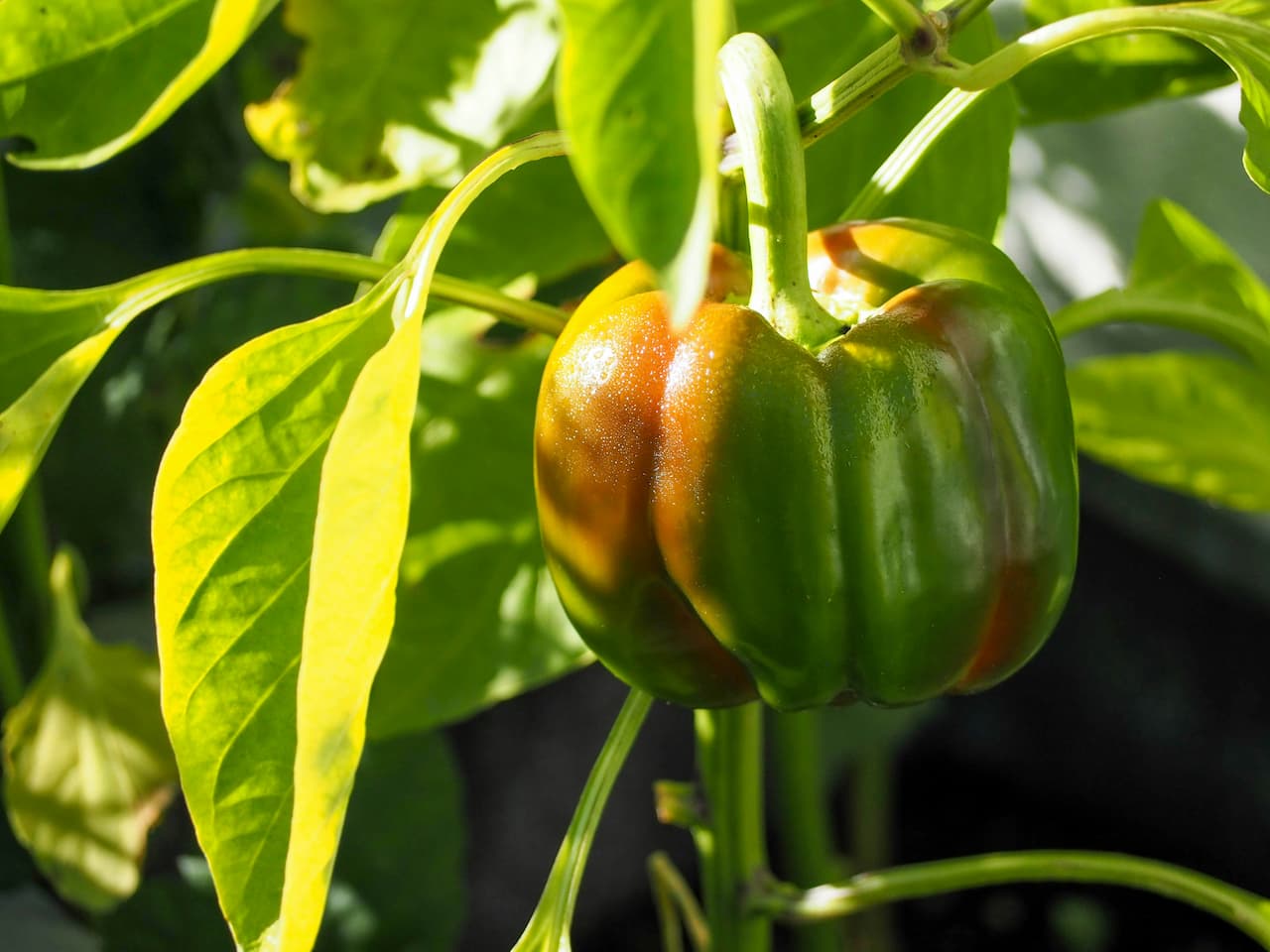
Sweet peppers can be harvested green as soon as they reach full size – typically August onwards. Left on the plant they will ripen to red, orange or yellow depending on variety, developing sweeter flavour and higher vitamin C content. In a UK summer, not all fruit will ripen to full colour outdoors before the season ends – harvesting green from late August onwards is perfectly reasonable and frees the plant to ripen remaining fruit.
Use scissors or secateurs to harvest rather than pulling – the stems are brittle and pulling can damage the plant. Once the first light frosts arrive in October or November, bring container-grown plants inside a porch or conservatory and they will continue ripening any remaining fruit over several more weeks.
Common problems
Share on socials: