At a glance
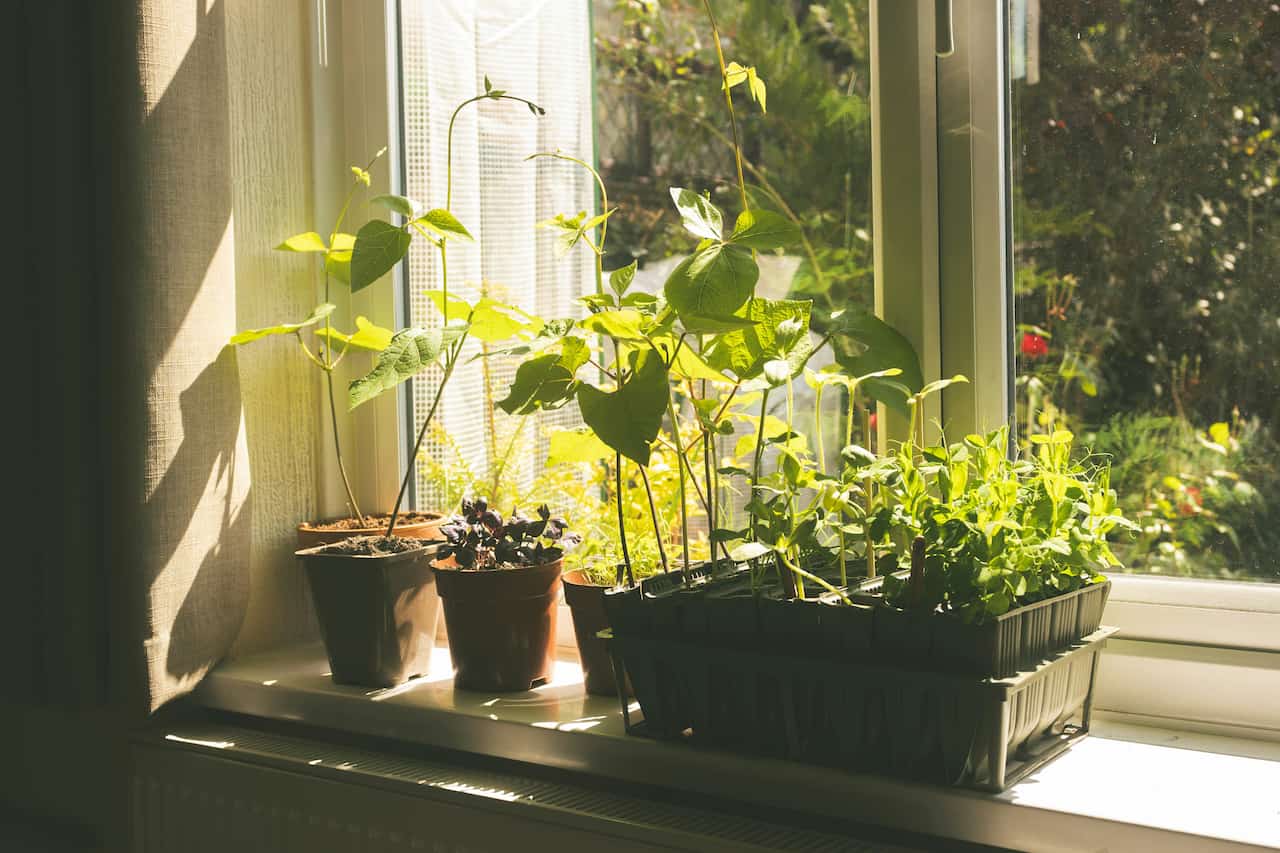
A kitchen windowsill growing fresh herbs year-round is one of the most practical small-space gardening projects there is. Fresh herbs used within minutes of picking have a flavour that supermarket equivalents – even the fresh-packed ones – cannot match. Having them immediately to hand also means you actually use them: instead of buying a whole packet for one sprig, watching the remainder wilt in the fridge, you snip exactly what you need and the plant keeps growing. A well-chosen collection of four or five herbs on a south-facing sill can supply most households with everything they need for everyday cooking throughout the year.
Most indoor herb attempts fail for one of two reasons: the wrong light, or overwatering. These are not minor adjustments – they are the difference between plants that thrive for months and plants that yellow and collapse within weeks. The herbs themselves are not to blame. Basil, chives, parsley and mint are genuinely easy to grow once the conditions are right. Understanding what those conditions are, and matching your herb selection to the light you actually have, is the whole story. The additional factor that catches many people out is the difference between UK winter and summer light – a south-facing sill that grows excellent herbs in June can leave the same plants struggling in December unless you adjust expectations and choose accordingly.
Light – the single most important factor
Most culinary herbs are Mediterranean in origin. They evolved in intense, all-day sunlight on rocky hillsides and are adapted to far more light than any UK windowsill provides – particularly in winter. The gap between a south-facing and a north-facing window in January in the UK is the difference between three to four hours of low-angle direct sun and almost none. This difference cannot be compensated for by good compost, careful watering, or any other management technique. If the light is wrong, the herb will grow slowly and weakly at best, or not at all.
The table reflects practical UK conditions rather than ideal ones. Basil is uncompromising: it needs maximum sun and warmth, and an east or west-facing sill will produce a struggling, leggy plant rather than the lush bush you want. Chives are the most forgiving herb in the collection – they tolerate lower light than any other culinary herb and are the only one genuinely worth attempting on a north-facing sill, though growth will be slower than on a sunnier aspect. Mint grows on any aspect but prefers more moisture than other herbs – keep it in its own pot on any sill, as its spreading roots will colonise and suppress everything else in a shared container. Rosemary and sage are better grown outdoors in the UK and brought in for winter or short spells; they grow very slowly indoors and the low-humidity indoor environment also increases their susceptibility to spider mites.
In winter from October to February, even a south-facing UK windowsill provides limited direct sun. Growth slows across all herbs and this is normal and expected. Reduce watering to match reduced growth, do not feed, and accept lower harvests. Rotating pots by a quarter turn every week or two ensures all sides receive light and prevents plants leaning permanently toward the window. From late February, as day length increases, growth picks up noticeably and watering and harvesting frequency can increase accordingly.
The seasonal light variation above explains why the same south-facing sill that grows excellent basil from May to September struggles to keep it alive in December. Winter is not the right season for basil indoors in the UK without supplementary lighting. It is, however, a good time for parsley, chives and mint, which all tolerate the lower winter light and continue producing usable harvests at a slower rate.
Best herbs for UK windowsills
How to rescue supermarket herb pots
Supermarket potted herbs are grown for rapid sale, not long-term indoor growing. They are typically sown very densely – many seedlings in a small pot – to produce a full, attractive display quickly. The growing conditions in a store or supermarket produce soft, tender growth that is not adapted to home conditions. The result is that most supermarket herb pots decline rapidly once taken home, which is not a failing of the buyer but a predictable outcome of how they are produced.
The rescue process is straightforward and transforms a single supermarket pot into three or four productive plants that will last for months.
The key step is cutting back by about a third after potting. Supermarket herbs have had their roots severely restricted and the existing leaf area is more than the reduced root system can support. Cutting back reduces the transpiration demand until new roots establish. Within two to three weeks the plants produce fresh growth and settle into genuinely productive indoor herbs. For basil specifically, avoid repotting in cold weather – basil hates cold roots and a pot moved into a cold kitchen after repotting will drop its leaves rapidly. A September basil pot rescued in this way will still decline over winter as light levels drop, so accept that basil is a spring and summer herb indoors in the UK and plan for other herbs to take over through the darker months. Chives, parsley and mint rescued from supermarket pots in autumn will establish and produce through winter with no difficulty at all.
Pots, compost and drainage
The right pot and compost make a significant difference to how long indoor herbs thrive. The key requirements are adequate depth for roots, good drainage, and an appropriate growing medium for each herb type.
Watering – the rule that saves most herbs
Overwatering kills more indoor herbs than any other single cause. The impulse to water frequently comes from good intentions – herbs look better when well-watered, and the concern is that they will dry out on a sunny sill. In practice, indoor herbs in UK conditions (particularly from autumn to spring) need far less water than most people assume, and the root rot that results from keeping compost constantly wet is usually fatal within a week or two.
The exception to the dry-out rule is mint, which genuinely prefers more consistent moisture than other herbs. Mint on a windowsill can be watered more frequently, but even mint should not sit in waterlogged compost – check that drainage is flowing freely and that saucers are emptied. Basil also prefers to stay reasonably moist rather than swinging between wet and very dry, but the critical point remains: never water without first checking the soil moisture.
Harvesting for continuous growth
The harvesting approach for indoor herbs is the same principle as for outdoor ones: cut regularly and from the outside or tips of the plant, never strip the whole thing at once. For leafy herbs like basil and parsley, always cut above a leaf node or pair of leaves – new shoots will emerge from those nodes and the plant will become bushier rather than stalkier. For chives, cut the whole clump down to 2-3cm above soil level when it needs harvesting – it regrows from the base completely. For mint, pick from the growing tips and cut back harder every few months to prevent woodiness and keep the flavour vivid.
The practical benefit of growing herbs near where you cook is that small, frequent use becomes habitual rather than effortful. A few leaves of basil torn into a salad, a small handful of chives snipped over scrambled eggs, a sprig of parsley added to a sauce as it finishes – these are the uses that make an indoor herb collection genuinely worthwhile, and they are only realistic when the herbs are immediately to hand. This changes how you cook in a way that having dried herbs in a jar never quite does, because the fresh ingredient has both a better flavour and a much lower barrier to use.
The most common harvesting mistake is under-harvesting – leaving the plant alone because it seems too small or because you do not immediately need the leaves. Regular light harvesting actively encourages new growth by preventing the plant from diverting energy into flowering. An unharvested basil plant flowers and declines; one pinched back regularly stays bushy and productive for months longer. Pinch out any flower buds the moment they appear on basil, coriander or parsley – once flowering starts, leaf quality and quantity drop rapidly. For basil, the classic pinch is to remove the central growing tip of each stem once it develops a flower shoot: this forces two new side shoots to develop, and repeating this process every week or two produces an increasingly bushy plant rather than a tall, spindly one. The same principle applied to parsley – cutting from the outside and leaving the central growing point intact – keeps it productive for months.
Feeding indoor herbs encourages the growth that makes regular harvesting possible. A dilute liquid feed every two to three weeks during active growth (typically April to September) keeps herbs producing actively. Use a balanced liquid fertiliser at half the recommended strength rather than full strength – indoor herbs in restricted root space are more sensitive to overfeeding than those in open ground, and a gentle, consistent approach outperforms occasional heavy doses. Do not feed in winter when growth is slow – unused nutrients build up as salts in the compost and can damage roots over time. Resume feeding in late February as day length increases and growth picks up noticeably.
Common problems
Most indoor herb problems are diagnostic – they tell you something specific about the growing conditions. A plant that looks wrong is almost always reacting to something fixable. The most important habit is looking at the plants when you pass them rather than only when you intend to water. Small problems caught early – a yellowing leaf, a gnat, a slightly sticky stem – are trivially easy to address. The same problems ignored for two weeks can mean a dead plant.
Fungus gnats are a sign of overwatering. The small flies that hover around indoor herb pots are fungus gnats, whose larvae live in wet compost. They are a reliable indicator that the compost has been staying too wet. Let the compost dry out more thoroughly between waterings and the population collapses within a few weeks. They are not directly harmful to established herbs but are a clear warning sign.
Leggy, stretched growth with long stems and small, pale leaves indicates insufficient light. Move the pot to a brighter position or accept that the herb is not suited to that window aspect. Yellow lower leaves combined with soggy compost is root rot from overwatering – repot in fresh compost with better drainage and reduce watering immediately. Yellow lower leaves on otherwise healthy compost usually indicates the plant needs feeding. Brown leaf tips are most often caused by low humidity or inconsistent watering, both common in centrally heated homes in winter – grouping pots together or standing them on a tray of damp pebbles raises local humidity slightly. Powdery white patches on leaves are powdery mildew, most common on herbs getting poor air circulation – space pots further apart and improve airflow around the plants.
Spider mites are an occasional problem on rosemary and sage when kept indoors, particularly in dry winter air with low humidity. They appear as fine webbing on the undersides of leaves and cause a pale, stippled appearance to the upper surface. Misting affected plants daily and improving humidity usually controls light infestations. Scale insects can also appear on bay trees kept indoors – scrape off with a soft cloth. Both pests are more common on herbs brought inside from outdoors, so check any pot before bringing it in.
One final note on starting out: the temptation is to buy or grow ten herbs at once. The practical advice is to start with three – one reliable perennial (chives), one flexible annual for fresh use (basil in summer, parsley in autumn and winter), and one shade-tolerant option (mint). Get those three working well before expanding. Three herbs that are genuinely productive and well-cared-for are more useful in a kitchen than eight herbs struggling in unsuitable conditions, and the habits of watering correctly, harvesting regularly and matching herbs to light are much easier to build with a small collection.
Share on socials: