At a glance
Iron sulphate – also known as ferrous sulphate or sulphate of iron – is one of the oldest and most effective lawn treatments available to UK gardeners, and also one of the cheapest. A kilogram of dry iron sulphate costs a fraction of equivalent branded moss killer products and treats a much larger area. It has three distinct effects on a lawn when applied correctly: it kills moss rapidly, it darkens and intensifies the green colour of grass, and it temporarily hardens and toughens turf by lowering the soil pH slightly. For any UK lawn with moss problems or a lawn that looks pale and weak, iron sulphate is frequently the most cost-effective first treatment to try.
The reason iron sulphate is so effective against moss is chemistry. Moss and algae are highly sensitive to ferrous iron, which disrupts cellular function and causes rapid die-off. Grass is comparatively tolerant of iron at typical application rates. The characteristic blackening of moss within 24-48 hours of application is the iron oxidising the moss tissue – the black colour indicates cell death rather than healthy growth. Understanding this timeline and what to do after the moss dies is as important as the application itself, because a lawn full of dead black moss still needs to be physically removed before the grass can fill in the gaps.
What iron sulphate does to a lawn
The greening effect comes from iron being a micronutrient that chlorophyll synthesis depends on. A pale yellowish-green lawn often has adequate macronutrients (nitrogen, phosphorus, potassium) but is deficient in iron, especially on alkaline or chalk soils where iron is present but locked up in a form grass cannot absorb. Iron sulphate applied in solution delivers iron directly through the leaf and into the root zone, triggering rapid chlorophyll production that shows as a visible darkening within less than a week. This effect is temporary if the underlying soil pH is causing iron lockout – a single application will not permanently correct a structural iron deficiency – but it provides an immediate cosmetic improvement and a useful diagnostic indicator of whether iron availability is the limiting factor for grass colour.
When to apply – timing guide
Apply in the morning on a dry day with no rain forecast for 4-6 hours. Iron sulphate needs time to dry onto the leaf surface before rain washes it off. Morning application allows the solution to dry during the day. Evening application in cool autumn conditions is also effective as dew forms gradually rather than heavy rain washing the treatment away.
How to mix and apply
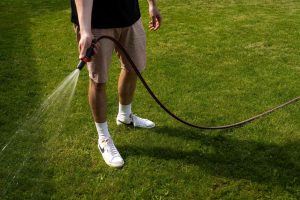
Iron sulphate is available as a dry powder or granular form, and occasionally as a liquid concentrate. The powder form is the most economical and is what most lawn professionals use. It dissolves readily in water to form a pale green solution that turns rust-coloured on contact with air as the iron oxidises. Apply using a garden sprayer or watering can fitted with a fine rose. A knapsack sprayer is the most efficient method for larger lawns, allowing even coverage without the repetitive refilling required with a smaller hand sprayer.
Iron sulphate will permanently stain everything it touches. Wear old clothing when applying – any splashes will leave rust-coloured marks that will not wash out. Protect your hands with chemical-resistant gloves. If the solution contacts a path, patio or timber decking, wash it off immediately with plenty of water before it dries.
Application rates and dilution
Getting the dilution rate right is the most important technical aspect of using iron sulphate. Too weak and you get limited moss kill and a subtle greening effect. Too strong and you risk scorching the grass, particularly in warm dry conditions. The standard dilution for general moss control and lawn conditioning is 35 grams per 5 litres of water, applied at a rate of 5 litres per 20 square metres. This works out to approximately 35 grams per 20m², or around 175 grams per 100m² of lawn.
Never exceed 70g per 5 litres on established grass and never apply at any concentration during hot dry weather. A 1kg bag of iron sulphate at the standard rate will treat approximately 570 square metres of lawn – enough for most UK residential lawns several times over, which explains why it costs significantly less per treated area than branded alternatives that contain the same active ingredient at a lower concentration in a more convenient format.
What happens after – and what to do next
Within 24-48 hours of a correct application the moss will begin turning black. This is the expected and desired result – do not be alarmed by what can look like significant lawn damage at this stage. The grass itself may also darken temporarily due to iron contact but will recover and green up within a week. By 10-14 days after application the moss should be fully blackened and dead throughout the treated area. At this point the dead moss needs to be physically removed by scarifying or vigorous raking, otherwise it forms a mat that prevents grass from establishing in the gaps.
After scarifying to remove dead moss, overseed bare patches with a lawn seed mix matched to the light conditions of your garden. Lightly top dress with a fine compost and keep moist until the new grass establishes. This combination of iron sulphate treatment followed by scarification and overseeding is one of the most effective and affordable lawn renovation approaches available, producing results that match commercial treatments at a fraction of the cost. For a lawn in poor condition with significant moss coverage, this three-stage process – treat, scarify, overseed – done in early autumn gives the best chance of full recovery before winter. The grass has enough growing time to establish from seed before temperatures drop, the moss is controlled before the damp autumn conditions that encourage its spread, and the overseeded areas fill in before frost arrives. Repeat the iron sulphate treatment the following spring at the lower greening rate to maintain the dark colour and keep any residual moss in check, and a heavily mossy lawn can typically be restored to predominantly grass within a single growing season using this approach. Applied consistently as part of an annual lawn care programme, iron sulphate is one of the highest-impact, lowest-cost interventions available to UK lawn owners. A 1kg bag costing under £10 can treat the average UK garden lawn multiple times, making it far better value than any branded equivalent.
Share on socials: