At a glance
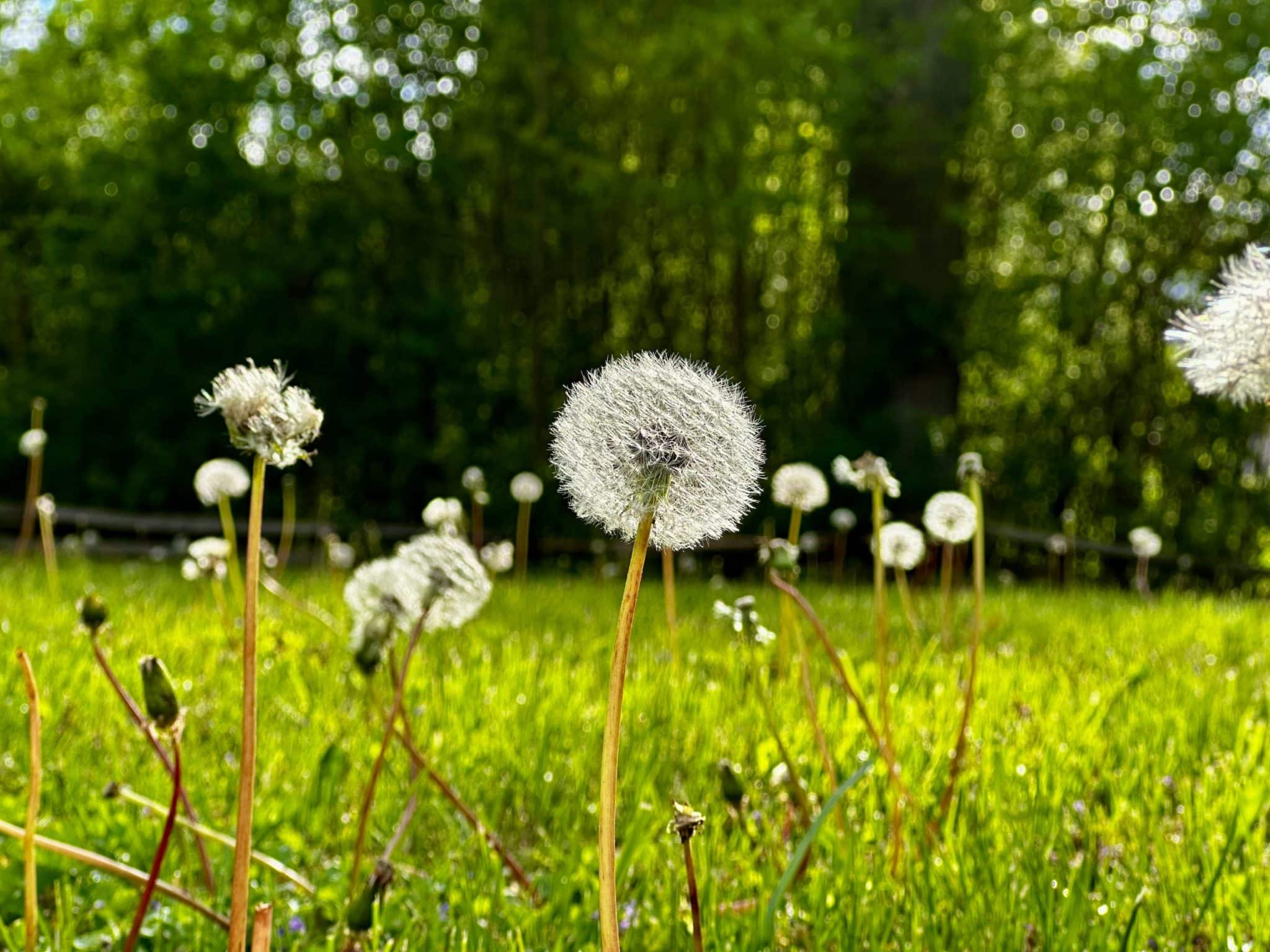
Weeds and pests are a fact of life in UK lawns and neither is a sign of failure on the part of the gardener. Dandelion seeds travel from neighbouring gardens on the wind. Chafer beetles lay eggs in the soil regardless of how well the lawn is maintained. What matters is being able to identify the problem accurately, respond with the right treatment at the right time and maintain the lawn conditions that make it naturally more resistant to weed colonisation and pest damage. A thick, well-fed, properly mown lawn is significantly harder for weeds to colonise than a thin, stressed, scalped one – and the cultural practices that maintain grass health are more important in the long run than any spray or treatment applied reactively.
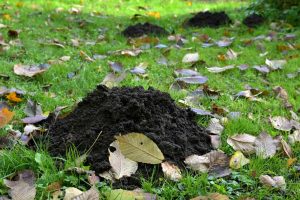
The distinction between weeds and pests is worth making clearly. Weeds are plants competing for space in the lawn – they are managed primarily by selective herbicides that kill broad-leaved plants without harming grass, and by improving lawn conditions to reduce bare patches where weeds establish most readily. Pests are organisms – typically insect larvae – that damage the grass itself by feeding on roots or stems. Pest damage is harder to treat than weed colonisation because the damaging stage (usually soil-dwelling larvae) is underground and difficult to reach with surface treatments. Early identification of pest damage before the population reaches turf-damaging levels is by far the most effective approach.
Common Lawn Weeds – Identification and Treatment
Selective herbicides for lawn weeds contain active ingredients that kill broad-leaved plants (dicots) while leaving grass (a monocot) unharmed. The most common actives in UK lawn weedkillers are 2,4-D, mecoprop-P (MCPP) and dicamba – products containing a combination of these three provide the broadest weed spectrum coverage. Apply when weeds are actively growing and air temperature is above 10°C – spring (April to May) and early autumn (September) are the two most effective treatment windows. A single application is sufficient for annual weeds and young perennials; established dandelions with deep taproots may require two applications at four-week intervals. Always apply on a dry, still day to prevent drift onto neighbouring plants and read the label carefully regarding re-entry times for children and pets.
Moss is not a weed in the botanical sense but it is one of the most common lawn problems in the UK, typically indicating a combination of poor drainage, compaction, shade and low soil pH rather than any single cause. Treating moss with a ferrous sulphate-based lawn sand kills it within two weeks and turns it black, making it easy to rake out – but without addressing the underlying causes the moss will return within a season. A programme of autumn scarification to remove dead moss and thatch, spring aeration to reduce compaction, and overseeding of bare patches created by scarification will improve conditions significantly. Improving drainage by topdressing with horticultural sand and raising the soil pH with lime if it falls below 5.5 addresses the root causes rather than the symptom.
One step that is frequently overlooked after weed treatment is overseeding. Selective herbicide kills the weed but leaves bare soil in its place – and bare soil is immediately available to the next weed seed that lands on it. Overseeding bare patches within two to three weeks of treating weeds fills the gap with established grass before weeds can recolonise. A handful of lawn seed mixed into a small amount of topsoil or compost and pressed firmly into the bare patch is sufficient for most gaps. Keep the area moist until the seedlings establish, which takes approximately 10-14 days in warm conditions. This one additional step – overseeding after treatment – is probably the single most effective way to reduce weed pressure in future seasons, because it removes the bare soil that new weed seedlings depend on.
Do not apply selective herbicide within three days of mowing. The weed needs sufficient leaf area to absorb the herbicide effectively. Mowing before application removes the leaf surface the chemical needs to enter the plant. Wait at least three days after the last mow before applying, and do not mow again for at least three days after treatment to allow translocation to the roots.
Lawn Pests – Diagnosis and Treatment
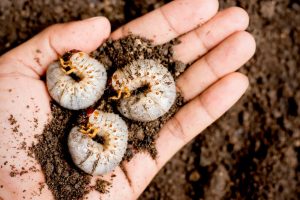
Chafer grubs and leatherjackets are the two pests capable of causing serious lawn damage in the UK and both are treated with biological controls rather than chemical pesticides. Nematodes – microscopic parasitic organisms sold as powders that dissolve in water and are applied with a watering can – are the primary treatment for both. Steinernema carpocapsae nematodes target leatherjackets; Heterorhabditis bacteriophora nematodes target chafer grubs. Application timing is critical: nematodes must be applied when soil temperature is above 10-12°C and the larvae are actively feeding close to the soil surface. For chafer grubs this means August to October; for leatherjackets, September to October or March to April. The soil must be kept moist for two weeks after application to ensure the nematodes can move freely through the soil and find their hosts. Nematode treatments are entirely safe for children, pets and wildlife and require no withdrawal period after application, making them a genuinely practical option for family gardens.
Year-Round Treatment Programme
Prevention Rules
The most important long-term factor in lawn weed and pest control is the overall health and density of the grass sward. A thick, vigorous lawn is far more resistant to both weed colonisation and pest damage than a thin, stressed one – and the investment in maintaining grass health through correct feeding, appropriate mowing height and regular aeration pays dividends year after year by reducing the frequency and scale of weed and pest problems. Chemical and biological treatments are useful reactive tools, but they address symptoms rather than causes. The lawn that needs treating least is the one that is managed best in the months and years between problems. This is worth keeping in mind when calculating the cost of weed and pest control products – the best return on investment is almost always found in soil improvements, overseeding bare patches promptly and maintaining a consistent mowing and feeding programme rather than in increasingly expensive treatments applied to a lawn that is struggling because its fundamental needs are not being met.
Share on socials: