At a glance
Most people with annual meadow grass in their lawn do not realise it until it dies. That is the thing that catches you out. Through spring and much of summer the plants are pale green, a bit flat, a bit spongy underfoot, but not dramatically different from the surrounding turf. Then a dry spell arrives in July or August and the affected patches turn straw-coloured while the rest of the lawn stays green. That is when the problem makes itself obvious, and by that point it has usually been building for a couple of seasons.
The botanical name is Poa annua. Despite the name, it does not behave like a simple annual in UK conditions. Many populations are short-lived perennials, or they cycle through seeding so rapidly that the distinction barely matters. It is one of the most common grass weeds in UK lawns and probably the most persistent. It is not dramatic to look at, which is part of the problem, and it does not respond to the treatments most people reach for first.
What annual meadow grass looks like
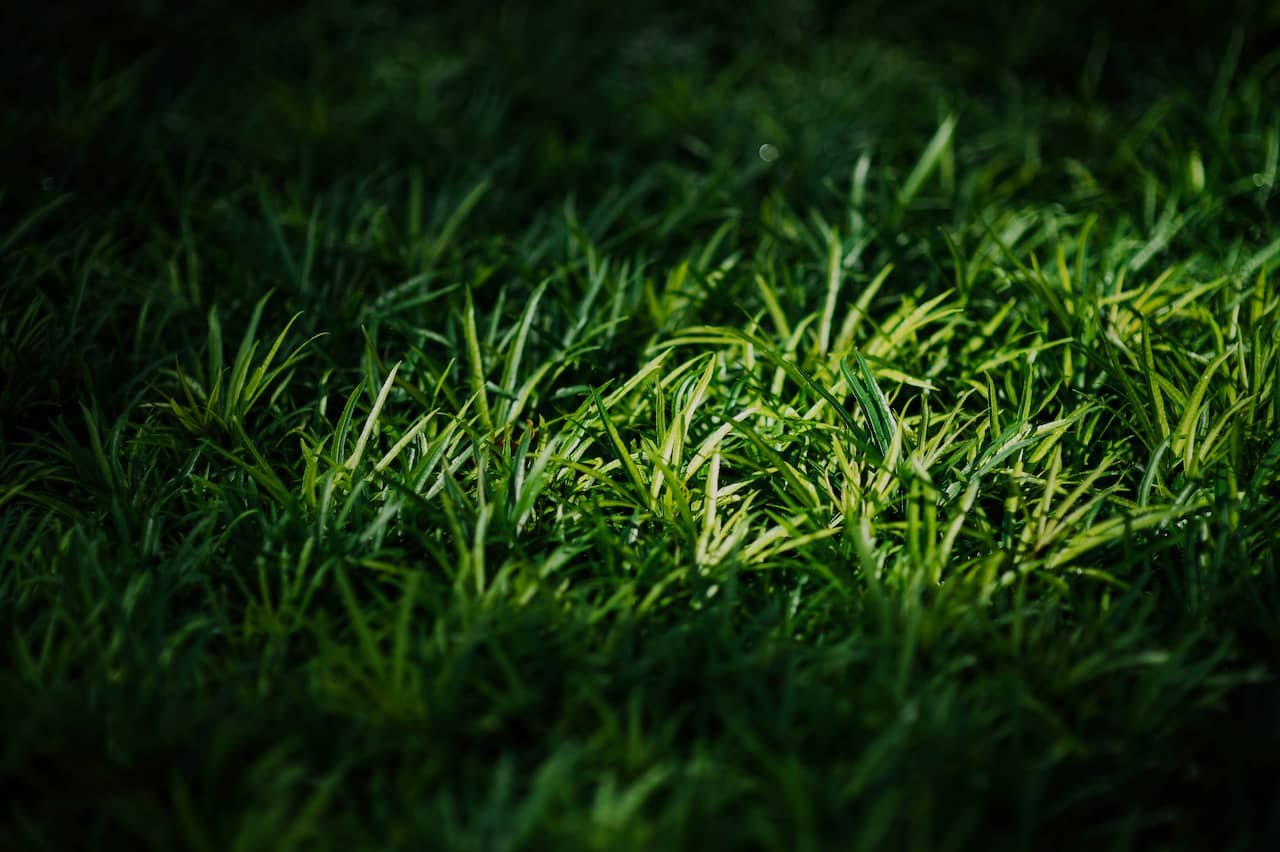
Getting the identification right matters, because Poa annua can look deceptively like a fine-leaved lawn grass until you know what you are searching for. The colour is the first giveaway. It is distinctively pale, a lighter, brighter green than perennial ryegrass or fescue, and that colour difference is often clearly visible across the lawn from a distance. The leaf tip is boat-shaped and folded, which is the most reliable identification feature up close. Growth is low and spreading, and the plants form spongy patches that feel noticeably different underfoot after rain compared to healthy turf.
Seed heads appear at almost any time of year, even when the plant is being mown regularly. They are small and pale and develop below the cutting height of most rotary mowers. If you see pale, whitish seed heads sitting low in the lawn, almost at soil level, that is Poa annua doing exactly what it does best.
The summer dieback is actually useful information. When patches go straw-coloured in July and August, mark them. Those are the areas to prioritise in autumn. The infestation is almost always larger than it looks during dieback, because plants at the edges survive long enough to seed before dying, and those seeds are already in the soil by the time conditions improve.
Why it keeps coming back
Annual meadow grass germinates at soil temperatures as low as 7 to 8 degrees Celsius. That is low enough to germinate freely from late summer all the way through autumn and into early winter, with peak germination running from late summer through November. The timing is not coincidental. Summer-stressed turf thins out and leaves bare soil. Desirable grasses slow down for winter and compete less effectively. The conditions that suit ryegrass and fescue least are the conditions that suit Poa annua most.
A single plant can produce several hundred seeds in a season, even at normal mowing heights. Those seeds can remain viable in the soil for five years or more. This soil seed bank is the real problem. You can kill every visible plant in the lawn and make no meaningful dent in the following season’s pressure, because the bank is full and ready to germinate the moment conditions allow it.
Mowing makes things worse. Regular close mowing does not prevent seed production because Poa annua has adapted to it. The plants flower and set seed from a very low profile, well below the cutting height of a standard rotary mower. Years of close mowing actually selects for a lower, denser, more prostrate growth form that is harder to remove manually and better at competing for space with surrounding turf. Annual meadow grass also thrives in compacted, waterlogged and worn ground. Compaction limits the rooting depth available to desirable grasses and creates the shallow, moisture-retaining conditions that suit Poa annua perfectly. Drainage problems have the same effect. So does heavy foot traffic that wears the turf thin and creates the bare soil it needs to establish.
Use the summer dieback as your map. When Poa annua patches go straw-coloured in a dry July or August, they show you exactly where the infestation is heaviest. Mark or photograph those patches. Those are the areas to hit first with aeration and overseeding come autumn, when conditions are most favourable for establishing desirable grasses.
Cultural controls – the foundation of long-term management
No single treatment eliminates Poa annua. The only thing that works long-term is improving the conditions that favour desirable grasses and making the lawn hostile to annual meadow grass establishment. Lawns where Poa annua is genuinely being reduced year on year have one thing in common: the cultural conditions have changed. The treatments below address those conditions directly.
Physical removal
For small infestations or isolated clumps, hand removal is effective if done correctly and at the right time. Poa annua has shallow, fibrous roots and lifts cleanly from moist soil. The critical point is timing. Remove plants before any seed heads form. Once seed heads are visible, disturbing the plant will scatter seed and make the problem worse. The best window is early spring, when new seedlings emerge fastest and before they reach flowering.
Use a hand fork or daisy grubber to lift the clump with its root system intact. Fill the resulting hole immediately with a pinch of grass seed and a little top-dressing, firmed in. Do not leave bare soil. Left empty, the gap will be recolonised faster than you would think. Repeat the patrol every two to three weeks throughout spring.
Hand removal only works for small areas. A lawn that is more than twenty to thirty percent Poa annua cannot realistically be hand-weeded back to health. Trying to hand-weed a heavily infested lawn while leaving the underlying conditions unchanged is one of the most common mistakes I see. You spend a lot of time, the bare patches refill immediately from the soil seed bank, and the overall situation does not improve. At that level of infestation, a different approach is needed.
Herbicide treatment
There is no selective herbicide available in the UK that kills annual meadow grass without also killing desirable grass species. This is the fundamental chemical control problem. Poa annua is a grass, and any product formulated to kill grasses will take the lawn with it. Do not waste money on products claiming selective Poa annua control for domestic lawns. No broadleaf lawn weedkiller will touch it either, since those products target dicotyledonous plants and Poa annua is a monocot.
The only practical herbicide approach is glyphosate applied as part of a planned renovation. Glyphosate is non-selective and kills all vegetation, including Poa annua, by working through green leaf tissue. It has no residual effect in soil, which means you can resow grass seed shortly after application. The wait is not about soil safety but about the vegetation dying fully and the surface being ready to prepare. In practice, waiting seven to fourteen days before raking clear and preparing to sow gives the glyphosate enough time to work through the plant fully and ensures the dead material can be removed cleanly.
Spot treatment with glyphosate on individual patches within an established lawn can work as a management tactic, provided you resow immediately after clearing the dead material. The risk is that the resulting bare patch is an open invitation for the soil seed bank. Every spot treatment must be followed immediately by overseeding. Have seed ready before you apply. Never leave a treated patch bare for more than a few days.
Always check the label before buying glyphosate products. Some formulations marketed for paths and hard surfaces contain a residual herbicide alongside the glyphosate to prevent regrowth for months. These will prevent grass seed from germinating. For any lawn renovation work, use a glyphosate-only formulation. The label will state clearly if a residual ingredient is present.
Lawn renovation – when infestation is severe
When Poa annua accounts for more than around forty percent of the lawn, trying to manage it in situ while the soil seed bank remains intact is a very slow process. Full renovation is usually more efficient, even though it means starting from scratch. The renovation sequence below is timed to give new permanent grasses the best possible establishment window before winter.
Apply glyphosate in late August. Wait seven to fourteen days for the vegetation to die fully, then rake clear and hollow-tine aerate before overseeding by early to mid October at the latest. Soil temperature needs to be above 8 to 10 degrees Celsius for germination, and that window closes as autumn progresses.
The mowing height in the first season after renovation matters considerably. Keeping it at 4 centimetres minimum throughout gives the new permanent grasses a genuine advantage over Poa annua seedlings emerging from the soil seed bank. Poa annua is better adapted to close mowing. Keeping the height up is one of the simplest things you can do to help the new lawn establish. Poa annua will return after renovation. The soil seed bank can hold viable seeds for five years or more, and the first couple of seasons will see some re-emergence. This is normal. What matters is the trajectory, which the next section covers.
How to know if the programme is working
Most articles on Poa annua tell you what to do but not how to know whether it is actually working. This matters because the weed keeps returning from the soil seed bank even when you are doing everything right, and that can feel discouraging if you do not know what progress looks like. The table below describes what to watch for season by season.
The homeowners who make the most progress with Poa annua are the ones who stop treating it as a weed problem and start treating it as a lawn health problem. The weed is filling a gap in the conditions. Fix the gap and it has nowhere to go.
Problems, symptoms and fixes
Most Poa annua problems follow recognisable patterns. Understanding the symptom and the right response saves time and prevents the common mistakes from making the situation worse.
Share on socials: