At a glance
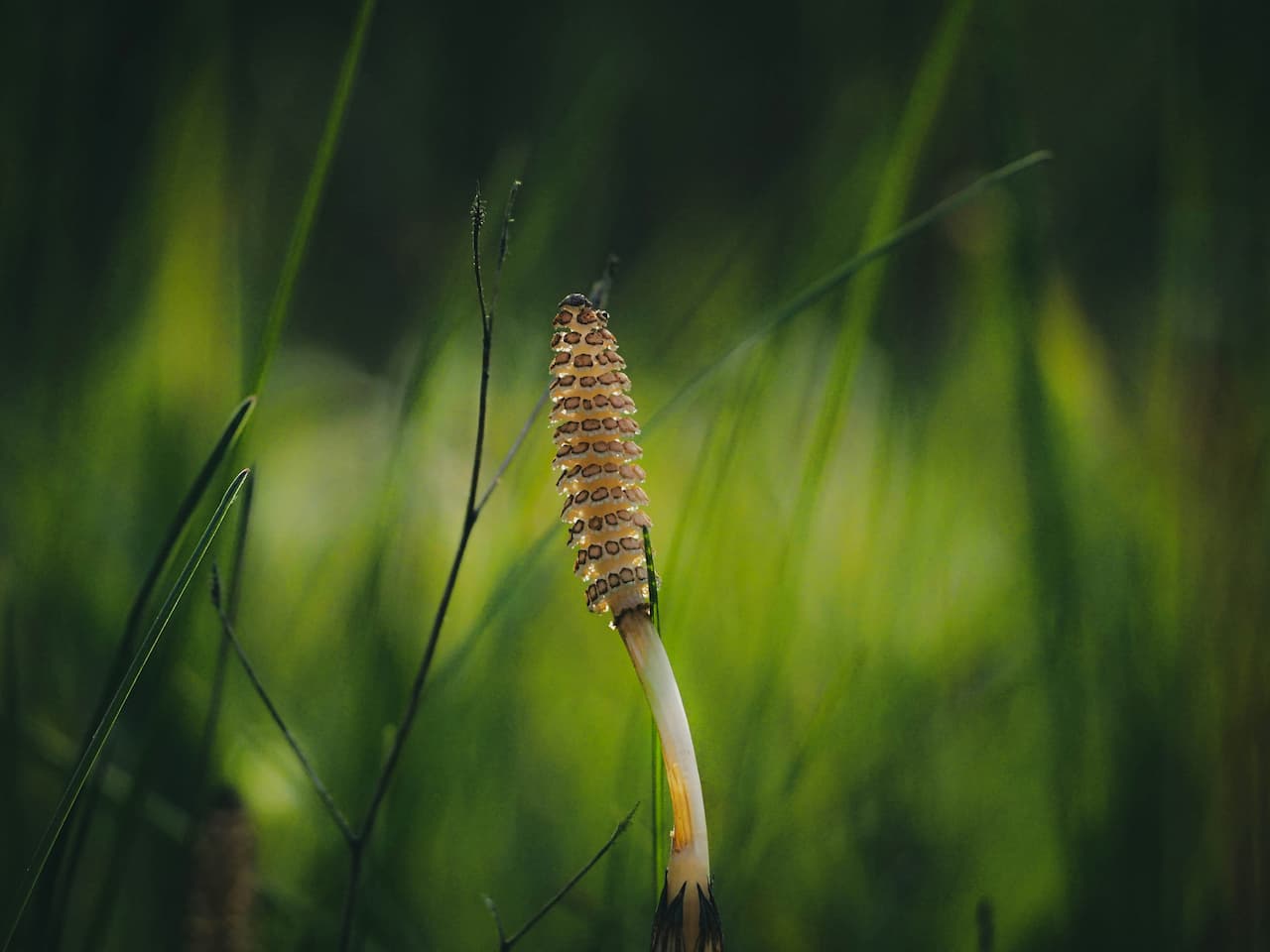
Field horsetail (Equisetum arvense) is arguably the most difficult weed to eradicate from a UK garden. It is a primitive plant that has survived essentially unchanged for over 300 million years – its resilience is not accidental. The root system extends up to 2 metres deep and spreads laterally in a dense underground network of rhizomes and tubers. The above-ground growth has a thick waxy coating that repels most herbicides. A single piece of rhizome as small as a fingernail, left in the soil after attempted removal, will regenerate into a new plant. And because it spreads both through its underground network and by spores, it can appear in a garden from neighbouring land even after the on-site population has been suppressed.
This is not a weed that can be “got rid of” in a single season. Anyone who has tried to dig it out, spray it once, or cover it briefly will confirm that it returned. Effective control requires a sustained, committed programme over three to five years at minimum. The realistic goal for most gardens is not complete eradication but long-term suppression to a level where it is manageable and no longer spreading. Understanding why it is so resistant – and which treatments actually penetrate those defences – makes the difference between wasted effort and genuine progress.
Identifying horsetail
Why horsetail is so hard to kill
Three factors combine to make horsetail uniquely resistant to the methods that work on most garden weeds. First, the waxy silica coating on the stems prevents herbicide from being absorbed effectively – even systemic herbicides like glyphosate, which need to enter the plant tissue to reach the roots, struggle to penetrate the surface without assistance. Second, the root system is both deep and extensive: rhizomes descend to 2 metres and tubers – small storage organs on the rhizome – can regenerate into new plants independently. Removing the above-ground growth repeatedly depletes the root reserves over time but does not kill the plant quickly. Third, the plant contains no true leaves – its photosynthesis happens in the stems – which means herbicides designed to enter through leaf surfaces have limited area to work with.
Digging is the most common approach people try first, and it reliably makes the problem worse. Breaking and disturbing the rhizome fragments it into dozens of pieces, each capable of producing a new plant. The disturbed soil also brings previously deep tubers closer to the surface where they germinate readily. Like Japanese knotweed and ground elder, horsetail is a plant where intervention without strategy actively spreads the infestation.
Treatment methods compared
Herbicide treatment – how to do it properly
Glyphosate is the only herbicide with meaningful systemic effect on horsetail, and it will only work if the waxy surface coating is broken before application. The standard approach is to crush the stems before spraying – either by running a garden roller over the patch, trampling the growth underfoot, or bruising individual stems with a gloved hand before applying the herbicide. This physical damage breaches the waxy barrier and gives the glyphosate an entry point into the plant tissue. Applying glyphosate to intact, undamaged stems and expecting it to penetrate is one of the most common reasons treatment fails.
Timing matters as much as technique. The best application window is mid-summer when the green vegetative stems are fully developed and the plant is actively photosynthesising – this maximises the amount of herbicide translocated down into the root system. A second application six weeks later, and again the following season at the same stage, builds up the effect progressively as root reserves are depleted. Adding a small amount of washing-up liquid to the spray solution acts as a surfactant that helps the herbicide adhere to and penetrate the damaged stem surface.
Do not apply glyphosate near water. Field horsetail frequently grows in moist or poorly drained areas and near watercourses. Glyphosate is highly toxic to aquatic life and must not be applied within 2 metres of open water or in conditions where runoff into a drain or watercourse is possible. A specialist herbicide approved for use near water – such as products containing glyphosate formulated for aquatic use – is required for infestations near ponds, streams or drainage ditches. Check the product label carefully before use.
Smothering and light exclusion
For infestations in areas where herbicide use is impractical or unwanted – vegetable beds, areas near ponds, or gardens where a chemical-free approach is preferred – smothering with light-excluding membrane is the most effective alternative. Laying thick woven polypropylene landscape fabric or heavy-duty black polythene over the infestation and securing the edges prevents light from reaching the plant. Without light, the above-ground stems cannot photosynthesise, and the root system gradually exhausts its energy reserves as it repeatedly sends up new shoots that die without light.
This process takes longer than herbicide treatment – three to five years is a realistic minimum for a well-established infestation – but it is genuinely effective if the covering is maintained without gaps. Horsetail is persistent enough to find any weak point in the membrane and exploit it, so the covering must be complete and the edges secured against lifting. Covering with a layer of bark mulch or gravel on top improves aesthetics and adds weight that helps keep the membrane in place. The membrane should be left in situ and inspected seasonally rather than lifted – disturbing the soil beneath resets the process.
Improving soil drainage is a worthwhile supporting measure where the infestation is in a persistently wet or waterlogged area. Horsetail thrives in poorly drained, compacted or acidic soil and is far less vigorous in well-drained, alkaline conditions. Where practical, improving drainage by adding grit or organic matter, installing a soakaway, or raising the bed level creates conditions that are less hospitable to horsetail and more favourable to competing plants. Liming an acidic soil to raise the pH incrementally reduces horsetail’s competitive advantage over time. These soil improvements do not kill horsetail on their own but combined with herbicide or smothering they make the overall programme more effective and reduce the likelihood of reinfestation once control has been achieved.
Common mistakes to avoid
Share on socials: