At a glance
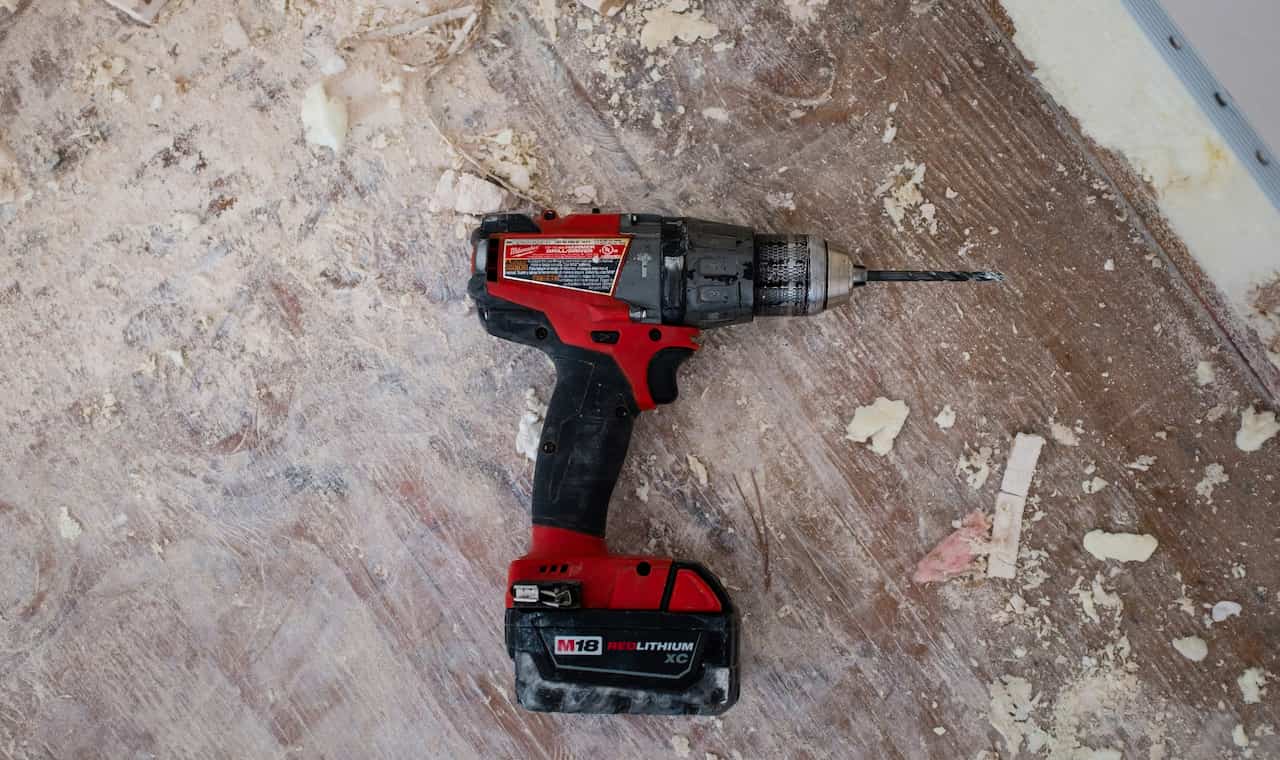
The budget cordless drill market has improved dramatically in the past five years. The gap between a £40 drill and a £120 drill has narrowed to the point where a well-chosen budget model handles the full range of home DIY tasks – drilling into timber, masonry and sheet material, driving screws, assembling flat-pack furniture – without meaningful compromise for the person using a drill once a fortnight rather than every working day. The models that disappoint at budget prices are not the category itself but the specific bad choices within it: cheap brushed motors with short lifespans, poor battery management that kills cells within a season, and plastic housings that crack on the first drop.
We tested five of the most widely available budget 18V cordless drills in the UK, covering the Ryobi ONE+ platform, Bosch’s entry-level professional range, DeWalt’s mid-market option and two value-focused brands in Einhell and Black+Decker. Each was put through identical tasks over four weeks: 200 screws into softwood, 50 masonry holes with an SDS bit adapter, flatpack assembly across three pieces of furniture and a drop test from bench height. Battery runtime was measured under consistent load to cutoff.
How we tested. Each drill drove 200 screws into softwood at 75mm depth, drilled 50 holes in brick with a masonry bit, and assembled three flatpack items from scratch. Battery runtime was measured from full charge to cutoff under consistent load. Build quality was assessed through a controlled drop from bench height onto concrete, with inspection of all moving parts before and after the test period.
Quick verdict summary
All 5 drills ranked
The Ryobi RCD18-0 earns its top position through consistent, reliable performance across every test rather than excellence in any single category. Its brushless motor is the standout feature at this price point – brushless motors run cooler, last significantly longer and deliver better runtime per charge than the brushed motors found in most budget drills. The two-speed gearbox covers both high-torque low-speed work for driving larger screws and faster drilling for timber, and the clutch has 24 settings giving genuinely useful control across different materials and screw sizes.
The ONE+ battery platform is the Ryobi’s strongest long-term argument. Over 100 tools share the same 18V ONE+ battery, from drills and impact drivers through to lawnmowers, hedge trimmers and leaf blowers. For a homeowner building a cordless toolkit from scratch, starting with the Ryobi platform means every subsequent tool purchase shares existing batteries rather than requiring a new investment. The body-only price is competitive and batteries can be bought separately or found bundled in starter kits.
The GSR 18V-55 sits at the upper end of the budget bracket but performs at a level that justifies every penny of the premium over cheaper options. At 55Nm of torque it is the most powerful drill in this test and the difference is noticeable on demanding tasks – driving long coach screws into hardwood, drilling large-diameter holes in timber with a spade bit, or working through the day on a more demanding DIY project. The electronic motor protection system prevented the motor stalling under overload in every test, a durability feature absent on the cheaper models.
The Bosch 18V Professional system is the main consideration for anyone thinking beyond a single drill. It is a professional-grade ecosystem with a wide range of tools, broadly compatible batteries and good UK availability. For occasional home DIY use the body-only price feels steep without existing batteries, but for anyone already in the system it is the obvious choice at this price level.
The Einhell TE-CD 18 is the drill that surprises most at first use. For around £45 with a battery and charger included, it delivers performance that is genuinely adequate for all standard home DIY tasks – not excellent, but not embarrassing either. At 45Nm it drives screws and drills timber without complaint. The brushed motor will not last as long as the Ryobi’s brushless equivalent, but for occasional use the lifespan is entirely acceptable and the all-in purchase cost is the lowest in this test by a significant margin.
Einhell’s Power X-Change platform covers a wide range of garden and DIY tools and the batteries are genuinely interchangeable across the range, which adds useful long-term value if other Einhell tools are likely to follow. The drill body itself feels slightly cheaper than the Ryobi or Bosch but survived the drop test without structural damage.
As an Amazon Associate I earn from qualifying purchases.
The DCD778 is DeWalt’s entry point into the XR brushless platform and it sits at the budget ceiling rather than the budget floor – body-only pricing puts it at the same level as the Bosch GSR. Its 42Nm torque is lower than either the Ryobi or Bosch, which was noticeable on the heaviest tasks in our test, and the two-speed gearbox covers the standard range adequately without the precision of the Ryobi’s 24-position clutch. Where it genuinely wins is build quality – the XR housing is noticeably more robust than any other drill in this test and it is the most confidence-inspiring to use.
For anyone already running DeWalt XR tools – an impact driver, an SDS drill, a circular saw – the DCD778 body-only is the logical drill choice: shared batteries, familiar platform, consistent quality. For someone starting fresh with no existing batteries, the value case compared to the Ryobi is less clear at a similar price point.
The Black+Decker BDCDD12 is the cheapest drill in this test with a battery and charger included, and it shows in the areas that matter most. At 30Nm it is the least torquey drill tested and the limitation is genuinely felt on any task requiring sustained effort – longer screws, denser timber, anything that a competent DIYer would tackle regularly. It handled flatpack assembly and light timber drilling without complaint, which covers the extent of its suitable applications well enough.
Its genuine advantages are weight and price. At under 1kg body weight it is the most comfortable drill in this test to use overhead or in tight spaces for extended periods, and the all-in price including battery and charger is the lowest available. For someone who genuinely only needs a drill for the occasional flatpack and picture hanging, the argument for spending more is weak. For anyone likely to use a drill regularly for more demanding tasks, the £15 to £20 step up to the Einhell is worth making.
As an Amazon Associate I earn from qualifying purchases.
Head to head comparison
| Model | Torque | Motor | Clutch | Weight | Score |
|---|---|---|---|---|---|
| Ryobi RCD18-0 | 40Nm | Brushless | 24 pos | 1.4kg | 4.4 / 5 |
| Bosch GSR 18V-55 | 55Nm | Brushless | 20 pos | 1.5kg | 4.2 / 5 |
| Einhell TE-CD 18 | 45Nm | Brushed | 15 pos | 1.5kg | 3.9 / 5 |
| DeWalt DCD778 | 42Nm | Brushless | 15 pos | 1.6kg | 3.8 / 5 |
| Black+Decker BDCDD12 | 30Nm | Brushed | 16 pos | 0.9kg | 3.2 / 5 |
What to look for when buying
The most important decision when buying a budget cordless drill is not which model to choose but which battery platform to commit to. Ryobi ONE+, Bosch 18V Professional, DeWalt XR and Einhell Power X-Change all run closed systems where batteries are not interchangeable between brands. A budget drill from brand A bought today means buying brand A’s batteries for every cordless tool that follows, which may cost significantly more than the drill itself over time. If there are no existing tools to match, choose the platform with the widest range of tools you are likely to need – Ryobi ONE+ is the strongest choice for homeowners who also want garden tools on the same battery.
Brushless versus brushed motor is the most important spec after platform. Brushless motors run cooler, last longer and deliver meaningfully better battery runtime. At this price point Ryobi, Bosch and DeWalt all offer brushless – Einhell and Black+Decker use brushed motors. For occasional light use brushed is adequate. For regular use or any application where the drill runs hard, brushless is worth the price premium. The other specification worth noting is clutch settings: more settings mean more precise torque control. The Ryobi’s 24-position clutch is the most granular in this test and gives the most control when driving small screws into softwood or assembling flat-pack where overtightening damages fixings.
Never buy a budget drill without checking battery availability and price first. A drill sold body-only for £55 may require a battery that costs £40 or more separately. Always calculate the total cost including a battery and charger before comparing prices across brands. Some cheaper all-in deals from budget brands represent better total value than premium body-only models once battery costs are included.
Final verdict and recommendations
For the best overall budget drill: Ryobi RCD18-0. Brushless motor, 24-position clutch, excellent ONE+ platform compatibility with garden and DIY tools, and the most competitive value proposition when total system cost is considered. The clear top choice for anyone starting a cordless toolkit from scratch.
For maximum performance at the budget ceiling: Bosch GSR 18V-55. The most capable drill in this test at 55Nm and the most confidence-inspiring for demanding tasks. Worth the premium for anyone already in the Bosch 18V Professional system or planning to buy into it.
For the lowest all-in cost with battery included: Einhell TE-CD 18. Genuinely adequate for home DIY use, includes a battery and charger, and costs less than any competing body-only option. The starting point for anyone who needs a functioning drill today on the tightest possible budget.
For existing DeWalt XR users: DeWalt DCD778. Shared batteries with existing XR tools justify the purchase regardless of the performance ranking in this test. The build quality is the best in the budget field.
For the absolute lightest and cheapest option: Black+Decker BDCDD12. Suitable for genuinely occasional use – flatpack, picture hanging, light timber work. Not recommended for anyone likely to use a drill regularly or for any demanding task.
The Ryobi RCD18-0 is the best budget cordless drill available to UK buyers right now. Its brushless motor, comprehensive clutch and excellent ONE+ platform compatibility make it the obvious choice for homeowners building a toolkit across multiple tools. The Bosch is the better drill for heavy use but costs more. The Einhell is the right answer if total all-in cost is the primary constraint. Everyone else is buying into a weaker proposition at a similar price.
As an Amazon Associate I earn from qualifying purchases. Prices correct at time of publishing.
Share on socials: