At a glance
Creeping buttercup is one of those weeds that seems manageable until it isn’t. A few plants in spring, left unchecked through summer, and by autumn you have a dense mat of rooting stems working its way through the entire bed. It spreads in two ways: by seed, which is modest, and by surface runners that root at every node as they creep outward, which is how it covers ground so fast. Each rooted node becomes an independent plant if you break the runner. Understanding that is the key to tackling it properly.
It thrives in wet, compacted soil and is genuinely telling you something about your ground conditions when it takes hold. Lawns with poor drainage, borders with clay soil, patches that stay waterlogged in winter: these are where creeping buttercup feels most at home. Remove it and do nothing about the underlying conditions and it comes back. The weed and the drainage problem need tackling together.
Identifying creeping buttercup
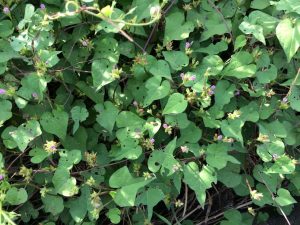
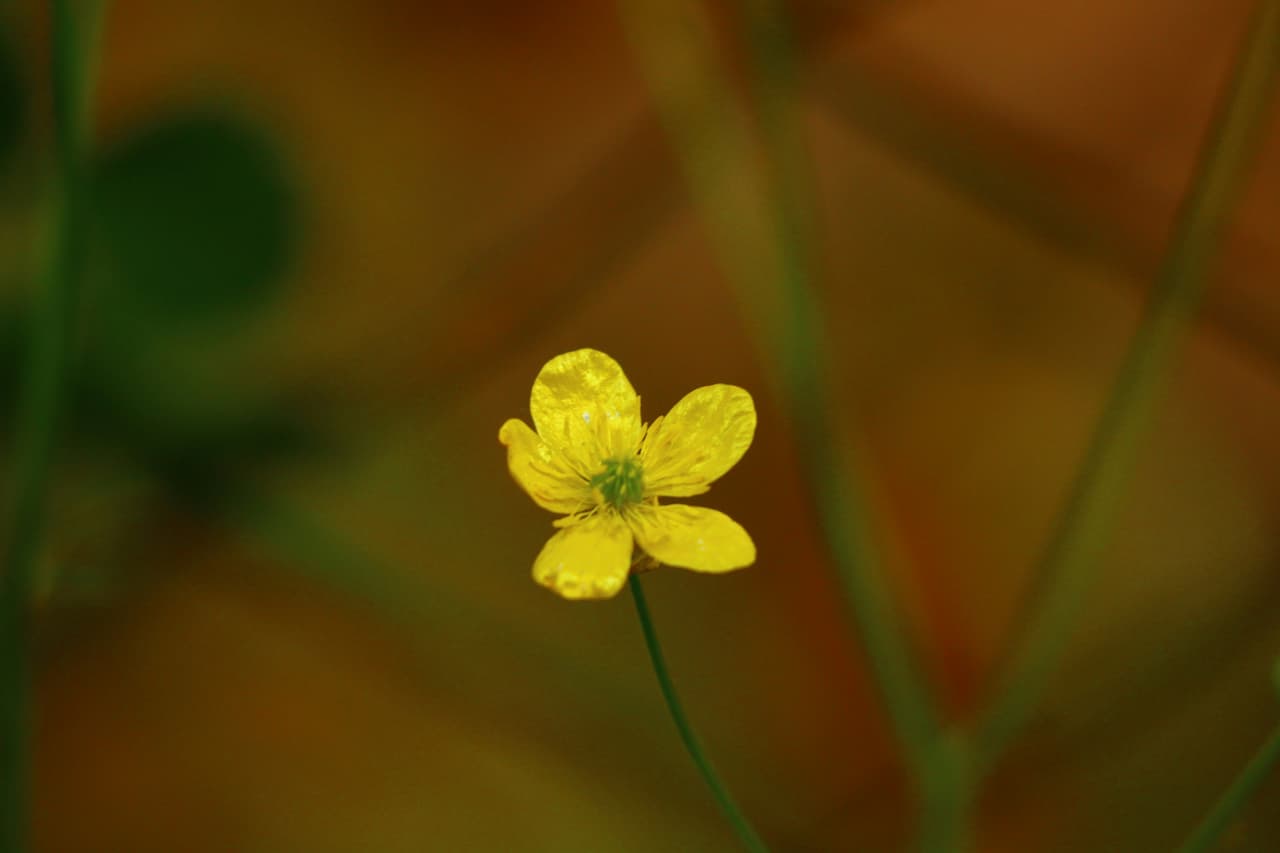
Creeping buttercup, Ranunculus repens, is identified most reliably by its creeping surface runners. These stolons spread outward from the central plant, lying flat on the ground, and root at the nodes where leaf stalks emerge. The leaves are divided into three leaflets with the central one on a short stalk, dark green, often with pale markings. The flowers are the bright yellow, glossy-petalled flowers most people associate with buttercups, appearing from May through to August.
Two other common buttercup species appear in UK gardens and it is worth knowing them so you are not removing the wrong plant. Meadow buttercup (Ranunculus acris) is upright with no runners, common in rough grass and far less of a garden problem. Bulbous buttercup (Ranunculus bulbosus) is also upright with no runners, has a swollen bulbous base at ground level, and flowers earlier. Neither spreads by stolons. Only Ranunculus repens produces the creeping stems that make it such a persistent problem in cultivated ground.
The pale leaf markings are a useful confirming feature that meadow and bulbous buttercup do not have. Combined with the flat creeping habit and visible runners rooting into the soil, they make Ranunculus repens straightforward to confirm with confidence.
How it spreads and why it is hard to remove
Each runner can produce multiple new plants. A single established plant sends runners in all directions, and each node that contacts moist soil can root. If you hoe or rotovate through an infested area you fragment the runners without removing them, and each fragment with a node becomes a new plant. This is the fundamental mistake most gardeners make with creeping buttercup: hoeing an established infestation makes things worse, not better.
It also produces seed, viable in the soil for 20 years or longer, though seed is a less significant route to spread than the runners. Seeds can remain dormant for years and then germinate after soil disturbance, which is why new plants sometimes appear in areas you thought were clear. A plant that has been in the ground for one season may have runners extending half a metre or more in multiple directions, each with rooted nodes. Removing the parent plant while leaving runner fragments means you have not removed the problem, only distributed it.
Hand weeding
For beds and borders with limited infestations, hand weeding is the correct approach and it works well if done properly. The key is tracing each runner back to its source rather than pulling the top growth alone. Work when the soil is moist but not waterlogged, which allows clean root removal without breakage.
Loosen the soil around the central plant first
Use a hand fork to loosen the soil around the base of the plant before pulling anything. This reduces root breakage and makes it possible to remove the whole plant as a connected unit rather than snapping roots at the surface.
Follow every runner outward from the centre
Do not pull from the tip. Follow each runner back to the parent plant and loosen the whole length before removing. A runner pulled from the tip will snap and leave the rooted section behind.
Loosen each rooted node before pulling
Where a node has rooted into the soil, use the hand fork to loosen the soil around it specifically before pulling. Each rooted node has its own root system below the surface. Pulling it out dry or without loosening almost always breaks the root and leaves it behind.
For heavy infestations, clear sections completely
In heavily infested borders, remove all plants from a section, fork the area over thoroughly removing every runner fragment, then replant. You will miss some fragments. Follow-up weeding over the next season catches the regrowth before it re-establishes a runner network.
Dispose of removed material carefully
Do not compost green runner material with viable nodes. Bag it for council collection, leave it on a hard surface to desiccate fully in the sun before composting, or burn it. Runners composted while still viable will root in the heap and spread the problem when you use the compost.
Hoeing and cultivation
Hoeing works on seedlings and young plants that have not yet established runners. It fails, and actively makes things worse, on established plants with a runner network. Hoeing through a mature infestation fragments the runners into sections each capable of rooting and regenerating.
For paths, vegetable beds and areas of bare soil where buttercup is at an early stage, regular hoeing on dry sunny days when the severed material will desiccate quickly can be effective. Time it for dry spells where the temperature is high enough to kill severed plant material on the soil surface before it can re-root. A vegetable bed with an established infestation is best cleared completely at the start of the season rather than hoed repeatedly, then hoed vigilantly throughout the year to catch any new plants before they can extend runners.
Chemical control
Glyphosate is effective against creeping buttercup and is the main chemical option available to UK gardeners for borders and paths where grass is not present. Apply to actively growing foliage in late spring or early summer before flowering. Glyphosate works systemically, travelling from the leaves down into the root system, which is why it is more effective than physical removal in heavily infested areas where hand weeding is impractical.
Allow two to three weeks after application before disturbing the soil. Applying glyphosate and then immediately digging or hoeing interrupts the translocation to the roots and significantly reduces effectiveness. The plant should be visibly yellowing and dying before you touch the area.
For lawns, selective broadleaf herbicides are used rather than glyphosate. Products containing clopyralid, mecoprop or combinations of broadleaf herbicides will kill creeping buttercup without harming the grass. Apply when both grass and weeds are in active growth, typically April through September, in dry conditions with no rain forecast for at least 24 hours. More than one application in a season is often needed for heavy infestations.
Dealing with it in lawns
Creeping buttercup in lawns is extremely common on heavy, poorly drained soils. The treatment that works is a combination of selective herbicide, overseeding of cleared areas, and drainage improvement. Used together these three approaches address the immediate problem and reduce conditions that allow it to return. Used separately, each has limitations on its own.
Selective broadleaf herbicide is the most efficient tool for active infestations. Apply in spring or early autumn when the grass is growing strongly. Follow label rates carefully; most products require two to three weeks before visible results, and second applications are often needed for heavy patches. After the buttercup dies, overseed the bare ground promptly. Thin grass lets seedlings re-establish quickly. Establishing a dense sward is one of the most effective long-term controls.
Scarification in autumn removes thatch and the shallow runners that creep in from borders or rough grass around the lawn perimeter. Follow with overseeding and a top dressing of sharp sand to begin improving drainage. Hollow-tine aeration followed by brushing sharp sand into the holes reduces compaction and improves water movement through the soil profile. This is not a one-season fix; two to three years of consistent aeration and sand dressing produces meaningful drainage improvement on clay lawns.
The drainage problem
Creeping buttercup thriving in your lawn or border is consistently associated with wet, compacted or poorly drained soil. Removing the plant and doing nothing else means it comes back, because the conditions it favours have not changed. On ground where it is persistent and widespread, improving drainage is not optional. It is the part of the solution that makes everything else stick.
Preventing return
After clearing an area, preventing return comes down to three things: dense planting that leaves no bare soil for seedlings to establish in, a thick mulch layer, and vigilance at the edges. Creeping buttercup does not compete well with established plants in well-maintained borders. The problem almost always begins in bare soil, in gaps in the planting, or from runners creeping in from adjacent infested areas.
A mulch of bark chip or composted material at least 7cm deep applied to beds in autumn prevents buttercup seedlings from establishing and makes it easy to spot any runners that do make it through. Keep mulch topped up. A thin mulch layer becomes ineffective quickly as it decomposes.
Inspect the edges of beds adjacent to lawns or rough grass at least twice during the season and remove any runner tips before they root. A runner removed before it roots takes seconds. The same runner left for a month becomes twenty minutes of work and a new plant that sends out its own runners. The edge inspection habit is the single most effective preventive measure after the initial clearance.
Common questions
Share on socials: