At a glance
Doff is one of the longest-established weed killer brands in the UK, best known for its glyphosate-based total weedkiller products that have been sold under various names since the 1970s. Glyphosate is a systemic, translocated herbicide – it is absorbed through the leaves and moves through the plant’s vascular system to the roots, killing the whole plant including the root system rather than just scorching the top growth. This is the key distinction between glyphosate-based products and contact weed killers: a contact weed killer burns what it touches and the plant often regrows from undamaged roots, while glyphosate kills the entire plant when applied correctly, including perennial weeds with deep or spreading root systems. It is not, however, a soil sterilant – it breaks down on contact with soil and does not prevent new weed seeds from germinating in treated ground once it has decomposed.
Doff produces several weed control products with different active ingredients, application methods and target uses. The most widely sold is Doff Maxi Strength Glyphosate Weed Killer, a concentrated liquid that is diluted with water and applied by watering can or sprayer to actively growing weeds. There is also a ready-to-use Doff Glyphosate formulation in a trigger spray for smaller areas. Both contain the same active ingredient at different concentrations. Understanding the correct application rate, timing and technique is the difference between a clean single-treatment result and a partial kill that requires re-treatment.
Doff Product Range – Which One to Use
How to Use Doff Correctly
The most common reason Doff glyphosate fails to deliver a clean kill is application error rather than product failure. Glyphosate must reach the weed’s leaves in sufficient quantity to be absorbed and translocated to the roots. Rain within 6 hours of application washes it off before it is absorbed. Application to dormant or stressed plants reduces uptake. Incorrect dilution delivers too little active ingredient for a complete kill. Getting these three factors right consistently produces the reliable results that glyphosate is capable of delivering.
Timing the application to coincide with active growth is the most important variable. Weeds in active growth during warm, settled weather with adequate soil moisture absorb glyphosate most efficiently. A weed that is drought-stressed, waterlogged or partially dormant in cold weather will absorb the herbicide slowly and may show incomplete kill even at maximum dilution. For persistent perennial weeds like horsetail and ground elder, timing the application to late summer – when the plant is translocating sugars and nutrients toward the root system ahead of winter dormancy – improves the systemic movement of the herbicide into the root zone and can produce more complete kills than spring applications.
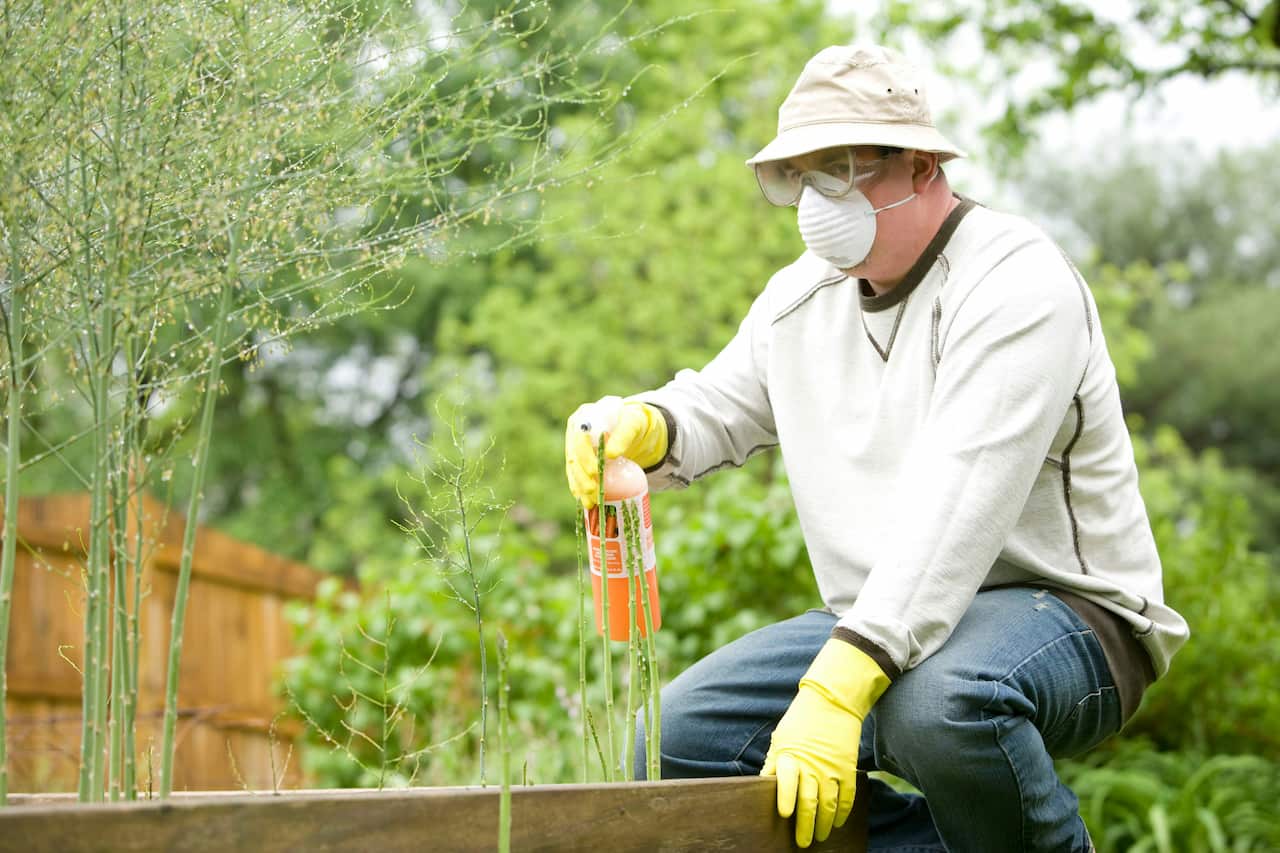
Applying glyphosate safely means protecting adjacent plants from spray drift and run-off. On a still day this is straightforward – use a coarse spray nozzle to reduce fine droplets and apply close to the weed foliage rather than from height. On windy days, application is a false economy: the spray drifts, the concentration on the target weed is reduced, and any valued plants in the vicinity are at risk. Using a shield or cardboard barrier between target weeds and nearby plants when working in borders gives additional protection, particularly when spot-treating individual weeds growing among ornamentals.
Never use Doff Path Weedkiller near ornamental plants, vegetable beds or areas you intend to replant. The residual component in path and drive formulations can persist in soil for several months and will damage or kill plants placed in treated ground. Standard Doff Glyphosate without residual is safe to replant after 7 days, but always check the label of the specific product you are using before replanting treated areas.
What It Kills – and What It Struggles With
The weeds that consistently resist glyphosate treatment share a common characteristic: either a very waxy or silica-reinforced leaf surface that prevents absorption, or an underground storage system that is so extensive that killing the above-ground growth makes no significant impact on the plant’s ability to regenerate. Horsetail (Equisetum arvense) is particularly difficult because its hollow, silica-coated stems repel water-based sprays almost entirely – crushing or bruising the stems before application improves uptake significantly, as does adding a small amount of washing-up liquid to the spray solution as a surfactant. For Japanese knotweed, glyphosate can suppress growth but persistent professional treatment over multiple seasons is required for anything approaching eradication – the plant has extensive rhizomes that can extend 3 metres from the visible growth and 2 metres deep into the soil.
Oxalis deserves particular mention because it is frequently misidentified by gardeners as a simple weed that should respond to standard herbicide treatment. The garden weed Oxalis corniculata and the related O. debilis produce large numbers of tiny bulbils attached to the root system that detach easily and remain viable in the soil after the top growth is killed. Glyphosate kills the leaves and stems but the bulbils regenerate rapidly, making chemical control largely ineffective as a standalone strategy. Physical removal of the entire root system – difficult because the bulbils scatter when disturbed – combined with persistent follow-up treatment of regrowth is the only reliable approach for an established oxalis infestation.
Common Questions Answered
Share on socials: