At a glance
Basil has a reputation as a difficult herb in the UK, and the reputation is not entirely undeserved. It is a warm-climate plant from tropical Asia that evolved in consistently hot, humid conditions with well-drained soil, and its performance in a cool, damp British summer reflects those origins. The plants sold in supermarkets – typically dozens of seedlings crammed into a small pot, grown in controlled conditions and sold as a short-term product rather than a long-term plant – have reinforced the idea that basil is disposable rather than cultivable. The reality is that basil grown correctly from seed in a warm, bright position, kept consistently above 12°C, and managed by regular pinching is a generous and productive herb that crops continuously from May to October.
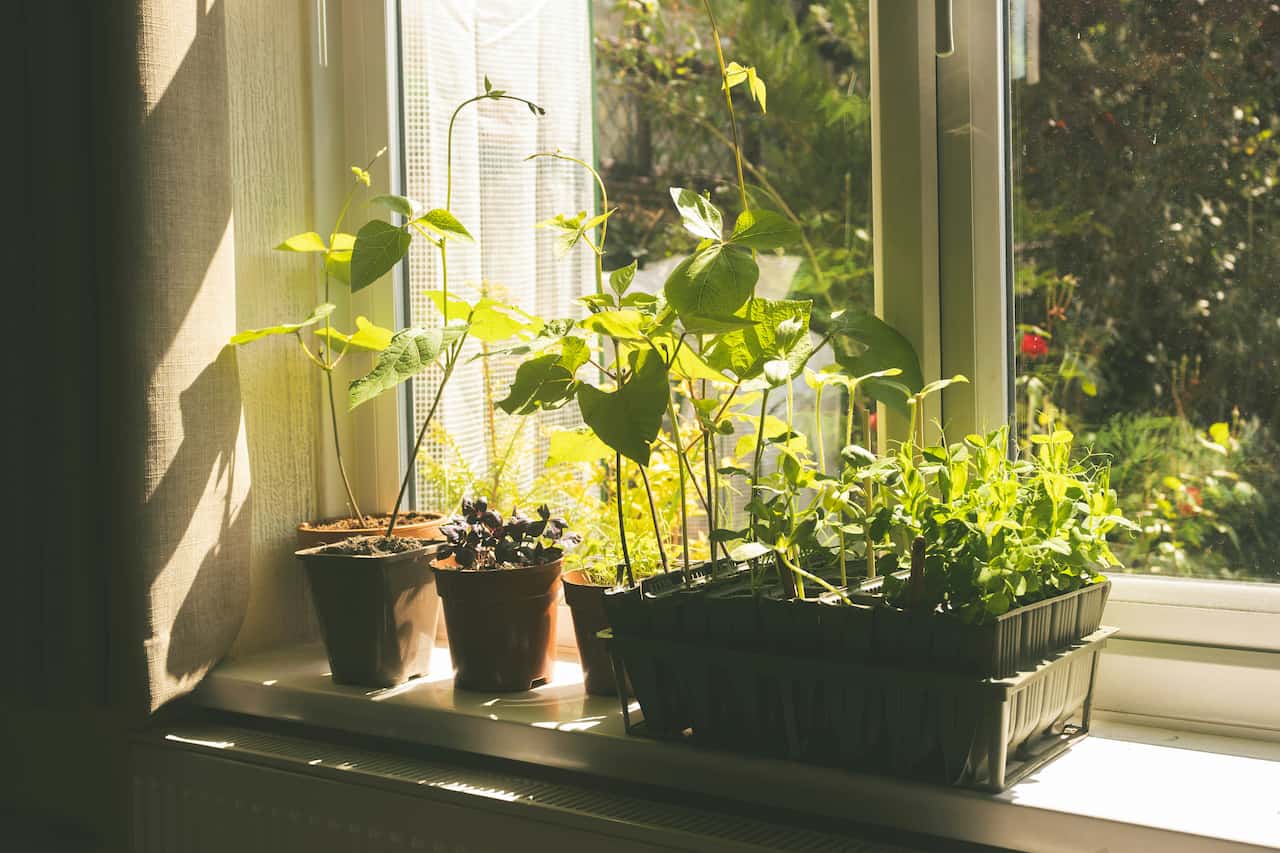
The most useful frame for understanding basil is to treat it like a warm-season vegetable rather than a hardy herb. It needs the same conditions as a tomato or cucumber – warmth, good light, consistent moisture at the roots but not wet foliage, and shelter from cold draughts. Given those conditions, it thrives. Denied them, it sulks, blackens and dies. The practical implications of this are straightforward: sow in warmth, grow on a south-facing windowsill or in a greenhouse, move outdoors only once the weather is reliably warm, and bring it back in before the cold returns in September.
Varieties to grow
Sweet Genovese is the standard kitchen basil – large, smooth, intensely fragrant leaves with the classic flavour used in pesto, caprese salads and pasta sauces. It is the fastest to grow and most productive but the least bolt-resistant of the common types. Greek or bush basil forms a compact, dense mound of small leaves with an excellent flavour and far superior bolt resistance, making it a much better choice for a long outdoor season. Purple and dark opal basils have a slightly more complex, spicier flavour than Genovese and are striking in salads and as a garnish, though the flavour intensity is slightly lower. Thai basil has a distinctive anise note quite different from Mediterranean types, essential for authentic Thai and Vietnamese cooking. Like coriander, basil rewards growing multiple varieties to extend the range of flavours available for cooking.
Sowing from seed
Sow basil indoors from March to July, using a warm windowsill or heated propagator. Sow thinly onto the surface of fine, moist seed compost in a small tray or module cells, covering the seed with just 5mm of compost or a light dusting of vermiculite. Germination requires warmth – a minimum of 18°C and ideally 20-25°C – and takes five to ten days. Do not sow outdoors directly; UK spring and early summer temperatures are too variable for reliable outdoor germination and seedlings emerging into a cool damp period are at high risk of damping off.
Once germinated, thin or prick out seedlings to give each plant individual space – crowded seedlings have poor airflow and are far more susceptible to fungal problems. Pot on into 9cm individual pots using a free-draining general potting compost. Basil resents root disturbance so handle seedlings carefully during pricking out, lifting them by a leaf rather than the stem. Succession sow every four to five weeks from March to July to maintain a continuous supply – a single sowing produces a generous flush but declines once it bolts, whereas three or four successive plantings provide productive basil from May right through to the first frosts in a greenhouse or on a warm windowsill.
Reviving supermarket basil
Supermarket basil pots contain many seedlings growing in very close competition, typically 20-40 plants in a 9cm pot. They are intended to be used within a few weeks and are not grown to thrive as long-term plants – the root system is severely restricted, the compost is usually very wet, and the growing conditions are nothing like a home environment. The result is that most people find their supermarket basil declines and dies within days of bringing it home, reinforcing the idea that basil is difficult.
The key to success with supermarket basil is division. Rather than treating the pot as a single plant, divide the root ball into four to six smaller clumps of seedlings and repot each clump individually into a 9-10cm pot of fresh, gritty, free-draining compost. Remove any dead or yellowing material, water each pot sparingly, and place on a bright, warm south-facing windowsill. Each clump, now with its own space and fresh compost, will recover within a week and grow on productively for months. This single technique transforms a plant most people discard within a fortnight into several productive herbs that last through summer.
Seasonal care calendar
Pinching out, harvesting and bolting
Pinching out is the most important ongoing management technique for productive basil. When a basil plant is left to grow unpinched, it puts energy into producing a tall central stem topped with a flower spike – a state known as bolting. Once the flowers open and pollination occurs, the plant focuses entirely on seed production and leaf quality declines sharply: the remaining leaves become small, tough and more bitter. Preventing this extends the productive life of the plant from a few weeks to several months.
Pinch out the growing tip – the central shoot and the top two sets of leaves – as soon as the plant has four to six sets of leaves. Do this with finger and thumb or sharp scissors, removing the tip just above a pair of leaves. The plant responds by pushing out two new shoots from the leaf axils below the pinch point, doubling the number of growing tips and creating a bushy, multi-stemmed plant rather than a single tall one. Repeat each time a shoot reaches five or six leaf sets. Remove any flower spikes the moment they appear, pinching them off at the base. This cycle of pinching, harvesting and flower removal is what keeps basil productive through a long season.
Harvest by removing entire stems rather than picking individual leaves – this forces new growth from lower buds rather than allowing the original stems to become woody and unproductive. The flavour of basil is most intense in the morning before the sun has volatilised the essential oils, so harvest then when possible. Basil does not store well fresh – it blackens rapidly in the refrigerator – so use it immediately, infuse into oil, or blend into pesto and freeze in ice cube trays for later use.
Plant basil next to tomatoes for mutual benefit. The classic companion planting pairing of basil and tomatoes is one of the most widely repeated in kitchen gardening – and it has genuine practical merit. Basil planted at the base of tomato plants in a warm raised bed or greenhouse border shares the heat-retaining environment that both crops need, and the aromatic oils in basil leaves are reported to deter aphids and whitefly from the tomatoes. Whether or not the pest deterrence is significant, the two crops share identical growing requirements and the same space efficiently.
Common problems and solutions
Share on socials: