At a glance
Most UK homes are fundamentally poorly designed for heat. The building stock was built for a climate of grey skies and moderate temperatures, not the increasingly frequent heat waves that now regularly push indoor temperatures above 28-30C during summer. Cavity wall insulation, loft insulation and double glazing – all installed to keep heat in during winter – trap it just as effectively in summer. The result is that many UK homes are significantly hotter indoors than the outdoor temperature during a prolonged hot spell, particularly in the afternoon and evening when the building fabric has absorbed heat throughout the day.
The good news is that a room can be cooled meaningfully without air conditioning using techniques that cost little or nothing to implement. The key is understanding that most of these techniques work best as prevention rather than remedy – stopping heat from entering the building fabric in the first place is far more effective than trying to expel it once absorbed. This guide covers the most effective methods in order of impact, explains the science behind why they work, and identifies the common mistakes that make UK homes hotter than they need to be.
Why UK homes overheat
A UK house overheats through a combination of solar gain, thermal mass and inadequate ventilation. Solar radiation passes through south and west-facing windows and heats internal surfaces – walls, floors and furniture absorb this energy and release it slowly as heat over hours. In a well-insulated modern home this is compounded by the fact that the insulation that keeps heat in during winter performs the same function in reverse during summer – the building retains heat and cannot release it quickly when outdoor temperatures cool in the evening.
The implication of these proportions is significant: solar gain through windows accounts for roughly 40% of the heat entering a room during a hot day. Blocking that single source – by closing blinds and curtains before the sun reaches each window – is the most impactful single action available, and it costs nothing. This is why the approach taken in hot southern European countries – shutters closed during the day, windows opened at night – works so effectively, and why UK homes that attempt to mimic this approach see the biggest improvements in indoor temperature.
Ventilation – the day and night strategy
The most powerful free cooling tool available to a UK homeowner is night ventilation – opening windows fully when outdoor temperatures drop below indoor temperatures in the evening and overnight, and closing them again before the heat of the day begins. This approach exploits the UK’s typically cool nights even during heat waves. Outdoor temperatures regularly drop to 15-18C overnight even when daytime highs exceed 30C – that 12-15 degree differential represents a significant cooling resource that is completely wasted in a house with closed windows.
Use a thermometer, not your instinct. The point at which outdoor air becomes cooler than indoor air is not always when it feels cool. During a heat wave, indoor air at 29C can feel comfortable relative to outdoor air at 25C that still feels warm. A cheap digital thermometer placed inside and outside immediately reveals which is cooler and when to open windows. Acting on feeling rather than temperature is one of the most common ventilation mistakes.
Blocking heat before it enters
External window shading – shutters, external blinds or awnings – is dramatically more effective than internal blinds or curtains for blocking solar gain. External shading stops solar radiation before it passes through the glass and converts to heat inside the room. Internal blinds and curtains absorb the solar radiation after it has already passed through the glass and re-radiate much of it into the room as heat. The difference in effectiveness between external and internal shading on a south-facing window is significant – external shading can reduce solar heat gain by 70-80%, while internal curtains reduce it by only 15-20%.
Using fans effectively
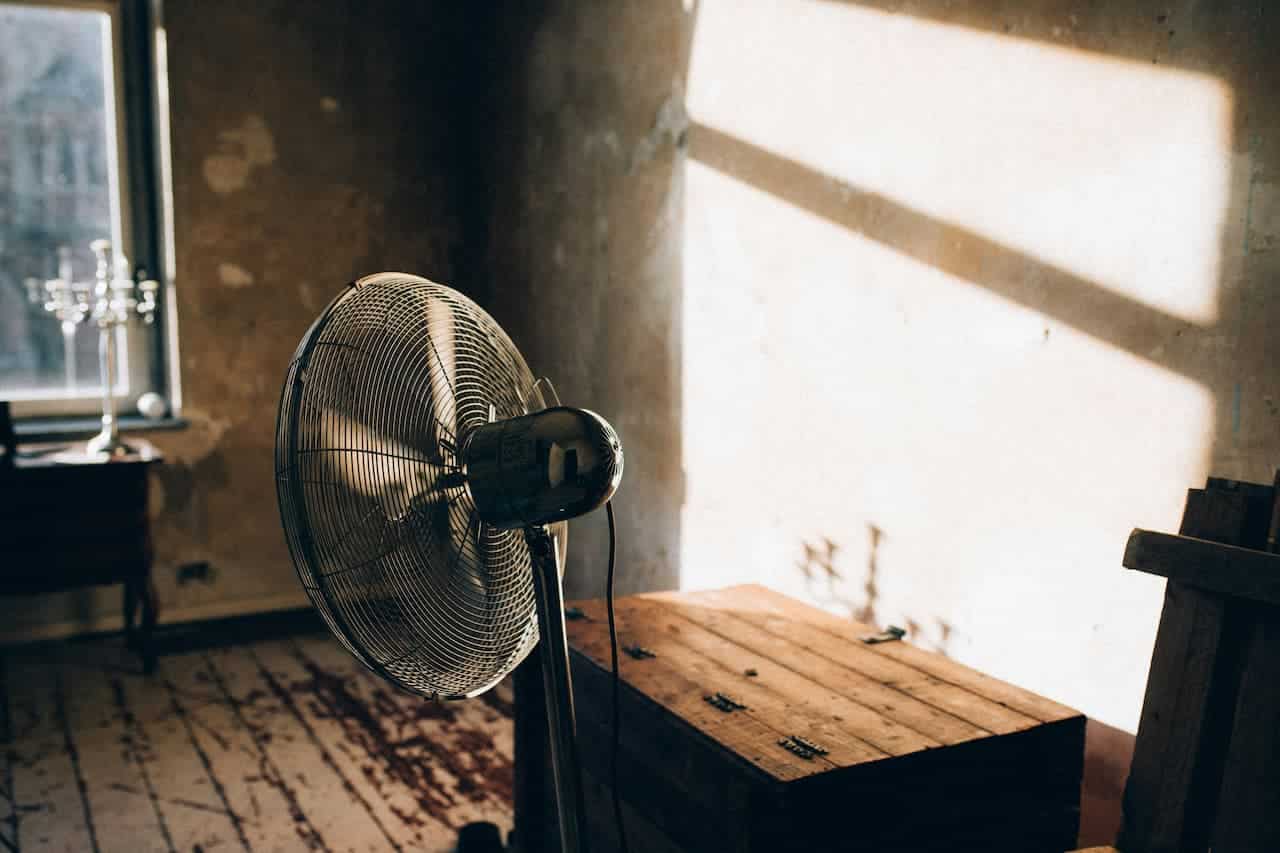
Fans are widely misunderstood as cooling devices. A fan does not lower the air temperature in a room – it simply moves air across skin, which accelerates evaporative cooling and makes you feel cooler. A fan running in an empty sealed room will actually make it slightly warmer over time as the motor generates heat. This distinction matters because it determines how and where to position fans for maximum benefit.
Common mistakes that make rooms hotter
The majority of UK households make at least one of these mistakes during a heat wave, often reversing the benefit of other measures they are taking simultaneously. The most costly in terms of heat gain is opening windows during the hottest part of the day – a counterintuitive action that feels right but actively warms the house by drawing in air that is hotter than the indoor temperature.
The combination of pre-emptive heat blocking, disciplined day and night ventilation management and correct fan use can reduce indoor temperatures by 4-6C compared with doing nothing during a UK heat wave. That is the difference between a room that is uncomfortable and one that is genuinely unpleasant to sleep in. None of these measures requires any expense beyond a thermometer and a window fan – the techniques themselves are free.
Share on socials: