At a glance
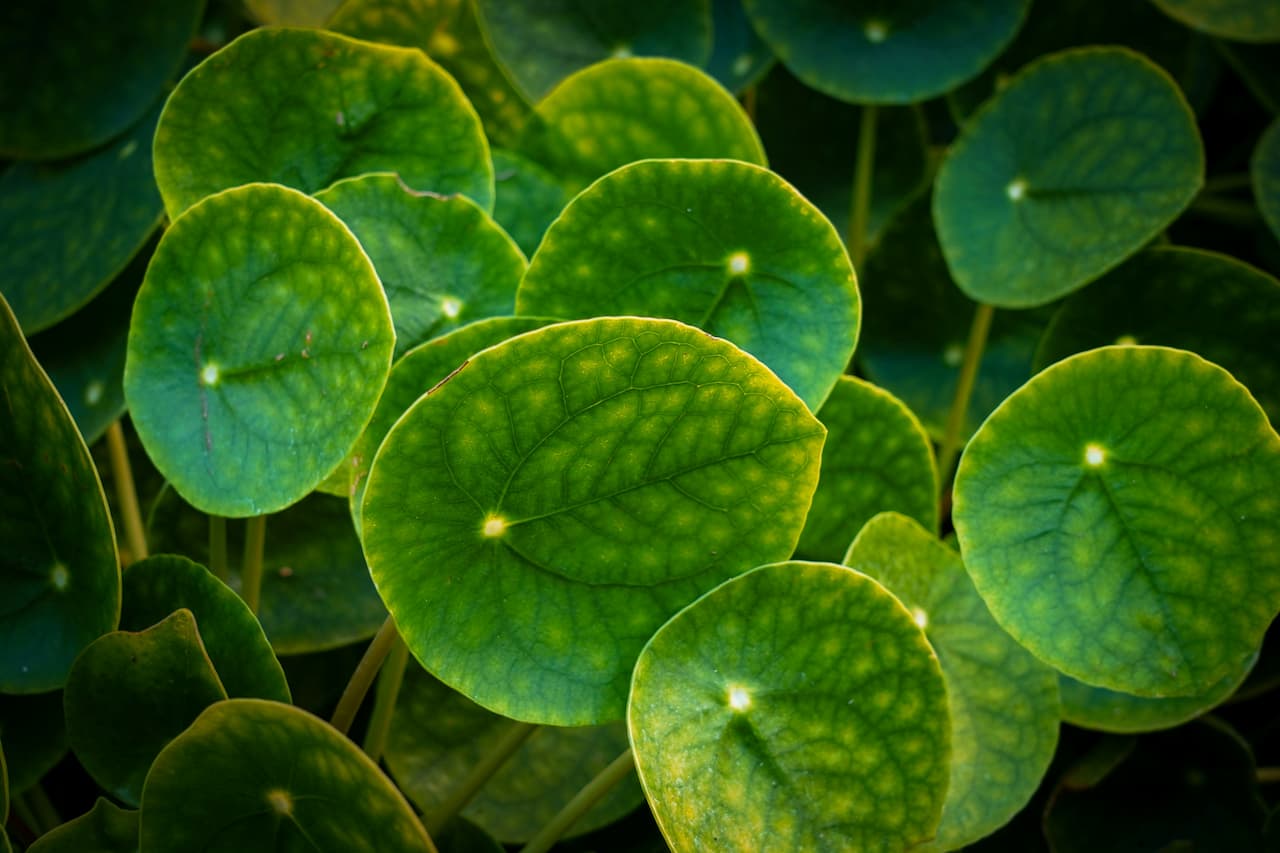
The Chinese Money Plant (Pilea peperomioides) has become one of the most popular houseplants in the UK over the past decade, and it is easy to understand why. The distinctive round, pancake-shaped leaves on slender stems give it an appearance unlike any other common houseplant, and its habit of producing small offshoots – known as pups or babies – from the soil and from the main stem makes it one of the most shareable plants available. The tradition of gifting Pilea pups is as old as the plant’s European history, and a single well-cared-for plant can produce dozens of pups over its lifetime. It is non-toxic to cats, dogs and humans, which makes it a particularly good choice for homes where more demanding plants like the Monstera cannot safely be displayed.
Care requirements are straightforward: bright indirect light, moderate watering, good drainage and a quarter-turn rotation every time you water to maintain the symmetrical rounded shape the plant is known for. The most common problems – leaning toward the light, curling leaves and yellowing – are almost always caused by insufficient light, incorrect watering or a draughty position. Compared to more demanding houseplants, the Chinese Money Plant is significantly more forgiving and better suited to the variable light conditions of many UK homes. Even beginners with a poor track record of keeping houseplants alive tend to do well with Pilea peperomioides.
About the Chinese Money Plant
Pilea peperomioides is native to Yunnan province in southwest China, where it grows as a ground-level plant in shaded forest margins at altitude. Its unusual leaf shape – perfectly circular with the stem attached at the centre of the leaf underside rather than at the edge – gives it an appearance that has made it highly sought after as a decorative houseplant. It was introduced to Europe by Norwegian missionaries in the 1940s and spread through the houseplant community primarily through the sharing of pups long before it became commercially available, which gave it the alternative common name “friendship plant.”
A healthy, mature Chinese Money Plant grows into a bushy mound of leaves 30-45cm in diameter, with a central stem that thickens slightly with age. Unlike cacti or succulents, it is not drought-tolerant and prefers consistently moist – though never waterlogged – compost. It grows actively from spring through to autumn and rests over winter, producing the most new leaves and pups between April and September. The pace of growth is satisfying without being overwhelming, and the plant is easy to keep at a manageable size by removing pups as they appear.
Light, Water and Conditions
The most common problem with Chinese Money Plants in UK homes is insufficient light. The plant needs bright indirect light – positioned within 1-2 metres of a bright window, but not in direct sun which would scorch the leaves. A spot near a north-facing window is typically too dark; a position in the middle of a room away from windows is also usually inadequate. The plant will survive in lower light but produces smaller, darker leaves, grows more slowly and becomes increasingly lopsided as it reaches toward whatever light is available.
The clearest sign of insufficient light is the plant leaning strongly toward the light source and producing leaves that are visibly smaller than previous growth. Moving to a brighter indirect position resolves this immediately. An east or west-facing window – or a position set back from a south-facing window to avoid direct summer sun – is ideal for UK conditions year-round.
Seasonal Care and Repotting
Repotting is straightforward. Choose a pot only one size larger – going up 2-3cm in diameter is appropriate. Pilea peperomioides prefers a slightly snug pot and does not benefit from excess space. Use a houseplant compost with added perlite, water in lightly after repotting and hold off feeding for two weeks while the roots settle. The plant should not be repotted more than once every one to two years – more frequent repotting disrupts root development without providing any benefit.
Mark the pot to track rotation direction. A small piece of tape on one side of the pot means you always know where you are in the rotation cycle. Rotate by the same quarter-turn each time you water and the plant completes a full 360 degrees every four waterings. This one habit, maintained consistently, produces a noticeably rounder and more even plant within a few months and makes a significant difference to the long-term appearance of the plant.
Propagating Pups
One of the Chinese Money Plant’s most endearing characteristics is its prolific production of pups – small plantlets that emerge from the soil at the base of the main plant, or occasionally from the main stem itself. These pups are genetically identical to the parent plant and can be removed and potted individually to produce new plants for sharing or growing on elsewhere in the home.
To remove a soil-level pup, wait until it has developed its own distinct set of leaves and is at least 5cm tall. Use a clean knife or scissors to cut the connecting root between the pup and the parent plant approximately 2cm below the soil surface. Pot the pup immediately into damp compost and treat as a young plant – bright indirect light, moderate watering and a small pot appropriate to its root size. Roots develop quickly and most pups establish without difficulty within three to four weeks.
Stem pups – which emerge directly from the main stem – can be removed when they have developed two or three leaves, by cutting cleanly at the point where they attach to the stem. Allow the cut to dry for a few hours before inserting into damp compost. Stem pups are slightly slower to establish than soil pups as they develop roots from scratch rather than arriving with an existing root system, but success rates are high if the compost is kept consistently moist without being waterlogged in the first few weeks. A propagator lid or clear polythene bag placed loosely over the pot helps retain humidity during this establishment phase and improves rooting speed noticeably.
Common Problems and Fixes
White spots on the leaves are one of the most common cosmetic complaints in UK homes and are entirely harmless. The spots are caused by calcium and magnesium deposits left on the leaf surface when tap water evaporates – the harder the local water, the more pronounced the deposits. Watering from below rather than above reduces the problem, as does switching to rainwater. Existing spots can be wiped gently with a damp cloth. This is a far more common issue with Pilea than it is with tougher-leaved plants like the snake plant or ZZ plant, because the thin circular leaves of the Chinese Money Plant show deposits more visibly than waxy or leathery foliage does.
Overall, Pilea peperomioides is one of the most rewarding houseplants available to UK growers. It is fast-growing enough to be satisfying, prolific with pups to share, attractive in all seasons and genuinely easy to keep healthy once the basics of light and watering are understood. For anyone looking to expand their indoor plant collection beyond the usual suspects, it sits alongside the pothos and tradescantia as one of the best easy-care options available.
Share on socials: