At a glance
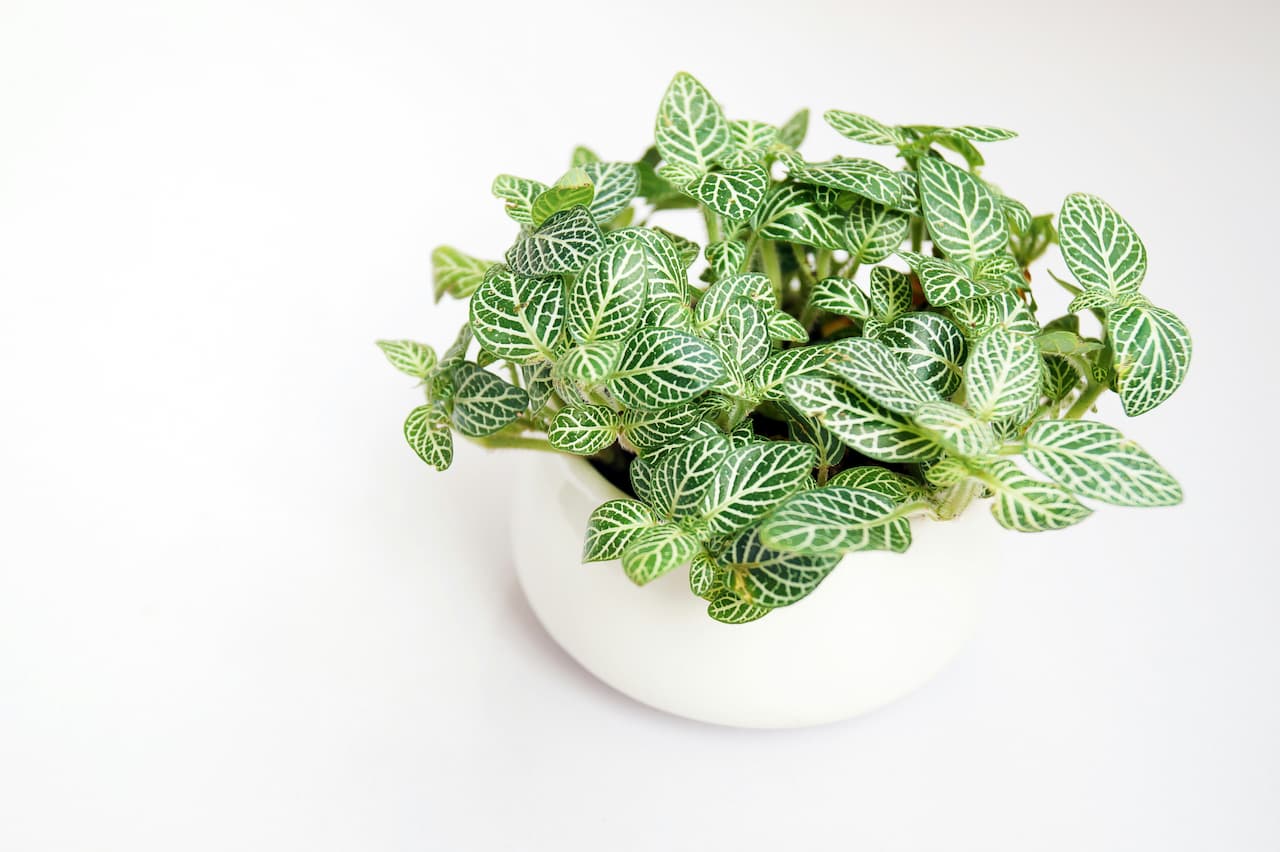
Fittonia – commonly called the Nerve Plant or Mosaic Plant – is a compact, low-growing houseplant famous for two things: the intricate network of coloured veins that gives its leaves an extraordinary decorative appearance, and its unmistakeable habit of dramatically collapsing flat when thirsty, only to fully recover within 30 minutes of being watered – a recovery that seems as impossible as the collapse itself. This dramatic wilt is alarming to new owners but is not a sign of serious stress – the plant is simply communicating its water needs with more theatrical flair than most houseplants, and understanding this behaviour makes the difference between panicking and responding calmly.
Native to the tropical rainforest floors of South America, Fittonia grows in warm, humid, low-light conditions beneath a dense canopy. In UK homes, replicating the high humidity is the main challenge, though Fittonia is considerably less demanding in this regard than Alocasia – it tolerates 50% humidity reasonably well, though it performs best at 60% or above. It is widely sold in UK garden centres and houseplant shops in small 6-9cm pots and is a popular and well-suited choice for terrariums where the enclosed glass environment naturally maintains the warm, humid conditions it prefers without any ongoing humidity management from the grower.
About Nerve Plants
The Nerve Plant’s common name comes from the intricate network of coloured veins running through every leaf – white, silver, pink or red depending on the variety, set against dark or mid-green leaf tissue. The contrast between the vein colour and the surrounding leaf tissue creates a genuinely striking and unusual decorative effect that very few other commonly available houseplants can match at the same modest price point. The plant grows low and spreading rather than upright, typically staying below 15-20cm in overall height but spreading outward across the surface of its pot and beyond, making it well suited to small spaces, windowsill groupings, ground-cover planting in larger pots and terrariums. It produces occasional small, inconspicuous flower spikes on upright stems that are usually removed promptly to direct the plant’s energy back into the decorative foliage rather than seed production.
Light requirements
Nerve Plants are among the most shade-tolerant houseplants available, making them one of the few genuinely useful options for darker corners of UK rooms. They grow naturally on rainforest floors beneath very dense canopy where light levels are extremely low by houseplant standards, and this background means they tolerate low indirect light better than almost any other commonly available houseplant – a position 2-3 metres from a window or in indirect light from a north-facing window is adequate for healthy survival and modest growth. In brighter conditions however – bright indirect light from a south, west or east-facing window – the plant grows noticeably faster, produces denser foliage and the vein colouration is typically more vivid and saturated than in low-light positions.
Direct sunlight damages the leaves quickly, causing irreversible bleaching and brown patches within a few hours of exposure in summer. Keep Fittonia out of direct sun at all times, including through glass. Grow lights work particularly well for Fittonia in darker rooms where natural light is very limited – even a modest LED grow light on a timer running 12 hours daily can transform the plant’s rate of growth and colour intensity in a north-facing room through the short UK winter days, when natural light levels drop too low for meaningful growth even in otherwise well-positioned rooms from November through to February.
Watering and the dramatic wilt
Fittonia’s dramatic wilting response to drought is its most distinctive trait and the source of considerable alarm among new owners. When the compost becomes too dry, the entire plant collapses flat – every leaf droops simultaneously and the plant looks completely dead. This response happens faster than in most houseplants, can occur within a day of the compost drying out, and seems catastrophic. It is not. Water the plant immediately and thoroughly until water runs from the drainage holes, ensure the drainage is working and the saucer is emptied after 30 minutes, and the plant will recover fully within 30-60 minutes – sometimes considerably faster once water reaches the roots.
To avoid the wilt cycle entirely, keep the compost consistently moist but not waterlogged. Unlike succulents or String of Hearts, Fittonia should not be allowed to dry out completely between waterings – it needs considerably more consistent moisture. Check the compost surface every 2-3 days by pressing a fingertip gently into the surface and water as soon as the top 1cm feels dry. In summer this may mean watering twice a week; in winter, once every 5-7 days as growth slows and evaporation decreases. A self-watering pot with a reservoir is an excellent long-term solution for Fittonia owners who travel frequently or find maintaining consistent watering frequency difficult across a busy week.
Repeated wilting weakens the plant over time. One dramatic wilt followed by prompt recovery is fine – the plant tolerates it well and shows no lasting damage. Repeated wilting cycles over several weeks through prolonged neglect gradually weaken the stems and reduce the plant’s ability to recover fully and quickly from each subsequent episode. If you find yourself dealing with the wilt regularly, consider a self-watering pot or a moisture-retaining compost to maintain more consistent moisture levels between your waterings.
Humidity
Nerve Plants prefer higher humidity than the typical UK home provides, but they are considerably less demanding than Alocasia or Calathea. 50% relative humidity is adequate for reasonable growth and general plant health – the plant will survive and grow reasonably well at this level, though leaf edges may develop some browning during dry centrally heated winter conditions when humidity in UK homes regularly drops well below this figure. At 60%+ the plant performs at its consistent best, producing the most vivid and saturated leaf vein colouration and showing the least susceptibility to browning at the leaf margins that is the most visible sign of humidity stress in this species.
In dry centrally heated homes during the UK winter, running a small humidifier near the plant, grouping it closely with other tropical houseplants or placing it on a pebble tray with water all provide a useful and measurable improvement to local humidity levels. A terrarium is the single most effective environment for Fittonia in a UK home – the enclosed glass maintains naturally high humidity without any ongoing intervention from the grower, and the plant’s tendency to spread low makes it a natural terrarium candidate alongside mosses and other low-growing tropicals.
Soil and potting
A well-draining but moisture-retaining compost works best for Fittonia. A mix of multipurpose compost and perlite in a 2:1 ratio provides good drainage while retaining enough consistent dampness that the plant needs without becoming waterlogged. Pure perlite or cactus compost drains too freely for this plant and leads to the wilting cycle that weakens it over time. Standard multipurpose compost used alone tends to compact progressively over several months and becomes poorly drained over time, which causes root rot from the opposite extreme to the fast-draining cactus mix problem. The 2:1 blend sits neatly between both risks.
Fittonia stays compact and does not need frequent repotting – every 2-3 years is typically sufficient. It has shallow, spreading roots and does better in wide, shallow pots rather than deep containers, which hold more compost than the root system can effectively use and increase the risk of waterlogged lower compost sitting away from the roots. When repotting, spring is the ideal time as the plant is entering its active growth period and will establish itself quickly in fresh compost before the demands of summer growth begin. Feed monthly from April to September with a balanced liquid fertiliser at half the recommended strength – Fittonia is not a particularly heavy feeder and excessive nitrogen fertiliser produces unnaturally soft, lush growth that wilts more dramatically and is more vulnerable to fungus gnat and other pest attack than normally grown plants.
Common problems
Fittonia is generally resistant to the more damaging common houseplant pests such as spider mites and mealybug, but can occasionally be affected by fungus gnats when the compost surface stays consistently moist and provides ideal egg-laying conditions. Allowing the top 1cm of compost surface to dry out slightly between waterings discourages fungus gnat egg-laying without compromising the deeper, consistent moisture the roots need to avoid triggering the wilt response. Unlike the dramatic wilt response, genuine decline in Fittonia – persistent loss of colour, leggy growth, leaves dropping without wilting first – is almost always environmental rather than pest-related. Grouping Fittonia with other humidity-loving houseplants like String of Hearts in a bright position creates a shared microclimate that benefits all of them and produces a more visually interesting and cohesive plant collection than any single plant displayed in isolation, and the plants benefit each other through shared transpiration.
Share on socials: