At a glance
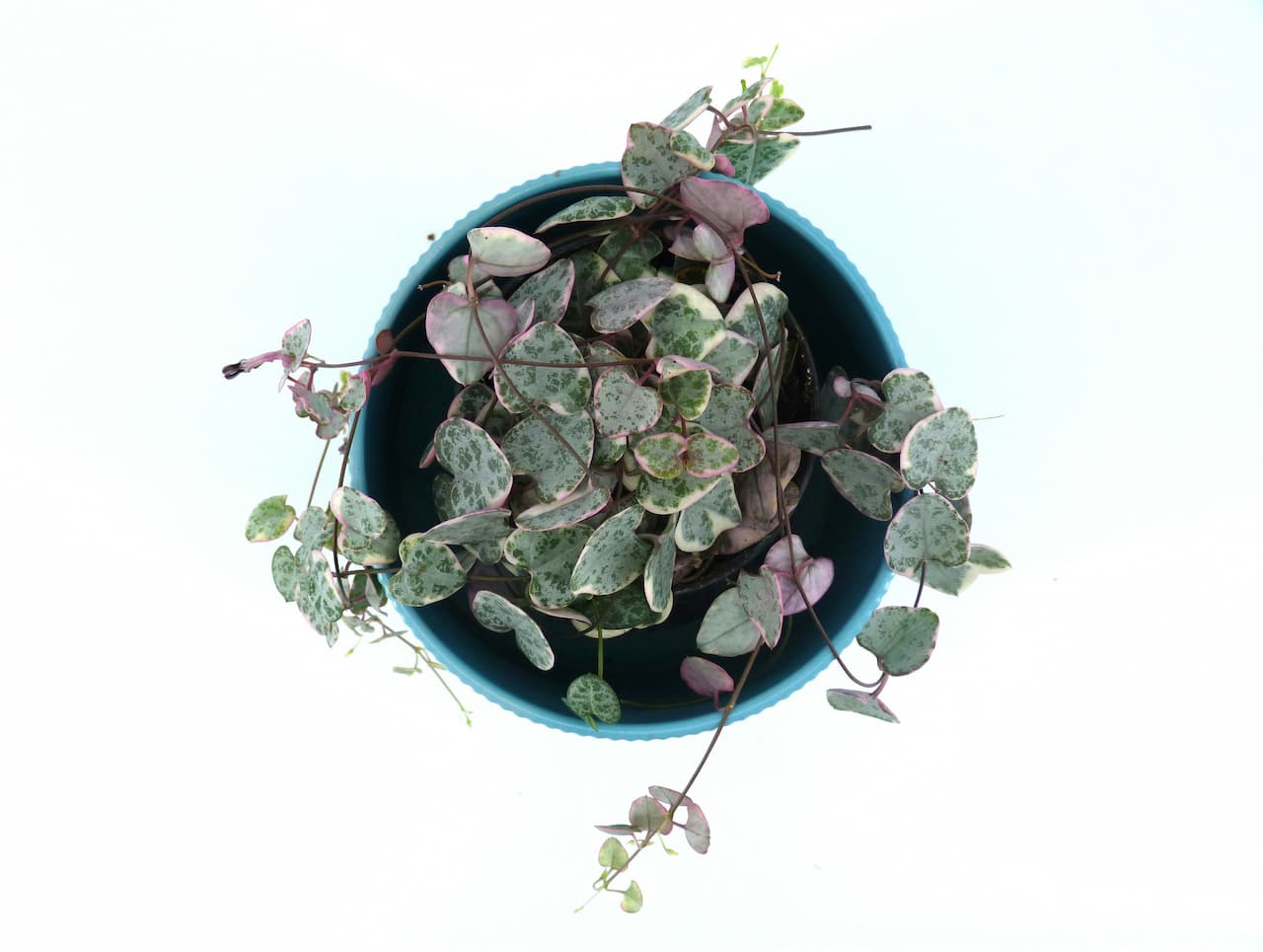
Ceropegia woodii – commonly known as String of Hearts or Chain of Hearts – is one of the most popular trailing houseplants in the UK for good reason. Its delicate heart-shaped leaves on long, wiry stems cascade beautifully from shelves and hanging pots, and it is genuinely forgiving of the occasional missed watering that defeats less tolerant plants. As a semi-succulent native to southern Africa, it stores water in its leaves and stems, which means overwatering is a far greater risk than underwatering in most UK homes. The plant’s tolerance of neglect, combined with its fast growth and decorative trailing habit, makes it one of the best choices for anyone building a collection of indoor plants.
The plant is widely available in UK garden centres and online, typically in 6-10cm hanging pots, and it grows quickly in the right conditions. With bright light, infrequent watering and fast-draining compost, a String of Hearts can produce several metres of trailing stems in a single growing season. The variety ‘Silver Glory’ with its more pronounced silver marbling is particularly attractive and widely available alongside the standard form. The variegated cultivar with pink colouring on the reverse of the leaves is also increasingly popular in UK houseplant shops, though it requires slightly more light than the standard green form to maintain its colour. Once you understand its semi-succulent nature and treat it accordingly, it is one of the easiest and most rewarding houseplants to keep in a UK home.
Light requirements
String of Hearts needs bright light to thrive. In the UK, the best position is on or very close to a south or west-facing windowsill where it receives several hours of direct or bright indirect light daily. In lower light conditions the leaves become pale and lose their silver marbling, the internodal spacing between leaves increases noticeably and the plant grows slowly with weak, etiolated stems that have too much space between each leaf pair. It will survive in lower light but will not produce the dense, vigorous trailing growth that makes the plant attractive and the characteristic heart-shaped pattern on the leaves will fade.
Direct summer sun through glass can scorch the leaves – in south-facing windows with intense afternoon sun, a light voile curtain or slightly pulling back from the glass prevents leaf burn while maintaining brightness. East-facing windowsills provide adequate morning light for reasonable growth in UK conditions, though south or west will always produce the most vigorous, compact growth with the best leaf markings. In winter, move the plant as close to the window as possible to compensate for the dramatically reduced daylight hours in the UK – a plant that was comfortable 30cm back from the glass in summer will benefit from sitting directly on the sill from October through February.
Watering
Overwatering is the primary cause of String of Hearts decline in UK homes. The plant is a semi-succulent and stores water in its leaves – it tolerates drought far better than waterlogging and recovers quickly from drying out, but rarely recovers from sustained root rot. Allow the compost to dry out completely between waterings, then water thoroughly, allowing excess to drain freely from the bottom of the pot before emptying any saucer or cache pot. In summer this typically means watering every 10-14 days; in winter, once every 3-4 weeks is often sufficient as growth slows and the rate at which the compost dries out drops significantly in cooler, darker conditions.
The test for watering readiness is to lift the pot – a dry pot is noticeably lighter than a recently watered one, and this weight test is more reliable than any schedule or moisture meter. You can also check the compost 2-3cm down with a finger – if it is still moist at that depth, wait another few days before checking again. Leaves that start to look slightly puckered or less plump are a reliable signal the plant needs water, while yellow or mushy growth at the base of stems and a sour smell from the compost indicates overwatering and possible root rot that requires urgent intervention – remove from the pot, cut away any black mushy roots, allow to dry and repot in fresh compost.
Never leave String of Hearts sitting in water. The roots rot quickly in waterlogged conditions. Always empty saucers and cache pots 30 minutes after watering, and ensure the pot has adequate drainage holes. A terracotta pot with its porous walls is preferable to glazed ceramic for this plant, as the terracotta wicks moisture away from the roots more efficiently and dries out faster between waterings.
Soil and potting
String of Hearts requires very free-draining compost. Standard multipurpose compost retains too much moisture and causes root rot in this plant – it is one of the most common causes of failure when growing it for the first time. Use a cactus and succulent compost mix, or make your own by combining 50% standard compost with 50% perlite or coarse horticultural grit. Perlite is the better addition for this plant as it improves drainage and aeration simultaneously. The pot must have drainage holes – never plant String of Hearts in a pot without them, regardless of how decorative it is. A layer of gravel or broken terracotta at the base of the pot is not a substitute for drainage holes and actively makes waterlogging worse by creating a perched water table.
Repot only when the plant is clearly rootbound – roots growing out of drainage holes or circling visibly at the surface. This plant does not mind being slightly tight in its pot and repotting into too-large a container means the extra compost holds moisture around the roots for longer, increasing rot risk considerably. Move up by one pot size only when repotting, and spring is the best time to do it when the plant is beginning its growing season and will establish quickly in the new compost without sitting in damp conditions during a cold rest period.
Feeding
Feed monthly through the growing season (April to September) with a diluted balanced liquid houseplant fertiliser at half the recommended strength. String of Hearts does not need heavy feeding – it is adapted to nutrient-poor, rocky conditions in its native southern African habitat and excessive fertiliser causes soft, weak growth that is more susceptible to pests and disease. A half-strength balanced feed (nitrogen, phosphorus and potassium in roughly equal proportions) supports healthy growth without pushing the plant beyond what it can sustain. Stop feeding entirely from October to March when the plant is resting and nutrient uptake is minimal. Too much nitrogen in the feed encourages lush leafy growth at the expense of the compact, silver-marked leaf pattern that makes the plant distinctive – use a cactus-specific feed if available, which typically has lower nitrogen and higher potassium.
Propagation
String of Hearts propagates readily by several methods, all of which are straightforward for a beginner and can be done without specialist equipment. The most reliable method for achieving large, bushy plants quickly is stem cuttings – take a 10-15cm section with at least two leaf nodes, strip the lower leaves to expose the stem, allow the cut end to callous for 24 hours in a dry spot and plant directly into moist cactus compost. Roots typically form within 3-4 weeks in warm conditions above 18C. Multiple cuttings planted together into the same pot create a fuller, more immediate visual effect than a single cutting.
The plant also produces small round tubers or bead-like nodes along its stems – these are natural vegetative propagation points. If a stem section with one of these tubers is gently pegged down onto the surface of moist compost in a separate pot using a bent piece of wire or a hairpin, it will root from the tuber point within a few weeks without any cutting being necessary. This is the lowest-intervention propagation method and creates a new plant without disturbing the parent at all. Water propagation works well for beginners who want to watch the roots develop, but transfer to compost before the roots exceed 2-3cm – water roots and soil roots have different cell structures and an abrupt transition once roots are long and established can set the plant back significantly as it adapts to the new medium.
Common problems
Mealybugs are the most common pest on String of Hearts in UK homes, particularly in warm, dry indoor environments during winter when central heating reduces humidity and creates ideal conditions for the pest to spread undetected. They appear as small white cottony masses in the leaf axils and along stems, and reproduce quickly if left untreated – a small infestation can colonise the whole plant within a few weeks. Treat promptly with a cotton bud dipped in isopropyl alcohol applied directly to each visible bug, followed by a thorough spray of diluted neem oil across the whole plant including stems and the underside of leaves. Repeat weekly for 3-4 weeks to eliminate all life cycle stages including eggs that may not yet have hatched. Isolate the plant from others while treating to prevent spread to neighbours like peperomia and other susceptible houseplants that mealybug will readily colonise given the opportunity.
Share on socials: