At a glance
The indoor hyacinth is one of those seasonal plants that arrives in shops in October promising everything and then causes confusion once the flowers fade. Either it is a gift someone has been given without instructions, or it is a December window display that has done its job and now sits yellowing on the sill with no one sure what to do with it. Most end up in the bin. They do not need to. With a small amount of understanding about what a hyacinth actually is and what it needs, you can get more from them, decide sensibly whether to keep the bulb, and plan better for the following year.
The key fact about indoor hyacinths is that they are spring-flowering bulbs being tricked into blooming in winter. The process is called forcing, and it has been done since Victorian times. It works because hyacinth bulbs need a period of cold and dark before they will flower, which normally happens in the ground over winter. Replicate those conditions artificially, then bring the bulbs into warmth and light, and they flower weeks or months before they would naturally. That is the whole trick. Everything else follows from understanding that.
Prepared or unprepared: what to buy and what to look for
When you buy hyacinth bulbs for indoor growing, the most useful distinction is between prepared and unprepared. Prepared bulbs have been dug early and given a temperature treatment that advances flower formation inside the bulb. They still need a chilling period from you, but a shorter one, and they will reliably hit Christmas if you start them at the right time. Unprepared bulbs need a longer chilling period of twelve to fourteen weeks and will not reliably flower by Christmas. For a January or February display, either type works. For Christmas specifically, look for bulbs labelled as prepared or suitable for indoor forcing.
Within prepared and unprepared, the second thing that matters is size. Larger bulbs have more stored energy and produce stronger flower spikes, more florets per spike, and more scent. When you are at the garden centre in September or October and the bulbs are loose in a box, pick up the biggest ones. The difference in display between a large bulb and a small one is not subtle.
Wear gloves when handling hyacinth bulbs. They contain crystals that can irritate the skin, particularly with repeated handling. Some people react more than others, but gloves are worth the ten seconds it takes to put them on.
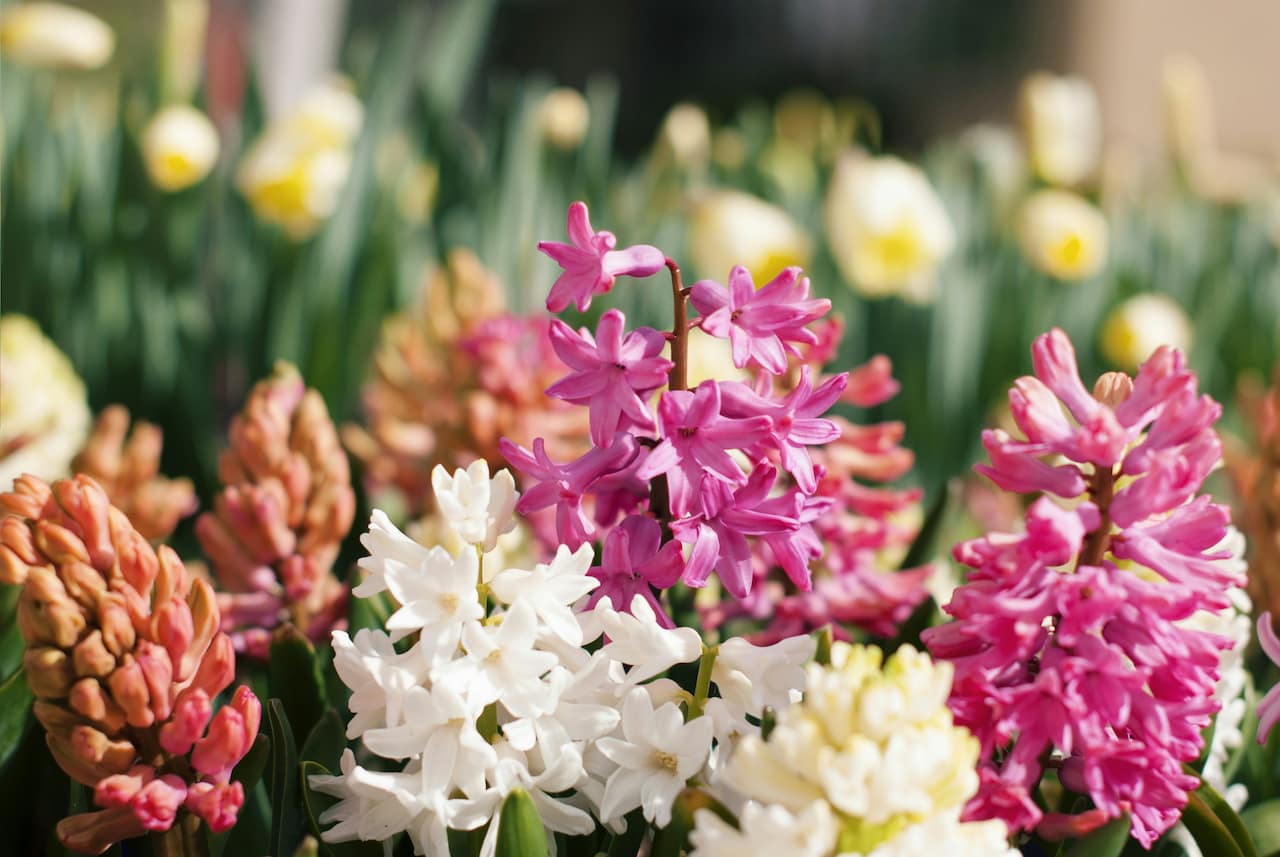
The main varieties widely available in UK garden centres:
Forcing hyacinths: chilling in soil and in water
There are two ways to force hyacinths indoors: in pots of compost, or in specialist hyacinth glasses with water. Both work. The water method gives a more contemporary look and you can watch the roots develop, which is genuinely satisfying. The pot method is more forgiving if you are not confident about water levels, and pots are easier to move around for staggered displays.
For pot-grown hyacinths, choose containers at least 15 centimetres deep with drainage holes. Put a layer of crocks or stones at the base for drainage. Fill about halfway with free-draining compost and plant up to three bulbs per pot, tips just showing above the surface, bulbs not touching each other. Water lightly enough to settle the compost, then check the drainage is working. Move the pot to a cool, dark location: an unheated shed, a garage, a cellar, or the bottom of a fridge if space allows. Cover with a bag or box to exclude light. The temperature should be around 5 to 9 degrees. Check every week or two and water lightly if the compost feels dry. Prepared bulbs need ten to twelve weeks at this stage. When the shoots are around 4 to 5 centimetres tall, bring them out.
For water-grown hyacinths, you need hyacinth glasses: the narrow-neck vases designed specifically to hold a bulb above the water. Fill the glass so the water level sits just at the neck. The bulb goes in the top: it should be supported by the neck with the base sitting just above the water surface. The roots will grow down and find the water. The bulb itself must not sit in the water or it will rot. Keep the vase in a cool, dark location at around 9 degrees. Change the water if it clouds, and top it up as it drops. A small piece of charcoal in the water helps keep it clear and reduces any smell. Bring the vase out when the roots are well developed and the shoots are 4 to 5 centimetres tall.
The transition out of the dark matters. Move pots and vases first to a cool room with indirect light to let the leaves green up over a few days. Then move to a brighter position. If you bring them from complete darkness into bright light and warmth in one step, the foliage can yellow at the tips and the stems can stretch awkwardly. A gradual transition produces sturdier plants.
Timing for Christmas and beyond:
The fridge is a perfectly good place to chill bulbs. If you do not have a cold outbuilding, the bottom drawer of a domestic fridge works well. Keep bulbs in a paper bag, away from fruit, and check them every couple of weeks. Prepared bulbs done this way can flower reliably to a tight schedule.
Keeping hyacinths well while they flower
Once the buds are showing colour and the plants are indoors, the main enemy is warmth. Hyacinths flower longest in cool, stable conditions. A room kept at around 15 to 18 degrees with good natural light and no direct sun is ideal. Put them near a warm radiator and the flowers will be over in ten days rather than three weeks. The same applies to placing them in direct sunlight, which fades the blooms quickly and can cause the stems to flop.
For pot-grown plants, water when the top of the compost feels dry. Do not overwater: soggy compost rots the bulb as effectively as waterlogged vase water rots the base. For vase-grown plants, maintain the water level just below the bulb base and replace it if it goes cloudy. The bulb must never sit in standing water.
Draughts and temperature fluctuations shorten the display in the same way that warmth does. A windowsill is fine during the day but can get very cold overnight against single-glazed glass, which stresses the plant. If you notice the leaves starting to look limp in the mornings, move the plants a bit further from the window at night.
Hyacinths indoors bloom for roughly two to four weeks depending on conditions. Cooler rooms give longer displays. If you want to extend it further, you can move the plants to the coolest room in the house once the flowers are fully open: an unheated conservatory, a porch, or a cool north-facing room. That is not a strange thing to do. It just slows everything down.
The rules that determine how long the display lasts:
After flowering: what to do with the bulb and the honest truth about reblooming
When the flowers fade, cut the flower stalk off at the base. The leaves will still be green at this point and should be left entirely alone. Do not cut them, bend them, or try to tidy them. The leaves are doing the work that matters now: pulling nutrients back down into the bulb to fuel whatever comes next. Cutting or damaging the leaves at this stage is exactly the wrong thing to do, even though the plant looks untidy.
Feed the plant while the leaves are still green, with a potassium-rich feed such as tomato fertiliser. One or two feeds as the leaves die back helps the bulb build reserves. Water lightly but do not overwater: the bulb is still vulnerable to rot and the plant no longer needs much.
Once the leaves have completely yellowed and died, cut everything back to soil level. Move the pot to a cold, dark place for the rest of summer, covered so light cannot get in. Do not water at all while the bulb is fully dormant. In spring, begin exposing it gradually to light and it should send up new shoots. Hyacinths also produce small offset bulbs over time, which gradually fill the pot and may eventually need separating.
Here is the part most articles skip over: forced indoor hyacinth bulbs are very unlikely to rebloom reliably indoors a second time. The forcing process puts the bulb under significant stress, and a prepared bulb has already been heat-treated once before you ever bought it. Expecting it to repeat the performance in a pot on your windowsill the following November is usually optimistic. Some do manage it, and it is worth trying, but do not plan your Christmas around a bulb that has already been forced once.
The more reliable path is to plant the bulbs in the garden once the leaves have died back. Plant them at roughly twice their own depth in a sunny, well-drained spot. They may skip a year while they recover their strength after being forced, but most will settle into normal spring flowering outdoors and continue year after year from that point. A bulb that was a Christmas pot plant one December can be a cheerful corner of the garden for years afterwards. That seems like a better outcome than the bin.
What to do at each stage after flowering:
What goes wrong and why
The most common problem with forced hyacinths is leaves appearing without any flower. This almost always means the chilling period was too short, or the room was too warm during the cool phase. The cold period is not just about time: it needs to be genuinely cold, around 5 to 9 degrees, not just cool. A garage that stays at 12 degrees through a mild UK November is not cold enough. If the leaves come up without a flower bud, move the plant back to a properly cold, dark spot for a few days and then bring it back into a cool, bright room. That sometimes brings the flower on. It does not always work, but it is worth trying before you give up.
Floppy stems or leaves that grow tall and pale usually mean the temperature was too warm during the greening-up phase, or the transition from dark to light happened too quickly, or the light levels during flowering are too low. Move to a cooler, brighter position.
Short, stubby flower spikes that do not develop fully usually mean the bulb matured too quickly during forcing. Extend the cool, dark phase by a week next time. Smaller bulbs also produce shorter spikes: use the biggest bulbs you can find.
Bulb rot in vases is caused by the water level being too high so that the base of the bulb sits in water. Lower the water level so only the roots are in contact with it, and change the water more frequently. Bulb rot in pots is caused by overwatering or poor drainage. Check the drainage holes are not blocked and let the compost dry slightly between waterings.
For vase-grown plants, cloudy or smelly water is a sign the water needs changing and possibly that algae or bacteria are building up. A small piece of charcoal in the bottom of the vase helps prevent this. Keep vases out of direct sunlight, which accelerates algae growth.
The most common problems and what to do:
Share on socials: