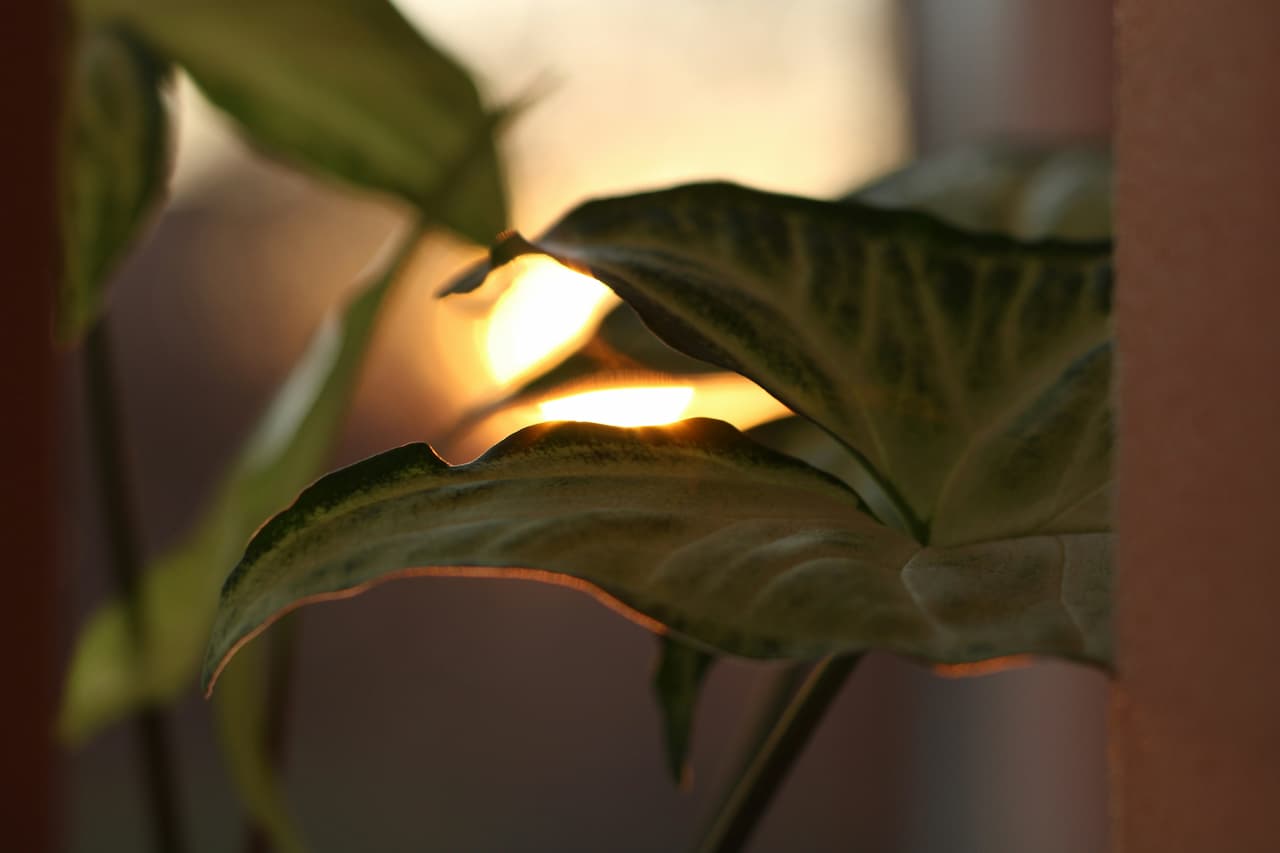
At a glance
Syngonium podophyllum – commonly called arrowhead plant or arrowhead vine – is one of the best choices for a UK home if you want a tropical-looking houseplant that is genuinely forgiving. It tolerates lower light levels than most tropicals, recovers quickly from inconsistent watering, and grows fast enough that new leaves appear regularly through spring and summer, providing the sense of a plant actively thriving rather than merely surviving. It is also one of the few houseplants that changes leaf shape as it matures – juvenile leaves are simple arrowhead-shaped ovals, while older plants on climbing stems develop deeply lobed, multi-segmented leaves that look entirely different from the young growth and create a much bolder, more dramatic effect.
The main limitation to be aware of from the outset is toxicity. Syngonium contains calcium oxalate crystals throughout the plant – in the sap, the leaves and the stems – which causes oral irritation, drooling and vomiting in cats and dogs if ingested, and can cause skin and eye irritation in humans if the sap makes contact during pruning or propagation. Gloves are advisable when cutting stems, and the plant should be kept out of reach of pets and small children. Beyond this caution, Syngonium is a straightforwardly rewarding houseplant for UK conditions that asks for less than most of its tropical relatives.
About Syngonium
Syngonium podophyllum is native to tropical rainforests from Mexico through Central America, where it grows as a climbing plant that starts on the forest floor and ascends trees as it matures, its leaves changing shape dramatically as it climbs toward the light. In cultivation, this climbing habit means the plant benefits from a moss pole or support once it outgrows its compact juvenile phase – plants given something to climb produce the large, lobed adult leaves that make mature specimens so distinctive. Plants kept compact by regular trimming stay in their juvenile arrowhead-leaf form indefinitely, which many owners prefer for its neatness on a shelf or desk.
The range of varieties available in the UK has expanded significantly. The most commonly sold form is the plain green species, but pink-flushed varieties (‘Pink Allusion’, ‘Neon Robusta’), white-variegated forms (‘White Butterfly’, ‘Albo Variegatum’), and deeply lobed cultivars are all readily available from UK houseplant retailers and online suppliers. Care requirements are broadly the same across all varieties, though the white and pink variegated forms are somewhat more sensitive to low light – the pale areas of the leaf contain less chlorophyll and need a brighter position to maintain healthy colouration without reverting toward plain green.
Growing Conditions
Light tolerance is one of Syngonium’s standout qualities for UK homes. It grows adequately in positions that would cause many houseplants to fail entirely – a north-facing room, a desk set back from a window, or a shaded corner where little direct sky is visible. In these conditions it will grow more slowly and the leaf colour on green varieties may deepen somewhat, but it will not develop the yellowing, wilting or collapse that characterises many tropicals in low light. For maximum leaf size, fastest growth and best colour on variegated forms, a position 1-2 metres from an east or north-facing window is ideal. Direct afternoon sun from a south or west-facing window bleaches the leaves and is the one light condition that causes reliable damage.
Seasonal Care Calendar
Syngonium growth follows the seasonal light cycle closely. The most active growth period is April through September, when longer days drive rapid leaf production. From October the plant slows noticeably, and from December through February it effectively stops growing while light levels are at their lowest. Care intensity should match this cycle – more water and feed when growing, much less in the dormant winter period.
Propagation by Stem Cutting
Syngonium propagates readily from stem cuttings and is one of the easiest houseplants to multiply at home. The key requirement is that each cutting must include at least one node – the slightly swollen joint on the stem from which roots and new growth will emerge. Cuttings taken between nodes will not root regardless of how they are treated. Beyond this, the process is forgiving and the success rate with fresh summer cuttings is very high.
Identify a healthy stem with at least one node
Choose a stem that has produced at least 2-3 leaves and has a visible node – the joint where a leaf or aerial root emerges from the stem. Cut just below this node with clean scissors or a knife. The cutting should be 8-15cm long and include one or two leaves above the node.
Remove lower leaves and allow the cut to callous
Remove any leaves that would sit below the waterline or compost surface – submerged leaves rot and contaminate the rooting medium. Leave the cut end exposed to air for 30-60 minutes before placing in water or compost, which allows the surface to seal slightly and reduces the risk of rot.
Root in water or moist perlite
Place the node end in a glass of room-temperature water, ensuring the node is submerged but the leaves are clear of the water. Syngonium roots in water within 2-4 weeks in a warm, bright position. Alternatively, place the cutting directly into moist perlite or a perlite-compost mix, which produces stronger initial roots that need less adjusting when potted on.
Pot on once roots reach 3-4cm
When water-rooted cuttings have developed roots 3-4cm long, pot them into a small container of houseplant compost mixed with perlite. Water lightly and keep in a warm bright position for the first two weeks while the roots adjust to soil. Avoid feeding for the first four weeks after potting to allow the plant to settle without stress.
Wear gloves when cutting Syngonium stems. The milky sap released when stems are cut contains calcium oxalate crystals that cause skin irritation and can cause serious eye irritation if transferred from hands to eyes. Wash hands thoroughly after handling any cut material. The same sap makes this plant toxic to cats, dogs and small children – treat any plant waste with the same caution as the live plant.
Common Problems and Solutions
Share on socials: