At a glance
Mowing is the most frequently performed lawn task and the one most UK gardeners get wrong. Cutting too short, mowing when the grass is wet, always running in the same direction and skipping mowing during dry spells are all habits that weaken turf over time without the gardener ever understanding why the lawn deteriorates year by year. Done correctly, regular mowing thickens the lawn, encourages lateral growth and tillering, suppresses weeds and creates the dense green sward that makes a garden look well kept through the whole growing season.
The principles are straightforward once you understand what grass actually responds to. Unlike most plants, grass grows from the base of the blade rather than the tip – from a zone called the meristem, which sits just above soil level – which means it recovers from cutting quickly. But it recovers well only if you remove a reasonable amount and leave enough leaf surface area to continue photosynthesising effectively. Cut too much in one pass and the plant goes into shock, turning brown and becoming vulnerable to moss, weed invasion and disease. Get the balance right consistently and the lawn almost looks after itself with minimal additional inputs.
When to mow
The UK mowing season runs from March through to October in most years, with the peak growing period from May to August when warm temperatures and rainfall combine to push strong, vigorous growth that can add several centimetres of height per week in ideal conditions. Outside these months, the grass grows very slowly or not at all and mowing is rarely needed or beneficial. The first cut of the year should be on a dry day with the blade raised to its highest setting – this tidies the slightly ragged winter growth gently without shocking the turf before it has fully come out of its slow winter state.
The most important timing rule is to avoid mowing wet grass. Wet blades clump together and clog the mower deck, the cut quality is noticeably poor, the mower wheels leave wheel tracks in soft ground that can become permanent dips, and you risk compressing the soil surface in a way that promotes compaction and reduces drainage over time. Always wait for the grass to dry after rain before mowing – often a matter of a few hours on a dry day. Morning dew is usually gone by mid-morning in reasonable weather. A reliable test: if the grass blades spring back upright as you walk across the lawn, they are dry enough to cut cleanly.
Never mow during drought or frost. During a dry spell when the grass has stopped growing and turned slightly straw-coloured, leave the mower in the shed. Mowing stressed grass during drought damages it further and delays recovery when rain returns. Similarly, never mow when the ground is frozen – the blades of grass are rigid and brittle and will be shattered rather than cut cleanly, leaving the lawn looking ragged and creating entry points for disease.
Cutting height
Cutting height is the single most important mowing decision you make. The right height depends on the type of lawn and the time of year, but the general rule for a hard-wearing UK family lawn is 25-40mm. Fine ornamental lawns with bent and fescue grasses can be kept shorter at 10-20mm, but these are much less forgiving of drought, wear and neglect than a standard utility lawn mix.
The golden rule is never to remove more than one third of the blade length in a single cut – this is the single most important principle in lawn management and the one most commonly ignored. If the grass has grown long during a holiday or a particularly wet spell, resist the temptation to cut it back to normal height in one aggressive pass. Drop the cutting height gradually over two or three mows spaced a few days apart, each time removing only a reasonable proportion. Scalping long grass in one cut shocks the plant and exposes the pale, etiolated lower portions of the blade that have been shaded from light since the last cut, resulting in a patchy, straw-coloured result that takes two to three weeks to recover from.
Mowing technique
The direction you mow matters considerably more than most people realise, and changing it costs nothing. Running the mower in the same direction every time causes the grass to lean and eventually lay flat in that direction permanently, which weakens the sward structure and produces an uneven surface that becomes more pronounced each season. Alternating the direction on each mow – north-south one week, east-west the next, diagonals the third – keeps the grass growing upright, distributes wear across the full area rather than concentrating it along fixed wheel tracks, and produces a more even, uniformly dense result. Upright grass also intercepts light more efficiently at the leaf surface and looks a visibly deeper, richer green than grass that has been pressed flat by years of identical cutting passes.
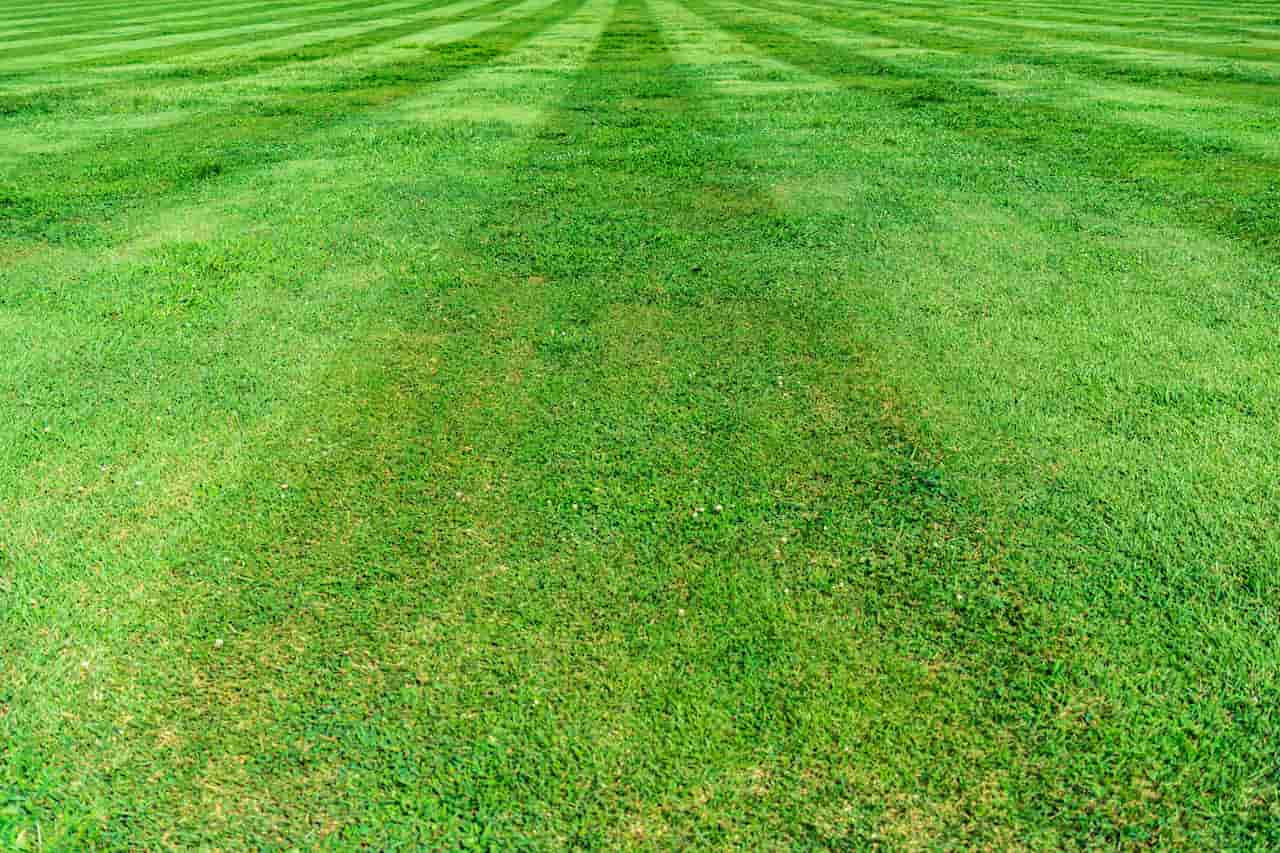
For a striped finish, run the mower in parallel passes with a slight overlap between each pass to avoid missing strips. The stripes are created by the roller pressing the grass alternately towards and away from you – light reflects differently off grass pressed in opposite directions, creating the contrasting bands. Our guide to how to stripe a lawn covers the technique in detail if a formal striped finish is your goal.
Overlap each pass by about 5cm. Running the mower exactly wheel-to-wheel on the previous pass risks leaving a thin strip of uncut grass between each run, especially on undulating ground or where the lawn surface is not perfectly level. A small overlap on each pass ensures complete coverage and a cleaner result without adding significant time to the job.
How often to mow
During the peak growing season from May to August, most UK lawns need mowing once a week. In cooler spring and autumn weather, once every ten to fourteen days is usually enough to keep the grass at the right height without allowing it to get away from you. During hot, dry summer spells when growth genuinely slows, you can stretch to every two weeks without any harm to the turf.
The frequency table above assumes a family utility lawn in average UK conditions with no unusual variables. A shaded lawn under trees or close to a north-facing wall will grow more slowly and need mowing less frequently at any time of year – sometimes half the rate of an open lawn in the same garden. A heavily fertilised lawn will grow faster and may need cutting twice a week at peak season to stay within the one-third rule without leaving heavy clippings on the surface. Use the table as a starting point and let the actual growth rate of your lawn guide the schedule rather than the calendar alone – the correct frequency is whichever keeps the grass within the right height range for its type.
Common mowing mistakes
Most lawn problems that gardeners attribute to disease, poor soil or weather are actually caused by repeated mowing errors that compound gradually over seasons until the lawn is visibly deteriorating without any obvious single cause. Correcting the habits below produces an immediate improvement in lawn health and appearance without any additional products, treatments or cost.
Aftercare and feeding
Regular mowing removes nutrients from the lawn in the form of clippings carried off in the grass box. Without regular feeding to replace what is removed, a lawn that is mowed frequently through the summer will gradually lose colour and density season by season, even if the mowing technique is otherwise correct. A spring lawn feed applied in March or April provides the nitrogen push that drives strong growth through the early season, while an autumn lawn feed applied in September hardens the grass for winter and promotes root development. Together they form the backbone of annual lawn nutrition alongside consistent mowing.
Edging the lawn after every second or third mow makes a significant difference to the overall appearance and takes less than ten minutes on an average garden. Clean, sharp edges where the lawn meets beds, borders or paving give a maintained, deliberate look that even a perfectly mown but ragged-edged lawn completely lacks – the edge is the frame that makes the whole picture work. Long-handled edging shears for the horizontal trim and a half-moon edging iron for the vertical cut, used in combination after mowing, are all that is needed to keep every boundary crisp and defined through the whole growing season.
Share on socials: