At a glance
Chard is one of the most rewarding leafy vegetables you can grow in a UK garden. It is easy, productive, genuinely attractive and hardy enough to keep cropping through mild winters when most of the veg plot is dormant. Unlike many vegetables, it tolerates both summer heat and autumn cold with minimal fuss, and a single sowing in spring can provide harvests right through until the following spring if the winter is not too severe. Few vegetables deliver as much return for as little effort.
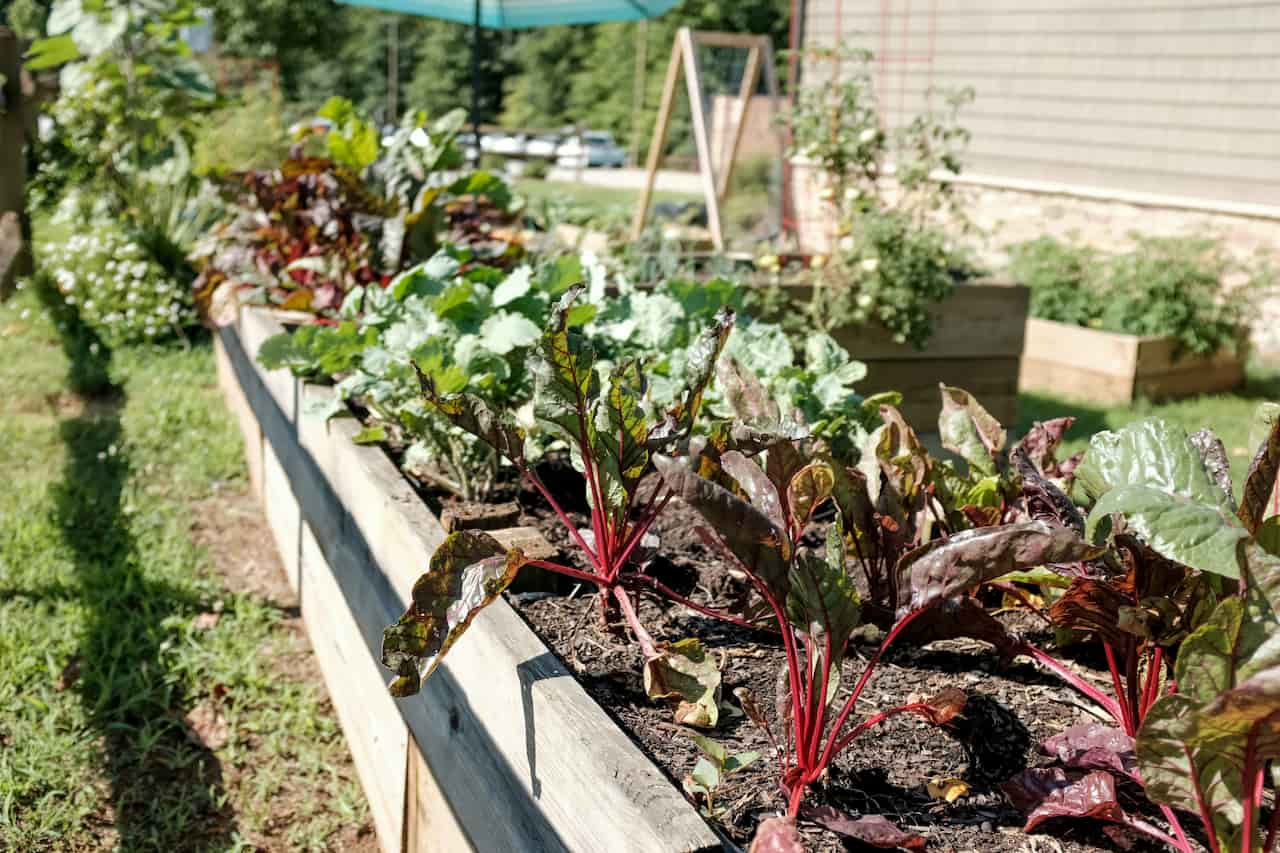
The colourful stems of rainbow chard – red, yellow, orange, white and pink – also make it one of the most decorative vegetables in the kitchen garden. It earns its place in ornamental raised beds as readily as in a traditional veg plot, providing genuine visual interest alongside its practical productivity. Whether you are growing it for the kitchen, the border or both, chard is a plant that delivers reliably season after season with very little ongoing input from the gardener.
About chard
Chard (Beta vulgaris subsp. cicla) is closely related to beetroot – both belong to the same species, and the two plants share similar growing requirements and a characteristic earthy sweetness. The main practical difference is that chard is grown for its leaves and stems rather than its roots. It is sometimes sold under the names Swiss chard, silverbeet or perpetual spinach, though perpetual spinach is technically a distinct variety with smaller, spinach-like leaves and much thinner stems rather than the broad-stemmed type most people recognise as chard.
The plant produces large, glossy leaves on thick, fleshy, distinctively coloured stems. Young leaves are mild-flavoured and tender enough to eat raw in salads. Mature leaves are best cooked – wilted, stir-fried, added to soups or used in gratins and pasta dishes. The stems take a little longer to cook than the leaf blades and are often separated and prepared first. In the kitchen, chard is considerably more versatile and robustly flavoured than spinach, and holds its texture far better when cooked rather than collapsing to a thin layer as spinach does.
Sowing chard
Chard is one of the easiest vegetables to sow successfully. It is not frost-tender in the way that runner beans or courgettes are, which means you can start it considerably earlier in the year than most warm-season crops. Sow outdoors directly into the growing bed from March onwards once the soil has begun to warm and dry out after winter. For an even earlier start, sow indoors from late February in a propagator or on a warm windowsill at around 15-20C, then transplant outdoors after the seedlings have been hardened off.
Each chard seed is actually a cluster of seeds encased in a corky outer fruit, which means you often get multiple seedlings emerging from a single sowing point. Sow approximately 2cm deep and 30cm apart in rows. Thin seedlings to one per station once they are large enough to handle comfortably – the thinnings are perfectly edible and can go straight into a salad. In raised beds, a grid pattern with 30cm spacing in all directions gives good results and allows adequate room for the large, spreading leaves to develop without overcrowding.
Succession sowing. For a genuinely continuous harvest throughout the year, make two or three separate sowings at six-week intervals from March through to July. An early spring sowing gives a summer and autumn crop; a midsummer sowing provides fresh leaves through autumn and into winter. Chard is one of the best vegetables available to UK gardeners for genuinely year-round production from a relatively small amount of growing space.
Ongoing care
Chard is an undemanding plant once it is established and growing actively. Water regularly in dry spells – it tolerates drought rather better than spinach but performs best with consistent soil moisture, particularly during hot summer spells when the large leaf surface loses water rapidly through transpiration. In a raised bed with free-draining growing medium, watering every three to four days during warm summer weather is usually sufficient. A balanced granular fertiliser worked into the soil before sowing provides the initial nutrient boost the plants need, supplemented by a liquid feed every three to four weeks during the active growing season to maintain strong, healthy leaf production.
Chard is a biennial, completing its life cycle over two years. It produces leaves in its first year and attempts to flower and set seed in its second. When plants start to bolt – sending up a tall, branching central flower stalk – leaf production drops dramatically and the remaining leaves become tougher and more bitter. Remove bolting plants and either replace with a fresh sowing or allow a single representative plant to set seed if you want to save it for next year. Spring-sown plants can occasionally bolt in their first year during a hot, dry summer, but the risk is lower than many gardeners expect; a midsummer sowing avoids this tendency as the plants are not subjected to the cold-then-warm vernalisation cycle that triggers early bolting.
Harvesting
The single most important principle for a productive chard plant is the harvesting method. Always pick the outer, older leaves first and leave the young central leaves to continue growing from the crown. This cut-and-come-again approach keeps the plant producing new leaves continuously through the season – it is the difference between a plant that crops for six or seven months and one that is exhausted within a few weeks.
Chard in the kitchen
One of chard’s great practical advantages over other leafy greens is its versatility once harvested. Young leaves under 15cm are mild enough to eat raw in salads, where the colourful stems add both visual interest and a pleasant crunch that softer lettuce leaves cannot provide. Larger, more mature leaves are best cooked – they wilt down quickly in a hot pan and are excellent sauteed with garlic and olive oil as a simple side dish, stirred into pasta at the last moment, added to soups and broths, or used as a wrapping for stuffed dishes in a similar way to vine leaves or cabbage.
The stems and leaf blades cook at noticeably different rates and are worth treating separately. Chop the stems into 2-3cm pieces and add them to the pan two to three minutes before the leaves to give them a head start. Both parts are nutritious – chard is rich in vitamins K, A and C, as well as magnesium and iron, making it one of the most nutrient-dense leafy vegetables available. It is also one of the most straightforward and lowest-maintenance to produce in a UK raised bed, which makes the nutritional return per square metre of growing space genuinely impressive.
Chard freezes well, which is extremely useful when a large, healthy plant produces more than the kitchen can use fresh. Blanch the leaves in boiling water for two minutes, plunge immediately into cold water to stop the cooking, drain very thoroughly and freeze in usable portions. Frozen chard works well in any cooked dish through the winter months when outdoor plants have slowed to a crawl. A combination of fresh leaves from cold-protected outdoor plants and a supply of frozen chard from the summer glut keeps the kitchen well supplied with greens through even the coldest months of the year.
Common problems
Chard is generally one of the most trouble-free vegetables in the kitchen garden. The problems that do arise are well understood and straightforward to manage.
Best varieties
‘Rainbow Chard’ – also widely sold under the name ‘Bright Lights’ – is the most popular variety in UK gardens and consistently the most recommended for good reason. The mix of red, yellow, orange, white and pink stems in a single packet makes it genuinely ornamental as well as productive, and the flavour across the range of colours is excellent. It is the natural first choice for anyone growing chard for the first time.
Chard and beetroot make natural companions in a raised bed. Both belong to the same species (Beta vulgaris) and have similar soil preparation, spacing and watering requirements, meaning they can share a bed comfortably without compromising each other. Both also offer long harvesting windows – beetroot from late summer through to winter storage, chard year-round – which makes good combined use of the growing space through the full season. The contrasting leaf forms, stem colours and heights of the two plants together make a visually interesting and productive raised bed planting in their own right, combining deep green and colourful chard stems with the spherical earthy roots of beetroot pushing out of the soil in late summer.
Share on socials: