At a glance
Heuchera – commonly known as coral bells or alumroot – is one of the most versatile perennials available to UK gardeners. Unlike the majority of border plants, heuchera is grown primarily for its foliage rather than its flowers. The leaves come in a remarkable range of colours – silver, lime green, amber, bronze, deep burgundy, near-black – and they look good every month of the year, providing colour, structure and interest in the border when little else is happening. No other commonly available perennial matches heuchera for year-round foliage value in a UK garden setting.
Heuchera is also genuinely adaptable in ways that matter to real gardeners. It tolerates partial shade well, making it one of the few colourful foliage plants that can be used confidently under trees or on the shaded side of a building. It performs well in containers, works as ground cover on difficult banks, and holds its own at the front of a mixed border. Once planted it requires minimal maintenance beyond an occasional tidy, a light feed in spring and division every few years. This guide covers everything you need to establish and maintain heuchera successfully in UK conditions.
About heuchera
Heuchera is native to North America, where wild species grow in woodland edges, rocky outcrops and open meadows. The vast majority of cultivars available in UK garden centres today are hybrids selected for exceptional leaf colour and pattern, developed primarily in the USA and UK from the 1990s onwards as breeders recognised the commercial potential of the plant’s foliage variation. The breeding effort has produced an extraordinary range, from varieties with pewter-silver leaves overlaid with dark veining to near-black cultivars that make a dramatic statement in contemporary planting schemes.
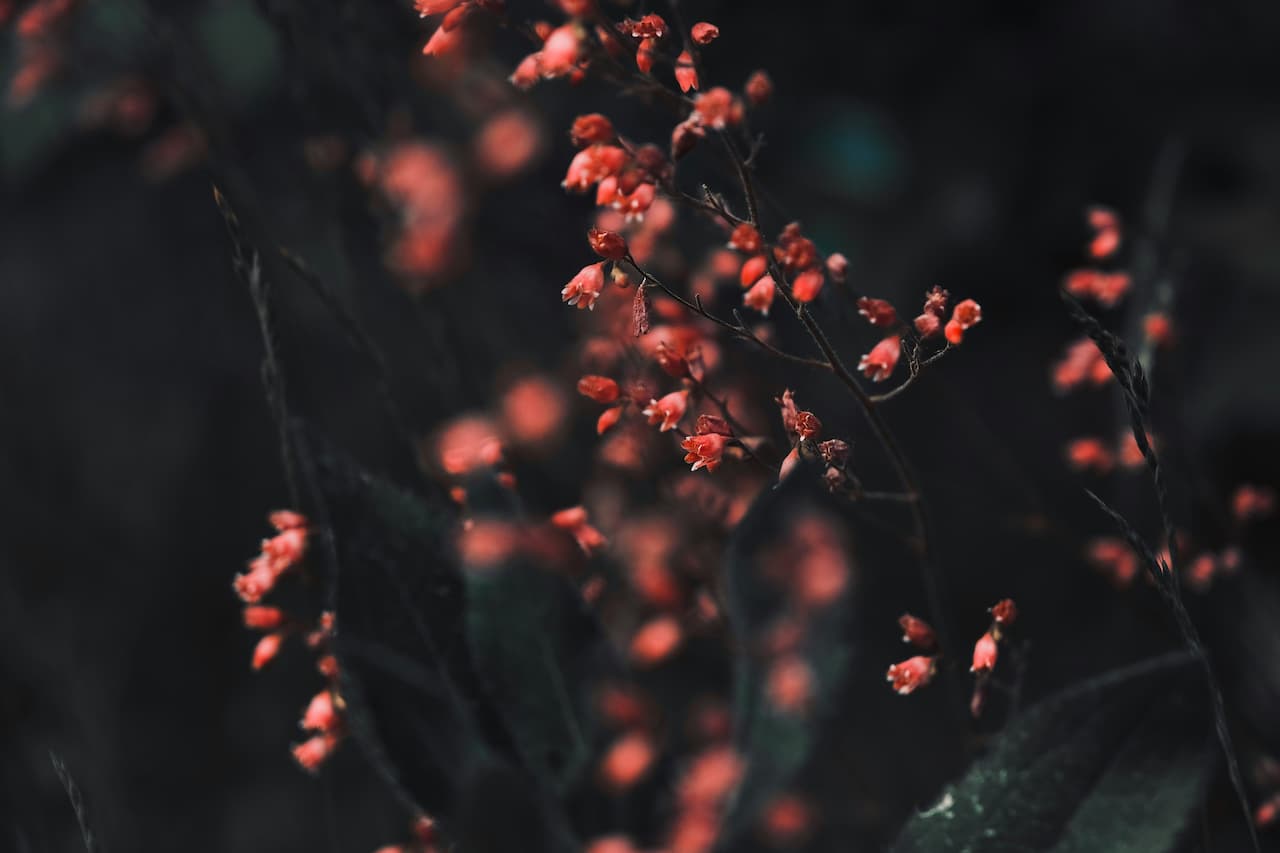
The flowers are a genuine bonus rather than the main attraction. Slender, wiry stems rise 30-60cm above the foliage and carry airy sprays of tiny bell-shaped flowers in white, pink or red from late spring into midsummer, typically May to July in UK gardens. The flowers are attractive to bees and other pollinators and look graceful against the bold foliage below. Most heucheras are semi-evergreen to evergreen in mild UK winters, retaining their foliage through all but the coldest spells and providing year-round ground cover in the border.
Planting heuchera
Heuchera grows well in most garden soils but performs best in one that is moist, reasonably well-drained and enriched with organic matter. It dislikes heavy, waterlogged clay in winter, which can cause crown rot in established plants. If your soil is heavy clay, improve the planting area with horticultural grit and garden compost before planting, or consider growing heuchera in raised beds or containers where you control the drainage.
Plant heuchera with the crown at or just above soil level – never buried deeply. Heuchera is prone to being heaved out of the ground during winter freeze-thaw cycles, particularly in exposed northern gardens, so firm it in well at planting and check the crown depth in early spring. If frost has pushed the crown above soil level, press it gently back down and firm the surrounding soil. Water in thoroughly after planting and keep consistently moist until the plant is fully established, which typically takes one growing season.
Container growing. Heuchera excels in pots and containers and is one of the best year-round patio plants available. Use a soil-based compost with added grit for drainage. A single heuchera in a 25-30cm pot makes a striking, low-maintenance display that looks good in every season. Refresh the compost every two years and divide when the crown becomes congested and starts pushing above the rim of the pot.
Ongoing care
Established heuchera is low maintenance in the right position. Water regularly in dry spells, particularly for container-grown plants and those in full sun where soil moisture evaporates more quickly. Feed lightly in spring with a balanced fertiliser to support the production of strong new foliage growth – a single application in March or April is all that is needed. Remove tatty, damaged or very old leaves as they appear to keep the plant looking its best, which is particularly worthwhile in late winter when old foliage can look tired before the fresh spring growth begins to push through from the crown.
The flower stems can be removed after blooming if you want to keep the focus on the foliage, which is the main attraction. If left, the spent flower stems look tidy for a while and allow pollinators to finish working the flowers – remove once they begin to look dishevelled. In late autumn, remove the oldest and most battered outer leaves but leave the newer inner foliage in place to protect the crown through any cold spells. In most UK winters heuchera remains largely evergreen, with the foliage looking most vibrant from spring through to autumn.
Division and propagation
Heuchera benefits from division every three to four years. Over time the central crown becomes woody, elevated progressively above the soil surface, and foliage and flower production declines noticeably. Division restores vigour and gives you additional plants at no cost. Spring is the best time – March or April as the plant is entering its growing season – though autumn division works well in milder parts of the UK.
Lift the whole plant carefully with a garden fork. Cut the crown into sections with a sharp knife, ensuring each section has healthy roots attached and several leaf rosettes. Remove and discard the oldest, woodiest central sections which will not regenerate well. Replant the younger outer sections at the correct depth – crown at or just above soil level – in refreshed soil with added compost and grit. Firm in thoroughly and water well. Divisions establish quickly and will produce good foliage the same season.
Vine weevil is the main pest to be vigilant about with heuchera, and particularly with container-grown plants. The white, C-shaped grubs feed on the roots underground through late summer and autumn, causing plants to wilt suddenly and collapse without obvious above-ground cause. If a heuchera collapses unexpectedly, tip it out of its pot or lift it and check the root ball for grubs. Our guide to getting rid of vine weevil covers the most effective treatment options including biological nematode treatments and preventative measures for containers.
Common problems
Heuchera is generally resistant to most common garden pests and diseases beyond vine weevil, which is the one to watch for consistently, particularly in containers. Slugs occasionally damage young leaves in spring but established plants with tough, mature foliage are largely left alone. Powdery mildew can appear in very dry summers on plants in full sun – water at the base to maintain soil moisture and ensure good air circulation around the crowns.
Best varieties
‘Palace Purple’ is the cultivar that brought heuchera to widespread attention in UK gardens and remains a benchmark variety. Its deep bronze-purple leaves are reliably hardy, vigorous and perform well across a wide range of conditions from part shade to full sun. It holds an RHS Award of Garden Merit and is the best starting point for anyone growing heuchera for the first time.
Heuchera pairs beautifully with many other shade-tolerant garden plants and its year-round foliage value makes it useful as a permanent framework around which seasonal planting can change. Combined with hydrangeas, the heuchera foliage provides a continuous backdrop that complements the hydrangea flower heads through summer and autumn while remaining attractive in winter when the hydrangeas are bare. For a cottage garden feel with strong seasonal interest, plant heuchera as edging to a border containing astrantia – the contrasting leaf forms, complementary flower and foliage colours, and shared preference for moist, lightly shaded conditions make them natural and reliable partners throughout the summer months.
Share on socials: