At a glance
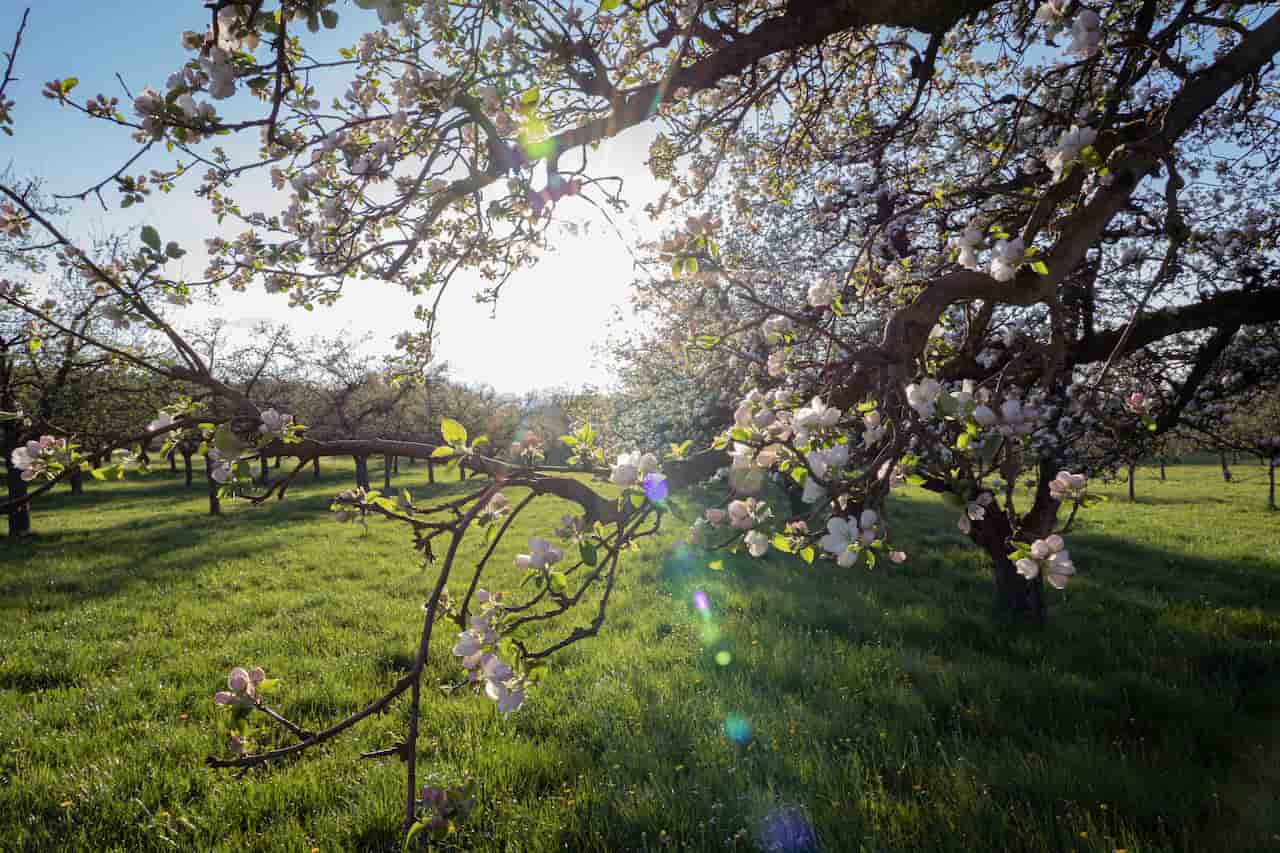
April is the month when the UK garden shifts gear. The cautious early-season activity of March gives way to something that feels much more like proper gardening – longer days, warmer soil, the sowing list expanding week by week and the first real harvests of the year arriving from crops started in the depths of winter. There is more to do in April than in almost any other month, and getting the priorities right matters.
The main caveat that applies throughout April in the UK – particularly in the north, Scotland and on higher ground – is frost. The average last frost date in northern England is mid to late May. April can still deliver hard frosts with little warning, and tender plants caught outside will not recover. Keep fleece close and do not be stampeded into planting out frost-sensitive crops too early however warm it feels.
Vegetable and growing jobs
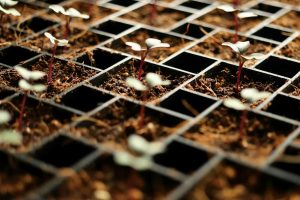
The vegetable garden is at its most demanding in April. The indoor sowing programme is still running, direct outdoor sowings are expanding rapidly and the first plantings out are beginning – all simultaneously.
| Crop | April action | Notes for UK growers |
|---|---|---|
| Potatoes | Plant chitted early varieties from mid-April in south, late April in north | Earth up shoots as they appear – protects from frost and increases yield |
| Onion sets | Plant if not done in March | Firm planting – just the tip showing above soil |
| Peas | Direct sow or transplant guttering-grown seedlings | Put support in immediately at planting |
| Broad beans | Direct sow if not done in March – last chance for good results | Pinch out tips in May to reduce blackfly |
| Lettuce and salad | Direct sow outdoors from mid-April | Sow every 2-3 weeks for continuous harvest |
| Carrots | Direct sow from mid-April when soil is warming | Thin to 8cm – do not transplant |
| Beetroot | Direct sow from mid-April | Soak seeds overnight to improve germination |
| Tomatoes | Pot on into larger containers if getting leggy on windowsill | Plant out late May/June – not before last frost |
| Courgettes | Sow indoors in late April | Fast growing – too early and they’ll be huge before it’s safe to plant out |
| French beans | Sow indoors from late April | Not frost hardy – do not sow direct outdoors yet |
Earth up potatoes as soon as shoots appear above the soil surface. Draw soil up around the emerging shoots to cover them completely. This protects shoots from frost, which can blacken and kill them even in late April, and crucially it increases the length of underground stem available for tuber development – more covered stem means more potatoes. Repeat every time shoots push through until the plants are too tall to earth up further.
Lawn care in April
April is peak lawn care month. The grass is growing vigorously, conditions are usually moist and mild, and the treatments applied now set the lawn up for the whole summer season.
- Regular mowing begins in earnest – once weekly from mid-April for most UK lawns. Keep the height at 4-5cm – resist the temptation to cut short until the lawn is fully established for the season.
- Apply spring lawn feed – if not done in March, apply a high-nitrogen spring feed now. The grass is actively growing and will use it effectively. Follow pack instructions on rates – over-application burns grass.
- Apply selective weedkiller – April is the best month for selective lawn weedkillers. Temperatures are consistently above 10°C, weeds are actively growing and the chemical is at its most effective. Treat before weeds flower and set seed.
- Overseed bare patches – if not done in autumn, April is the second-best time to overseed repairs. Scarify the surface lightly, apply seed at the recommended rate and keep moist. April germination is fast.
- First scarifying or vigorous raking – remove winter moss and thatch before peak growing season. Follow immediately with overseeding on any bare areas.
Borders and ornamental plants
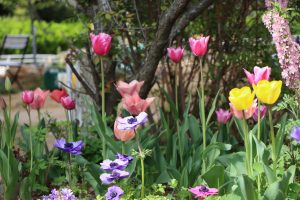
April borders are full of activity. Spring bulbs are at their peak, early perennials are romping away and it is the ideal time to plant summer-flowering perennials and hardy annuals that will form the backbone of the summer display.
- Plant summer-flowering perennials – hostas, hemerocallis, geraniums, astrantia and most hardy perennials can go in now. April planting gives the full growing season to establish before winter.
- Sow hardy annuals direct – cornflowers, calendula, nigella, cosmos (in south), ammi and many other hardy annuals can be sown directly into prepared beds from mid-April. Scatter on the surface, rake in lightly and thin once established.
- Deadhead spring bulbs but leave the foliage – remove spent daffodil and tulip flowers to prevent energy going into seed production, but leave the leaves to die back naturally. The leaves are feeding next year’s bulb – cutting them prematurely produces weaker plants and fewer flowers the following spring.
- Start dahlia tubers into growth – pot dahlia tubers in compost indoors in April for earlier flowering. They won’t go outside until after the last frost, but starting them indoors gives 4-6 weeks of establishment that makes a real difference to flowering time.
As an Amazon Associate I earn from qualifying purchases. Prices correct at time of publishing.
What to prune in April
April pruning is more selective than March – most of the structural pruning is done and April is more about tidying and managing growth that has started.
- Forsythia – prune immediately after flowering this month. Cut back flowered stems by a third to half their length to maintain a compact shape and promote fresh growth for next year’s flowers.
- Spring-flowering shrubs – the rule is consistent: prune spring-flowering shrubs immediately after they finish flowering, not before. Flowering currant, ornamental quince and early-flowering viburnum all benefit from a light prune after flowering in April.
- Evergreen hedges – light tidying cuts are fine in April. Avoid hard cuts until May when regrowth will be faster and more even.
- Tender perennials wintered indoors – cut back any leggy growth on tender perennials like pelargoniums and fuchsias that have been overwintered indoors before bringing them outside to harden off.
Do not prune clematis until you know which group it belongs to. Clematis pruning depends entirely on when it flowers. Group 1 (early spring flowers on old wood) should not be pruned now – you would remove this year’s flower buds. Group 2 (large-flowered, late spring to early summer) gets a light tidy only. Group 3 (late summer flowers on new wood) was pruned hard in February or March. If unsure, observe when it flowers and look it up before touching it.
North vs south – what changes in April
| Task | South England and Wales | North England, Scotland and high ground |
|---|---|---|
| Potato planting | Mid-April – soil warming well | Late April to early May – risk of late frost |
| Direct sowing outdoors | Most crops from mid-April | Hardy crops only until late April |
| Hardening off tender plants | Begin mid-April | Begin late April at the earliest |
| Last frost risk | Early to mid-April for most areas | May frost still possible throughout April |
| Dahlias outdoors | Very late April in sheltered spots with fleece | Wait until May |
April checklist
- Plant chitted early potatoes and earth up as shoots appear
- Direct sow peas, lettuce, carrots, beetroot and broad beans outdoors
- Continue indoor sowing of tomatoes, courgettes, French beans and basil
- Plant onion sets and garlic if not done in March
- Apply spring lawn feed and selective weedkiller
- Mow weekly from mid-April on a high setting
- Overseed bare lawn patches
- Plant summer-flowering perennials in borders
- Sow hardy annuals direct into prepared beds
- Pot up dahlia tubers to start into growth indoors
- Deadhead spring bulbs but leave foliage to die back naturally
- Prune forsythia and other spring shrubs after flowering
- Keep fleece handy – frost still possible throughout April in the north
April is the month that rewards the gardener who has planned ahead – the seeds sown in March are germinating, the lawn treated in March is thickening up, and the April work you do now will be paying off in June and July harvests. For what comes next, read our March gardening jobs UK guide if you need to catch up on anything from last month, or plan ahead with our May guide when it lands.
As an Amazon Associate I earn from qualifying purchases. Prices correct at time of publishing.
Share on socials: